THE ADVENTURE COLLECTIVE® · Independent discovery and booking for outdoor travel

Spend a private day chasing waterfalls, reflections, and terraced light around Ubud. This photographer-minded tour links Kanto Lampo, Tibumana, Gunung Kawi Sebatu and Tegalalang with an optional jungle swing and a Balinese lunch overlooking rice fields.
Spend a private day chasing waterfalls, reflections, and terraced light around Ubud. This photographer-minded tour links Kanto Lampo, Tibumana, Gunung Kawi Sebatu and Tegalalang with an optional jungle swing and a Balinese lunch overlooking rice fields.
You step out of an air-conditioned minivan into humid Balinese air that smells faintly of wet earth and incense. The driver nudges the door closed and for the next eight hours the island’s green will insist on your attention — plunging waterfalls that drum the jungle, rice paddies that tilt and glow with sunlit terraces, and a silent hilltop temple where koi glide like slow, jeweled clocks.
Verified experiences and guided adventures in the surrounding area.
Operated by Hire Bali Cab · Ubud, Bali
You step out of an air-conditioned minivan into humid Balinese air that smells faintly of wet earth and incense. The driver nudges the door closed and for the next eight hours the island’s green will insist on your attention — plunging waterfalls that drum the jungle, rice paddies that tilt and glow with sunlit terraces, and a silent hilltop temple where koi glide like slow, jeweled clocks.
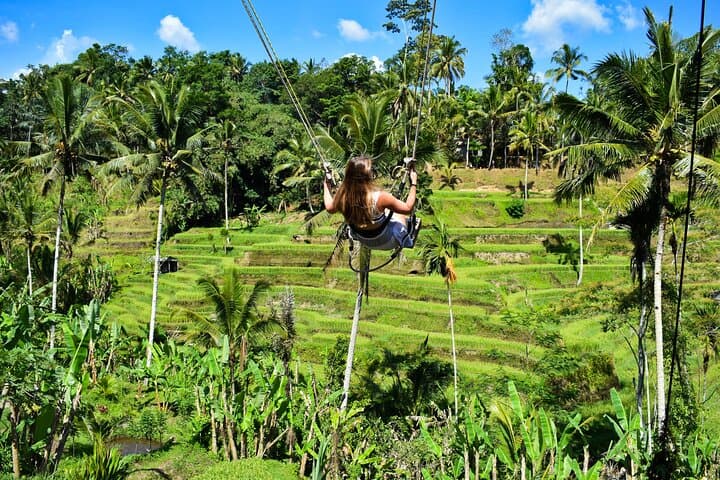
This private Ubud day tour strings five of the area’s most photogenic stops into a single easygoing loop: Kanto Lampo and Tibumana waterfalls, a jungle swing option, Gunung Kawi Sebatu temple with its reflecting pools, and the stepped expanse of Tegalalang rice terraces. The route follows old river valleys carved into volcanic soil; these waterways have shaped rice cultivation here for centuries and continue to feed the irrigation channels — the subak system — that made Bali’s terraces an engineering as well as an aesthetic achievement.
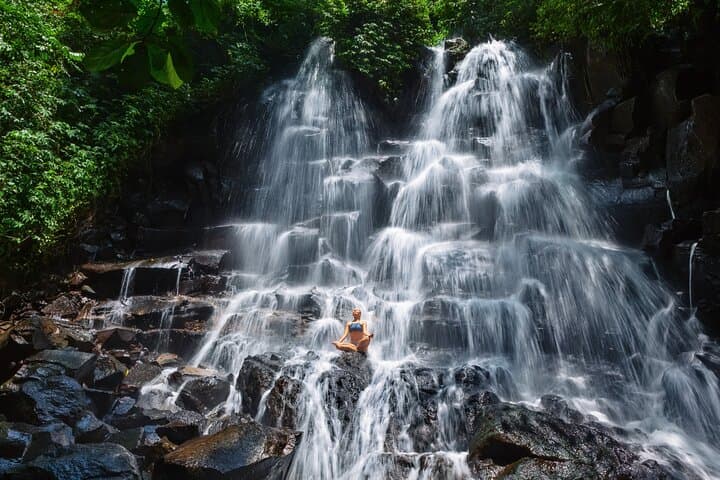
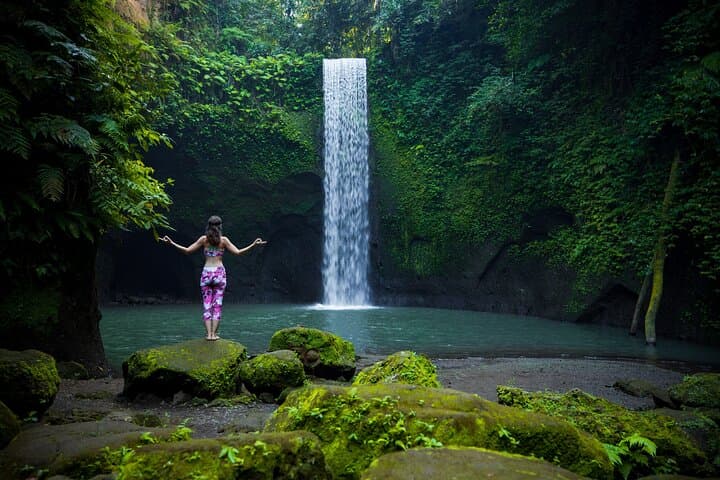
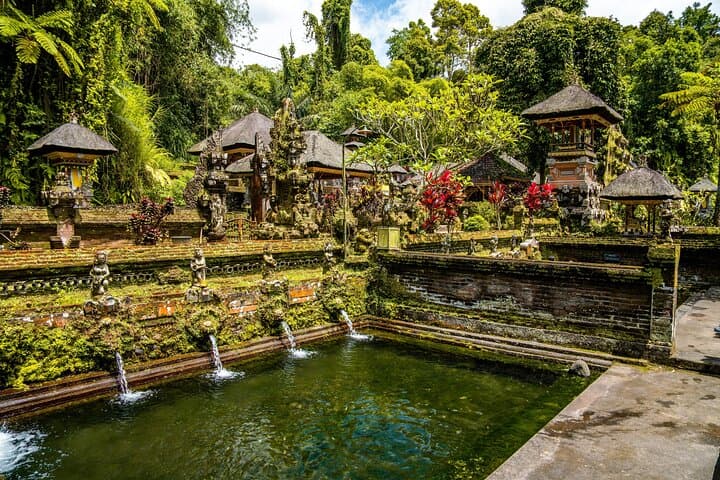
Gunung Kawi Sebatu is quiet compared with Ubud’s busier shrines. Stone carvings and mossed steps give the place a lived-in grace; ponds mirror the sky and seem to hold the island’s slow rituals. At Kanto Lampo, water threads down volcanic rock in ribbons, daring you to get closer. Tibumana requires a brief staircase descent and, if the season has been kind, a refreshing swim in cold mountain water.
Local culture is never far: farmers in the rice fields maintain plots passed through generations, and small offerings — frangipani and folded palm leaf trays — appear along paths. A respectful reminder: temples require modest dress and often a sarong and sash; bring one or be prepared to rent locally.
Practical edge: this is an 8-hour private tour suited to photographers and casual adventurers. Expect unpaved pathways, some stone steps, short hikes, and wet rocks at waterfalls. Bring a small waterproof pack, sturdy shoes with grip, and a change of clothes if you plan to swim. The tour includes bottled water, air-conditioned transport, parking, and entrance fees, and your guide handles parking and timing to minimize crowds.
Timing matters — mornings at Tibumana and late afternoon at Tegalalang will give you the softest light; mid-day can be harsh but good for bold color contrasts. Cash for small temple donations or local tips is wise.
For those who want frames that pop on social feeds or prints that hold up on a wall, this private loop gives variety within a single day: cascading movement, reflective stillness, and the geometric order of terraces. The landscape will not just be photographed — it will respond, the river and rice nudging you to slow down and find a steady composition.
moderate.
8 hours.
Light to moderate fitness — comfortable walking and descending stairs; able to handle short uneven trails.
Yes — the itinerary is family-friendly, but parents should supervise near waterfalls and stairs.
Entrance fees and bottled water are included; the listed tour includes a Balinese lunch overlooking rice fields.
Swimming is possible at Tibumana depending on water levels; follow your guide’s instructions about safety and currents.
Bring small cash for temple donations, snacks, tips, or sarong rental if needed.
The jungle swing is optional and typically an extra cost at the operator; check with your guide on arrival.
Modest clothing is required; a sarong and sash are often requested — bring one or rent locally at the temple.
The terraces around Ubud use the traditional subak irrigation system developed over centuries; temples like Gunung Kawi Sebatu play a role in coordinating water and ritual.
Stick to marked paths to avoid trampling rice bunds and refrain from feeding wildlife; local guides aim to keep visitor numbers balanced to protect fragile riverbanks.
Hire Bali Cab operates guided outdoor trips and adventures with an emphasis on safety, stewardship, and memorable experiences.
You step out of an air-conditioned minivan into humid Balinese air that smells faintly of wet earth and incense. The driver nudges the door closed and for the next eight hours the island’s green will insist on your attention — plunging waterfalls that drum the jungle, rice paddies that tilt and glow with sunlit terraces, and a silent hilltop temple where koi glide like slow, jeweled clocks.
You step out of an air-conditioned minivan into humid Balinese air that smells faintly of wet earth and incense. The driver nudges the door closed and for the next eight hours the island’s green will insist on your attention — plunging waterfalls that drum the jungle, rice paddies that tilt and glow with sunlit terraces, and a silent hilltop temple where koi glide like slow, jeweled clocks.
This private Ubud day tour strings five of the area’s most photogenic stops into a single easygoing loop: Kanto Lampo and Tibumana waterfalls, a jungle swing option, Gunung Kawi Sebatu temple with its reflecting pools, and the stepped expanse of Tegalalang rice terraces. The route follows old river valleys carved into volcanic soil; these waterways have shaped rice cultivation here for centuries and continue to feed the irrigation channels — the subak system — that made Bali’s terraces an engineering as well as an aesthetic achievement.
Gunung Kawi Sebatu is quiet compared with Ubud’s busier shrines. Stone carvings and mossed steps give the place a lived-in grace; ponds mirror the sky and seem to hold the island’s slow rituals. At Kanto Lampo, water threads down volcanic rock in ribbons, daring you to get closer. Tibumana requires a brief staircase descent and, if the season has been kind, a refreshing swim in cold mountain water.
Local culture is never far: farmers in the rice fields maintain plots passed through generations, and small offerings — frangipani and folded palm leaf trays — appear along paths. A respectful reminder: temples require modest dress and often a sarong and sash; bring one or be prepared to rent locally.
Practical edge: this is an 8-hour private tour suited to photographers and casual adventurers. Expect unpaved pathways, some stone steps, short hikes, and wet rocks at waterfalls. Bring a small waterproof pack, sturdy shoes with grip, and a change of clothes if you plan to swim. The tour includes bottled water, air-conditioned transport, parking, and entrance fees, and your guide handles parking and timing to minimize crowds.
Timing matters — mornings at Tibumana and late afternoon at Tegalalang will give you the softest light; mid-day can be harsh but good for bold color contrasts. Cash for small temple donations or local tips is wise.
For those who want frames that pop on social feeds or prints that hold up on a wall, this private loop gives variety within a single day: cascading movement, reflective stillness, and the geometric order of terraces. The landscape will not just be photographed — it will respond, the river and rice nudging you to slow down and find a steady composition.