THE ADVENTURE COLLECTIVE® · Independent discovery and booking for outdoor travel

Experience five of Ubud’s most photogenic waterfalls in a single, guided day trip. From cavern light at Tukad Cepung to a peaceful dip at Tibumana, this circuit pairs easy jungle walks with curated logistics for a relaxed, full-day adventure.
Experience five of Ubud’s most photogenic waterfalls in a single, guided day trip. From cavern light at Tukad Cepung to a peaceful dip at Tibumana, this circuit pairs easy jungle walks with curated logistics for a relaxed, full-day adventure.
Mist hangs low in the morning as an air-conditioned minivan threads a narrow road out of Ubud toward the jungle. The first stop, Kanto Lampo, announces itself with layered rock and a steady veil of water; later, Tibumana offers a single tall drop and a calm emerald pool. Tukad Cepung feels theatrical — a waterfall inside a cavern where sunbeams cut through the opening above — while Goa Raja and Ulu Petanu close the loop with quieter, more remote cascades and riverside calm.
Verified experiences and guided adventures in the surrounding area.
Operated by Angga's Hidden Bali · Ubud, Bali
Mist hangs low in the morning as an air-conditioned minivan threads a narrow road out of Ubud toward the jungle. The first stop, Kanto Lampo, announces itself with layered rock and a steady veil of water; later, Tibumana offers a single tall drop and a calm emerald pool. Tukad Cepung feels theatrical — a waterfall inside a cavern where sunbeams cut through the opening above — while Goa Raja and Ulu Petanu close the loop with quieter, more remote cascades and riverside calm.
Geology here is honest and visible: streams cut through volcanic tuff and limestone, forming narrow chutes and chambers that focus light and sound. Culturally, these falls sit near villages and small temples; water is treated respectfully in Balinese Hindu practice, and local warungs and caretakers often manage entry points.
Practically, the circuit is designed as a full-day, low-impact route with short walks, stairs, and occasional slippery stone. A driver-guide handles timing and entrance coordination so visitors can move between sites without navigation stress. Expect about 8–10 hours total, intermittent swimming at calm pools, and pockets of shade under the canopy.
Plan an early start for softer light and fewer crowds, wear grippy footwear for wet rocks, carry biodegradable sunscreen and a dry bag for electronics. Bring small local cash for tips or snacks; entrance fees are generally included in guided circuits but vary at independent gates. The route balances picture-worthy moments with simple jungle walking — approachable for most travelers but still rewarding for those who want close-up river and cave environments.
easy.
8–10 hours.
Basic fitness for short walks, stairs and uneven jungle trails; able to step over rocks and descend/ascend short stairways.
Most guided circuits include entrance fees in the tour price, but small variances occur—confirm with your operator and carry small cash just in case.
Yes, several stops (Tibumana, Kanto Lampo, Ulu Petanu) have swim-friendly pools, but avoid swimming in strong currents and follow guide instructions about safety and cultural boundaries.
The route is classified as easy: short hikes, stair descents, and minimal elevation; however, expect several uneven surfaces and wet rock that require steady footing.
Generally yes for those with basic mobility, but people with serious back, heart, or mobility issues should avoid steep steps and consult the operator before booking.
Water sites around Ubud have long been integrated into Balinese village life and ritual; many falls sit on streams that fed rice terraces and village temples for generations.
Stick to marked paths, avoid single-use plastics, and use biodegradable sunscreen—local entrance fees and guide services often support trail maintenance and village stewardship.
Angga's Hidden Bali operates guided outdoor trips and adventures with an emphasis on safety, stewardship, and memorable experiences.
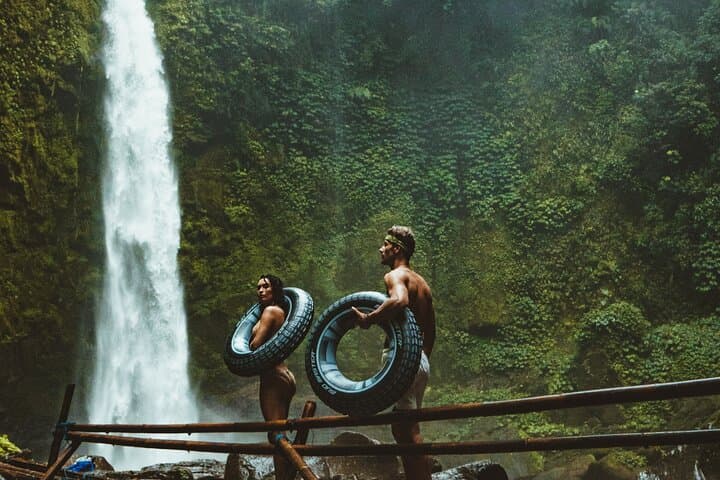

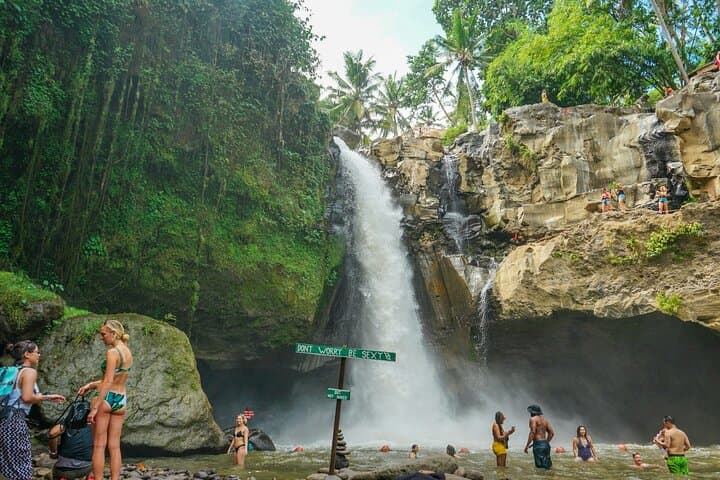
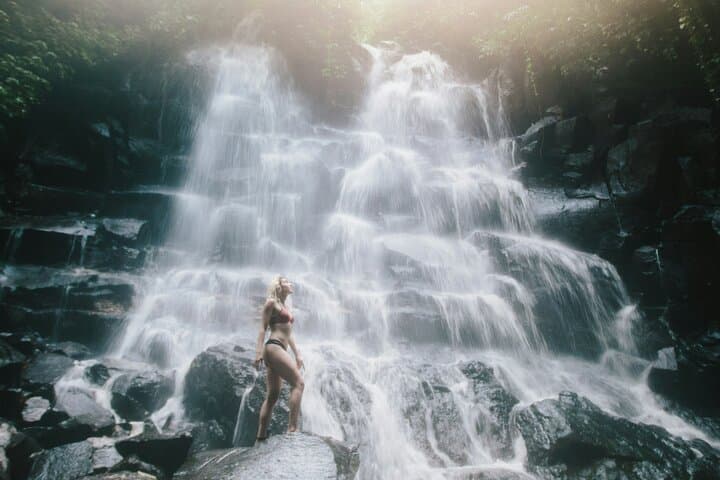
Mist hangs low in the morning as an air-conditioned minivan threads a narrow road out of Ubud toward the jungle. The first stop, Kanto Lampo, announces itself with layered rock and a steady veil of water; later, Tibumana offers a single tall drop and a calm emerald pool. Tukad Cepung feels theatrical — a waterfall inside a cavern where sunbeams cut through the opening above — while Goa Raja and Ulu Petanu close the loop with quieter, more remote cascades and riverside calm.
Mist hangs low in the morning as an air-conditioned minivan threads a narrow road out of Ubud toward the jungle. The first stop, Kanto Lampo, announces itself with layered rock and a steady veil of water; later, Tibumana offers a single tall drop and a calm emerald pool. Tukad Cepung feels theatrical — a waterfall inside a cavern where sunbeams cut through the opening above — while Goa Raja and Ulu Petanu close the loop with quieter, more remote cascades and riverside calm.
Geology here is honest and visible: streams cut through volcanic tuff and limestone, forming narrow chutes and chambers that focus light and sound. Culturally, these falls sit near villages and small temples; water is treated respectfully in Balinese Hindu practice, and local warungs and caretakers often manage entry points.
Practically, the circuit is designed as a full-day, low-impact route with short walks, stairs, and occasional slippery stone. A driver-guide handles timing and entrance coordination so visitors can move between sites without navigation stress. Expect about 8–10 hours total, intermittent swimming at calm pools, and pockets of shade under the canopy.
Plan an early start for softer light and fewer crowds, wear grippy footwear for wet rocks, carry biodegradable sunscreen and a dry bag for electronics. Bring small local cash for tips or snacks; entrance fees are generally included in guided circuits but vary at independent gates. The route balances picture-worthy moments with simple jungle walking — approachable for most travelers but still rewarding for those who want close-up river and cave environments.