THE ADVENTURE COLLECTIVE® · Independent discovery and booking for outdoor travel

Move beyond snapshots on an eight-hour circuit through Tirta Empul, Kanto Lampo, the Monkey Forest and rice terraces. Expect ritual immersion, jungle steps, and curated photo moments led by a local guide.
Move beyond snapshots on an eight-hour circuit through Tirta Empul, Kanto Lampo, the Monkey Forest and rice terraces. Expect ritual immersion, jungle steps, and curated photo moments led by a local guide.
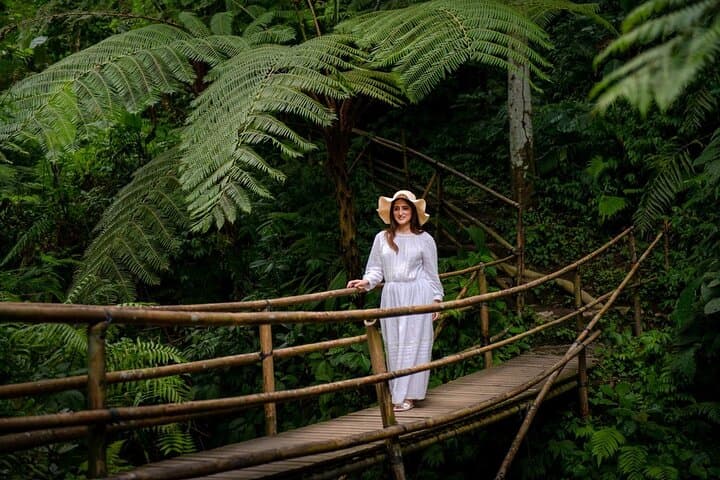
You arrive before the heat, rice terraces bright as film stock and temple bells marking the hour. The morning hum of Ubud—motorbikes, roosters, a distant chanting—gives way to dripping water and dense jungle as you step into Tirta Empul’s cool courtyard. Guides hand you a sarong and the ritual begins: moving from fountain to fountain, the sacred springs daring you to leave the day’s dust behind.
Verified experiences and guided adventures in the surrounding area.
Operated by Bali Direction Tour · Ubud, Bali
You arrive before the heat, rice terraces bright as film stock and temple bells marking the hour. The morning hum of Ubud—motorbikes, roosters, a distant chanting—gives way to dripping water and dense jungle as you step into Tirta Empul’s cool courtyard. Guides hand you a sarong and the ritual begins: moving from fountain to fountain, the sacred springs daring you to leave the day’s dust behind.
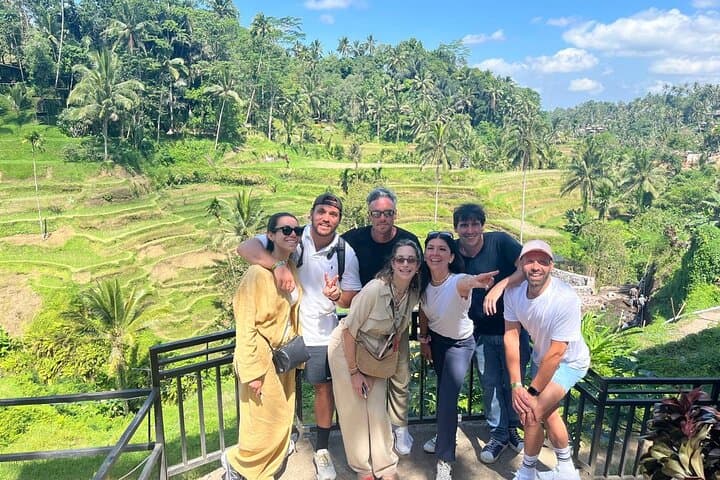
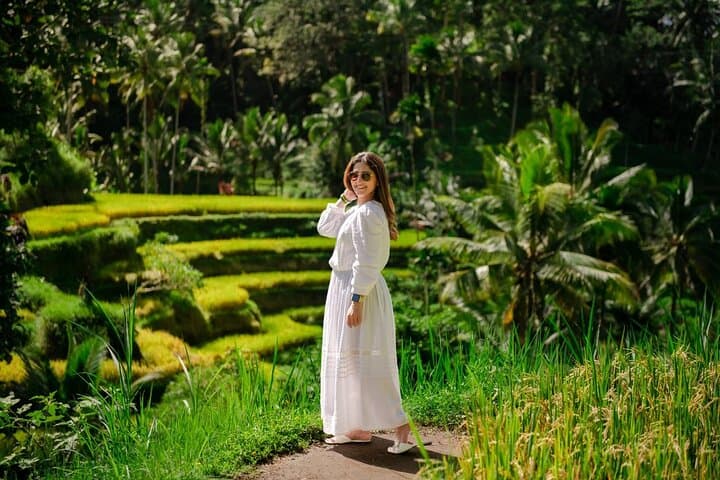
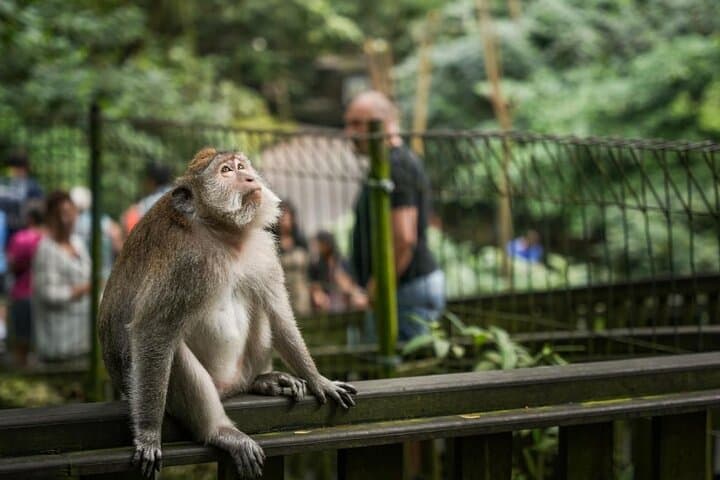
This full-day loop stitches together Bali’s cultural highlights: Tirta Empul, a 10th-century Hindu water temple; Kanto Lampo’s layered fall where volcanic rock channels the stream; the Sacred Monkey Forest Sanctuary with its mossy shrines and long-tailed macaques; and the sculpted rice terraces fed by the island’s ancient subak irrigation system.
Geology here is quiet but present—volcanic soils that hold terraces and waterfalls that carve through hardened lava flows—while centuries of religion and cooperative farming shape daily life. Local guides add practical context: why water is holy, how subak governs planting, and which temple stones date back a millennium.
Plan for gentle but uneven walking—expect 2–4 km total on foot with short stair descents (up to 50–100 steps at Kanto Lampo) and modest elevation changes across sites. Wear sturdy shoes, bring refillable water, and keep cameras ready for close-up wildlife moments—while keeping pockets zipped. Early starts cut crowds and soften light for photos. Respect temple dress codes, avoid feeding monkeys, and allow extra time to move between dispersed sites—this is a day built for images, context, and small, memorable rituals.
easy.
8 hours.
Suitable for travelers with basic mobility; requires short, uneven walks and stair descents but no sustained climbs.
Participation is optional; guides explain the steps and provide sarongs—you can observe or join based on comfort and health restrictions.
Yes—the walk includes shallow river access and spray from cascades; plan for towel and a dry change of clothes if you intend to swim.
Return transfer is listed as included; confirm exact pickup point at booking and allow time for traffic between sites.
This experience is not recommended for pregnant travelers or those with serious cardiovascular or spinal conditions due to uneven terrain and ritual participation.
Tirta Empul dates to the 10th century and remains an active site of Balinese Hindu purification; the subak irrigation system used on terraces reflects centuries-old communal farming practices.
Respect temple rules, avoid single-use plastics, and do not feed wildlife—local guides promote low-impact visits to protect sacred sites and animal behavior.
Bali Direction Tour operates guided outdoor trips and adventures with an emphasis on safety, stewardship, and memorable experiences.
You arrive before the heat, rice terraces bright as film stock and temple bells marking the hour. The morning hum of Ubud—motorbikes, roosters, a distant chanting—gives way to dripping water and dense jungle as you step into Tirta Empul’s cool courtyard. Guides hand you a sarong and the ritual begins: moving from fountain to fountain, the sacred springs daring you to leave the day’s dust behind.
You arrive before the heat, rice terraces bright as film stock and temple bells marking the hour. The morning hum of Ubud—motorbikes, roosters, a distant chanting—gives way to dripping water and dense jungle as you step into Tirta Empul’s cool courtyard. Guides hand you a sarong and the ritual begins: moving from fountain to fountain, the sacred springs daring you to leave the day’s dust behind.
This full-day loop stitches together Bali’s cultural highlights: Tirta Empul, a 10th-century Hindu water temple; Kanto Lampo’s layered fall where volcanic rock channels the stream; the Sacred Monkey Forest Sanctuary with its mossy shrines and long-tailed macaques; and the sculpted rice terraces fed by the island’s ancient subak irrigation system.
Geology here is quiet but present—volcanic soils that hold terraces and waterfalls that carve through hardened lava flows—while centuries of religion and cooperative farming shape daily life. Local guides add practical context: why water is holy, how subak governs planting, and which temple stones date back a millennium.
Plan for gentle but uneven walking—expect 2–4 km total on foot with short stair descents (up to 50–100 steps at Kanto Lampo) and modest elevation changes across sites. Wear sturdy shoes, bring refillable water, and keep cameras ready for close-up wildlife moments—while keeping pockets zipped. Early starts cut crowds and soften light for photos. Respect temple dress codes, avoid feeding monkeys, and allow extra time to move between dispersed sites—this is a day built for images, context, and small, memorable rituals.