THE ADVENTURE COLLECTIVE® · Independent discovery and booking for outdoor travel

See Ubud’s top sights in a single private day: fly on a jungle swing, stroll Tegallalang’s rice terraces, meet macaques in the Sacred Monkey Forest, and cool off by a jungle waterfall. Practical notes on timing, fees, and wildlife etiquette help you plan a smooth day.
See Ubud’s top sights in a single private day: fly on a jungle swing, stroll Tegallalang’s rice terraces, meet macaques in the Sacred Monkey Forest, and cool off by a jungle waterfall. Practical notes on timing, fees, and wildlife etiquette help you plan a smooth day.
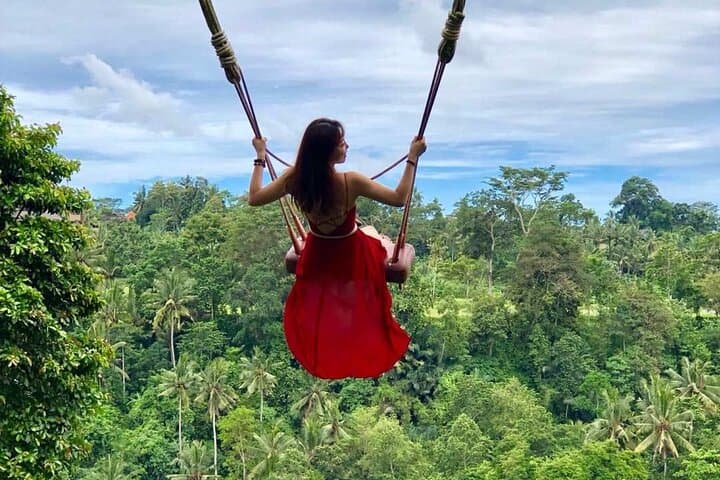
You step out of an air-conditioned minivan and the air changes—warm, humid, threaded with coconut and wet earth. A wooden swing hangs at the edge of a steep green bowl and the jungle seems to lean forward, daring you to fly a little. From that airborne view to the hush of temple pools and the chatter of macaques, this is a day that stitches contrasting scenes together quickly and cleanly.
Verified experiences and guided adventures in the surrounding area.
Operated by BaliHit · Ubud, Bali
You step out of an air-conditioned minivan and the air changes—warm, humid, threaded with coconut and wet earth. A wooden swing hangs at the edge of a steep green bowl and the jungle seems to lean forward, daring you to fly a little. From that airborne view to the hush of temple pools and the chatter of macaques, this is a day that stitches contrasting scenes together quickly and cleanly.
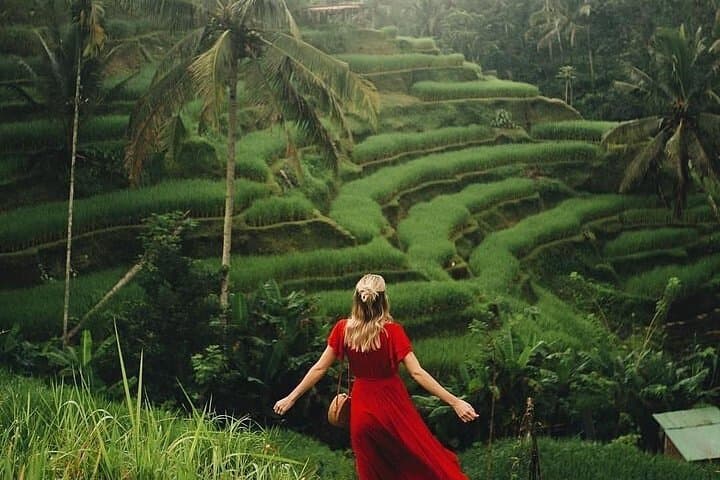
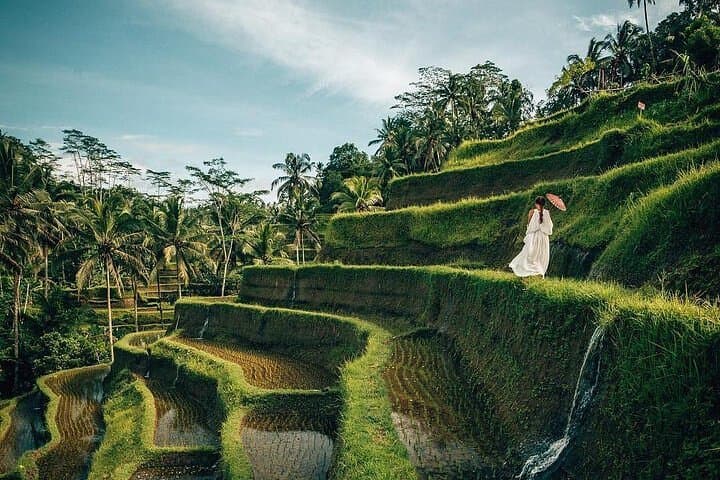
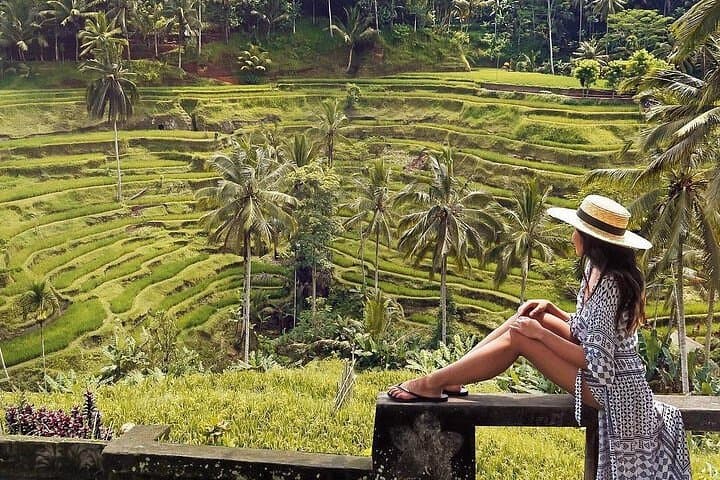
Ubud sits on volcanic soils carved by centuries of rice cultivation and framed by low ridgelines. The Tegallalang terraces are part of Bali’s subak irrigation system, an agricultural practice tied to Balinese Hindu ritual and communal water rights recognized by UNESCO. The Sacred Monkey Forest preserves small temples and a long-tailed macaque population that lives among ancient banyan and fig trees; nearby waterfalls cut channels through basalt and soft sediment, cooling the valley air.
Practically, expect about 8–10 hours in a private vehicle with multiple short walks, photo stops, and brief climbs on dirt or stone paths. Bring sun protection, closed shoes for uneven footing, and a lightweight swimsuit if you plan to enter waterfall pools. Entrance fees and lunch are usually additional; guides can act as photographers and handle logistics, but keep small bills for local sellers and tips.
Move deliberately around wildlife—don’t feed or show food—and pace your day to mornings or late afternoons to avoid peak heat and crowds. The route rewards curiosity: artisans in Mas, a quiet ridge walk at dawn, and a handful of temple moments that reveal how landscape and ritual continue to shape life here.
easy.
8–10 hours.
Suitable for travelers with basic mobility; involves short walks, steps, and uneven terrain but no technical fitness required
No—most attractions (Monkey Forest, rice terraces, waterfall, temple) charge separate admission payable on-site.
Yes—it's family-friendly, but supervise children around monkeys and near water; infants must sit on an adult's lap during vehicle transfers.
Yes—the English-speaking driver/host typically offers to act as a photographer during stops.
Bottled water is usually provided in the vehicle, but bring snacks if you prefer; lunch is normally at your own expense at a local restaurant.
Ubud’s landscape is shaped by the subak system—community-managed irrigation linked to Balinese Hindu temples—an agricultural tradition central to local culture.
Avoid feeding wildlife, stay on marked paths to prevent erosion, and support local artisans directly to keep tourism benefits in the community.
BaliHit operates guided outdoor trips and adventures with an emphasis on safety, stewardship, and memorable experiences.
You step out of an air-conditioned minivan and the air changes—warm, humid, threaded with coconut and wet earth. A wooden swing hangs at the edge of a steep green bowl and the jungle seems to lean forward, daring you to fly a little. From that airborne view to the hush of temple pools and the chatter of macaques, this is a day that stitches contrasting scenes together quickly and cleanly.
You step out of an air-conditioned minivan and the air changes—warm, humid, threaded with coconut and wet earth. A wooden swing hangs at the edge of a steep green bowl and the jungle seems to lean forward, daring you to fly a little. From that airborne view to the hush of temple pools and the chatter of macaques, this is a day that stitches contrasting scenes together quickly and cleanly.
Ubud sits on volcanic soils carved by centuries of rice cultivation and framed by low ridgelines. The Tegallalang terraces are part of Bali’s subak irrigation system, an agricultural practice tied to Balinese Hindu ritual and communal water rights recognized by UNESCO. The Sacred Monkey Forest preserves small temples and a long-tailed macaque population that lives among ancient banyan and fig trees; nearby waterfalls cut channels through basalt and soft sediment, cooling the valley air.
Practically, expect about 8–10 hours in a private vehicle with multiple short walks, photo stops, and brief climbs on dirt or stone paths. Bring sun protection, closed shoes for uneven footing, and a lightweight swimsuit if you plan to enter waterfall pools. Entrance fees and lunch are usually additional; guides can act as photographers and handle logistics, but keep small bills for local sellers and tips.
Move deliberately around wildlife—don’t feed or show food—and pace your day to mornings or late afternoons to avoid peak heat and crowds. The route rewards curiosity: artisans in Mas, a quiet ridge walk at dawn, and a handful of temple moments that reveal how landscape and ritual continue to shape life here.