THE ADVENTURE COLLECTIVE® · Independent discovery and booking for outdoor travel

Spend a full day exploring Ubud’s signature natural and cultural sites: macaque‑filled forest, sculpted rice terraces, sacred spring pools and a hidden jungle waterfall. Practical routing and local insights make this an accessible way to experience central Bali’s landscapes and rituals.
Spend a full day exploring Ubud’s signature natural and cultural sites: macaque‑filled forest, sculpted rice terraces, sacred spring pools and a hidden jungle waterfall. Practical routing and local insights make this an accessible way to experience central Bali’s landscapes and rituals.
You step out of an air-conditioned minivan and the jungle leans in — humid air, calls of long‑tailed macaques, and a carved temple gate that frames a green valley. This full-day loop across central Ubud moves from the shaded groves of the Monkey Forest to the stepped green ribs of Tegallalang, then to the stone pools of Tirta Empul and a quiet plunge pool beneath Ulu Petanu.
Verified experiences and guided adventures in the surrounding area.
Operated by Sindu Bali Driver · Ubud, Bali
You step out of an air-conditioned minivan and the jungle leans in — humid air, calls of long‑tailed macaques, and a carved temple gate that frames a green valley. This full-day loop across central Ubud moves from the shaded groves of the Monkey Forest to the stepped green ribs of Tegallalang, then to the stone pools of Tirta Empul and a quiet plunge pool beneath Ulu Petanu.
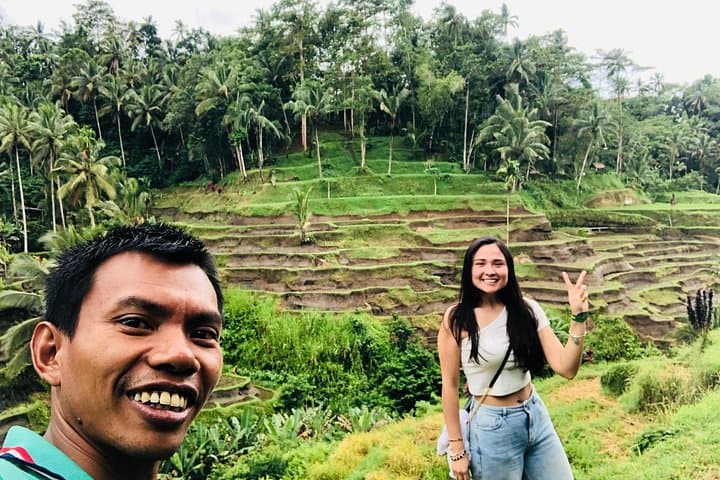
The region’s human story is visible in every contour: Tegallalang’s terraces follow the subak water‑management system attributed to Rsi Markandeya (8th century), and Tirta Empul’s springs have drawn ritual bathers since 926 AD. Geologically, you’re on volcanic soils—deep, fertile loam that sculpts steep rice banks and feeds dense lowland rainforest. Culturally, Balinese Hindu rituals and village irrigation agreements still shape the landscape; visitors are moving through living traditions, not a static site.
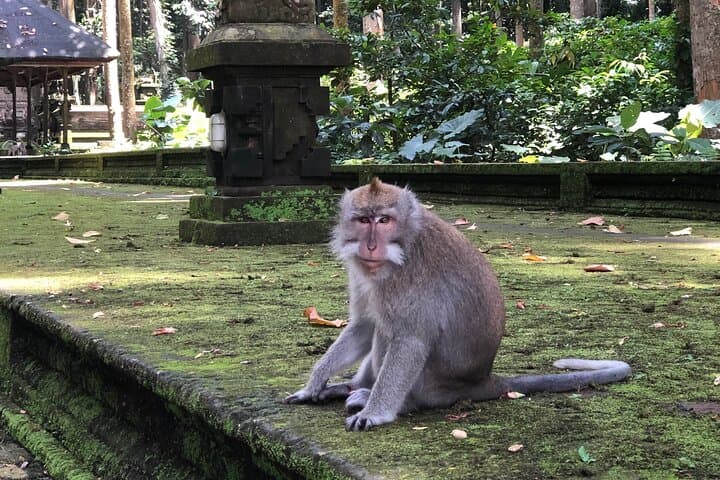
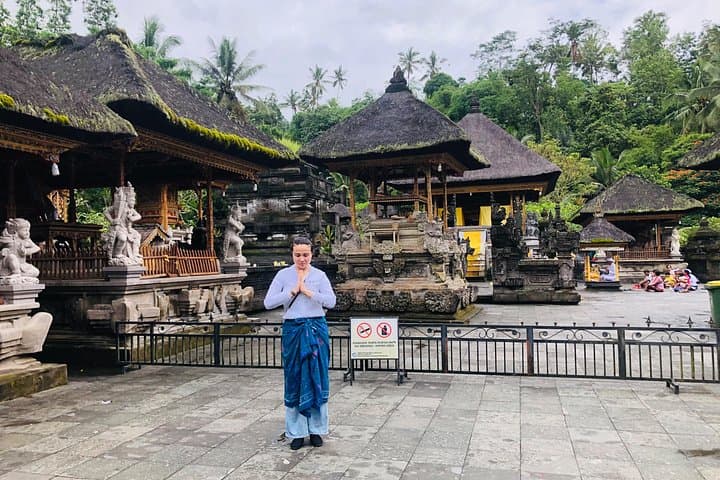
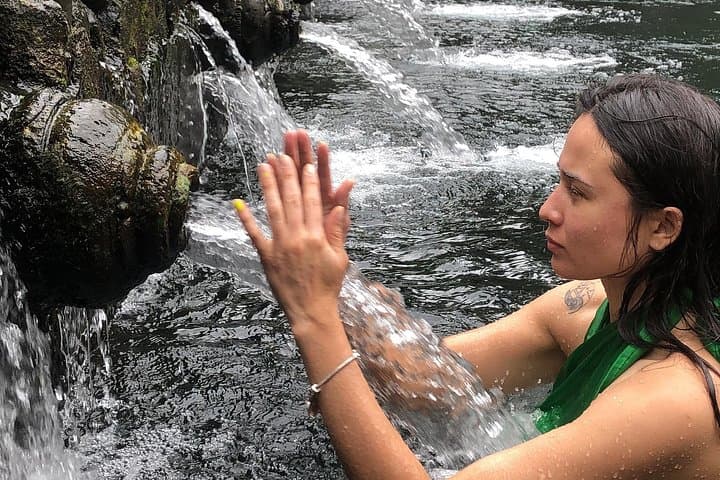
Expect a mix of short walks, steps and uneven village paths rather than long hikes. The Monkey Forest offers close wildlife encounters; at Tegallalang you’ll trade jungle shade for exposed viewpoints and stairwork between terraces. Tirta Empul asks for quiet reverence and a modest dress code (sarongs are commonly required and often provided). Ulu Petanu’s pool is a cooling finale — water inviting the traveler after a warm day.
Practical notes: plan for an 8–10 hour day, wear sturdy shoes for steps and slipperiness near streams, carry a refillable bottle, and bring small change for temple donations and local vendors. Respect monkeys — don’t feed them and secure loose items — and allow extra time for photography at viewpoints.
easy.
8–10 hours.
Light walking and several flights of stairs; suitable for most travelers with average mobility.
Macaques are wild and can snatch food or loose items—observe at a distance, don’t feed them, and follow park staff instructions.
Yes, modest dress is required for the temple. Many tours provide sarongs, but carrying a lightweight wrap is useful if you prefer your own.
Swimming is usually allowed in the pool below the falls but conditions change with rain; check with your guide and avoid strong currents after heavy showers.
Private tours typically include hotel pickup within the Ubud area—confirm your pickup point when booking and allow flexibility for traffic.
Tirta Empul has been a center for ritual purification since 926 AD, and Tegallalang’s terraces reflect the island’s ancient subak irrigation system from around the 8th century.
Visitor pressure affects temples and fragile terrace edges—stick to marked paths, avoid feeding wildlife, and use refillable bottles to reduce plastic pollution.
Sindu Bali Driver operates guided outdoor trips and adventures with an emphasis on safety, stewardship, and memorable experiences.
You step out of an air-conditioned minivan and the jungle leans in — humid air, calls of long‑tailed macaques, and a carved temple gate that frames a green valley. This full-day loop across central Ubud moves from the shaded groves of the Monkey Forest to the stepped green ribs of Tegallalang, then to the stone pools of Tirta Empul and a quiet plunge pool beneath Ulu Petanu.
You step out of an air-conditioned minivan and the jungle leans in — humid air, calls of long‑tailed macaques, and a carved temple gate that frames a green valley. This full-day loop across central Ubud moves from the shaded groves of the Monkey Forest to the stepped green ribs of Tegallalang, then to the stone pools of Tirta Empul and a quiet plunge pool beneath Ulu Petanu.
The region’s human story is visible in every contour: Tegallalang’s terraces follow the subak water‑management system attributed to Rsi Markandeya (8th century), and Tirta Empul’s springs have drawn ritual bathers since 926 AD. Geologically, you’re on volcanic soils—deep, fertile loam that sculpts steep rice banks and feeds dense lowland rainforest. Culturally, Balinese Hindu rituals and village irrigation agreements still shape the landscape; visitors are moving through living traditions, not a static site.
Expect a mix of short walks, steps and uneven village paths rather than long hikes. The Monkey Forest offers close wildlife encounters; at Tegallalang you’ll trade jungle shade for exposed viewpoints and stairwork between terraces. Tirta Empul asks for quiet reverence and a modest dress code (sarongs are commonly required and often provided). Ulu Petanu’s pool is a cooling finale — water inviting the traveler after a warm day.
Practical notes: plan for an 8–10 hour day, wear sturdy shoes for steps and slipperiness near streams, carry a refillable bottle, and bring small change for temple donations and local vendors. Respect monkeys — don’t feed them and secure loose items — and allow extra time for photography at viewpoints.