THE ADVENTURE COLLECTIVE® · Independent discovery and booking for outdoor travel

Step into Ubud’s Monkey Forest for a focused, guided hour among temples, banyans and inquisitive macaques. This skip-the-line ticket pairs cultural context with practical tips so you can enjoy the sanctuary safely and efficiently.
Step into Ubud’s Monkey Forest for a focused, guided hour among temples, banyans and inquisitive macaques. This skip-the-line ticket pairs cultural context with practical tips so you can enjoy the sanctuary safely and efficiently.
A narrow lane opens onto humid shade and a chorus of chattering—lantern-lighted banyans drape over stone paths while long-tailed macaques move like small, opinionated locals through the understorey.
Verified experiences and guided adventures in the surrounding area.
Operated by Bali Lovina Tours · Ubud, Bali
A narrow lane opens onto humid shade and a chorus of chattering—lantern-lighted banyans drape over stone paths while long-tailed macaques move like small, opinionated locals through the understorey.
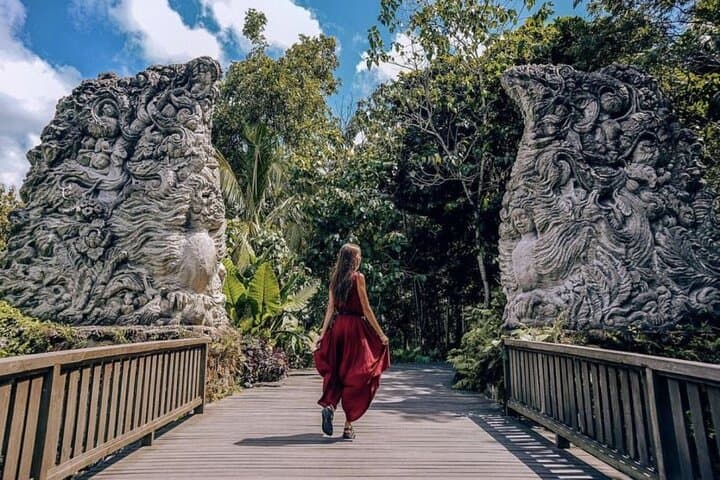
The Sanctuary (Mandala Suci Wenara Wana) sits at the heart of Ubud, its temples dating to the 14th century when Balinese courts and village communities established sacred groves around ritual compounds. The soft volcanic soils of central Bali feed the dense vegetation; streams thread the site and steps lead down to Pura Beji’s bathing terraces. Temple architecture here reflects Majapahit and Balinese carving traditions: stone reliefs, guardian statues and moss-dark niches that give the forest a lived-in, ceremonial feel.
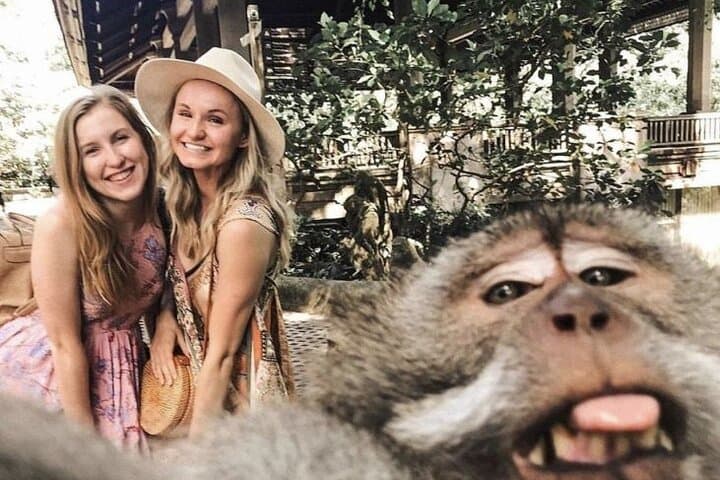
Culturally the site remains active—priests perform offerings and locals maintain the shrines—while park staff manage interactions between visitors and the resident macaque population. That combination of living tradition and wildlife creates moments that are equal parts candid and fragile: monkeys inspect pockets, poses and phones with unselfconscious interest.
Practical guidance: the guided, skip-the-line ticket lasts about an hour and focuses on key temples, Dragon Bridge details and the bathing spring; arrive early to avoid mid-day heat and crowds. Keep water sealed, secure loose items and follow guides’ instructions—do not feed the macaques. Wear closed-toe shoes for uneven stone steps, and plan for short bursts of humidity; bottled water is commonly available at the park entrance. If you want quieter photos, aim for the first hour after opening or late afternoon before closing.
easy.
1 hour.
Suitable for most fitness levels; involves walking on uneven stone steps and short stairs.
Macaques are wild and curious; they can bite or snatch items if provoked—avoid direct eye contact, sudden movements and never attempt to touch a monkey.
The standard guided tour runs about 60 minutes and covers the main temples, bridges and key viewing areas.
Yes—paths have accessible sections and the attraction lists wheelchair and stroller accessibility, though some temple areas have stairs.
Yes—photography is permitted but avoid flash near animals, keep distance when monkeys are feeding or interacting with priests, and secure cameras at all times.
The sanctuary developed around several 14th-century temples, including Pura Dalem Agung Padangtegal, reflecting Ubud’s role as a cultural and ritual center.
Park fees support habitat management and local conservation; don’t feed wildlife and follow signage to reduce stress on the macaque population.
Bali Lovina Tours operates guided outdoor trips and adventures with an emphasis on safety, stewardship, and memorable experiences.
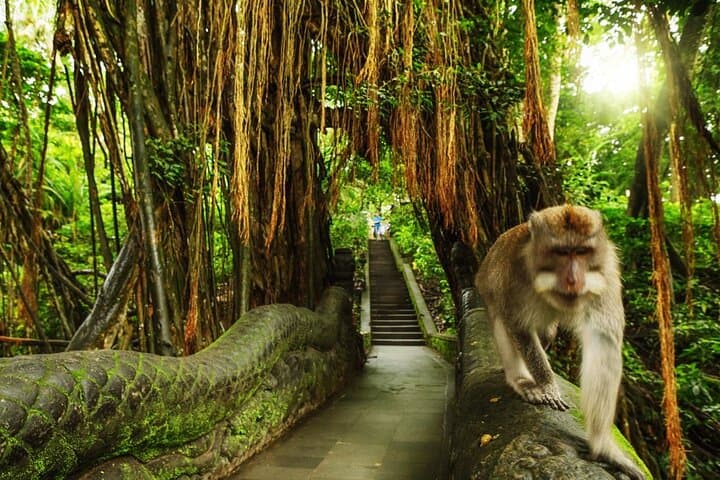
A narrow lane opens onto humid shade and a chorus of chattering—lantern-lighted banyans drape over stone paths while long-tailed macaques move like small, opinionated locals through the understorey.
A narrow lane opens onto humid shade and a chorus of chattering—lantern-lighted banyans drape over stone paths while long-tailed macaques move like small, opinionated locals through the understorey.
The Sanctuary (Mandala Suci Wenara Wana) sits at the heart of Ubud, its temples dating to the 14th century when Balinese courts and village communities established sacred groves around ritual compounds. The soft volcanic soils of central Bali feed the dense vegetation; streams thread the site and steps lead down to Pura Beji’s bathing terraces. Temple architecture here reflects Majapahit and Balinese carving traditions: stone reliefs, guardian statues and moss-dark niches that give the forest a lived-in, ceremonial feel.
Culturally the site remains active—priests perform offerings and locals maintain the shrines—while park staff manage interactions between visitors and the resident macaque population. That combination of living tradition and wildlife creates moments that are equal parts candid and fragile: monkeys inspect pockets, poses and phones with unselfconscious interest.
Practical guidance: the guided, skip-the-line ticket lasts about an hour and focuses on key temples, Dragon Bridge details and the bathing spring; arrive early to avoid mid-day heat and crowds. Keep water sealed, secure loose items and follow guides’ instructions—do not feed the macaques. Wear closed-toe shoes for uneven stone steps, and plan for short bursts of humidity; bottled water is commonly available at the park entrance. If you want quieter photos, aim for the first hour after opening or late afternoon before closing.