THE ADVENTURE COLLECTIVE® · Independent discovery and booking for outdoor travel

A private day tour from Ubud that pairs cinematic waterfalls with sacred springs and the iconic Tegalalang rice terraces. Expect a full day of uneven paths, photogenic light shafts, and close encounters with Balinese ritual—and come prepared to respect both terrain and tradition.
A private day tour from Ubud that pairs cinematic waterfalls with sacred springs and the iconic Tegalalang rice terraces. Expect a full day of uneven paths, photogenic light shafts, and close encounters with Balinese ritual—and come prepared to respect both terrain and tradition.
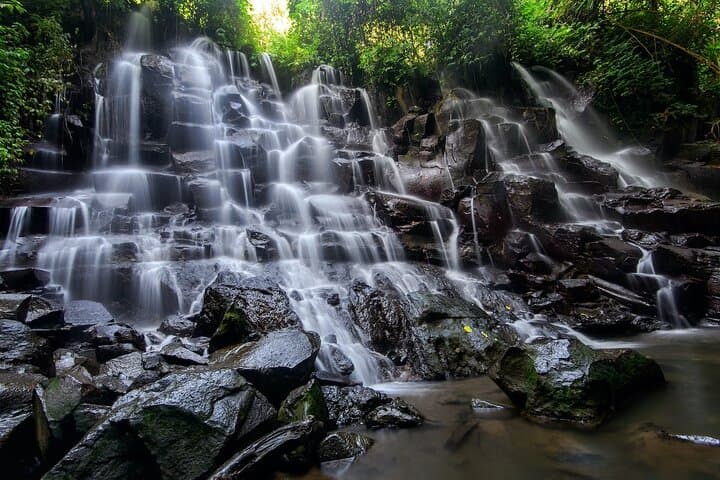
You arrive before the motorbike and minivan traffic swells—a narrow road lined with frangipani and small shrines leads away from Ubud’s center and into greener country. By midmorning the group has already traded the town’s incense-scented bustle for jungle hush: limestone cliffs frame shafts of sunlight at Tukad Cepung, water drums down mossy steps at Kanto Lampo, and the rice terraces of Tegalalang fall away in geometric, living shelves that the light seems to carve into topography.
Verified experiences and guided adventures in the surrounding area.
Operated by Bali Agung Tours · Ubud, Bali
You arrive before the motorbike and minivan traffic swells—a narrow road lined with frangipani and small shrines leads away from Ubud’s center and into greener country. By midmorning the group has already traded the town’s incense-scented bustle for jungle hush: limestone cliffs frame shafts of sunlight at Tukad Cepung, water drums down mossy steps at Kanto Lampo, and the rice terraces of Tegalalang fall away in geometric, living shelves that the light seems to carve into topography.
This private day tour stitches together three different faces of central Bali: the island’s volcanic geology that carves caves and waterfalls through basalt and tuff; the living engineering of the subak rice-irrigation system that shaped terraces like those at Tegalalang; and Tirta Empul, a temple whose holy spring has been a pilgrimage site since roughly the 10th century. Balinese Hindu ritual threads through the day—offerings at stone altars, the measured cadence of purification, and farmers bending low in paddies that still follow time-honored practice.
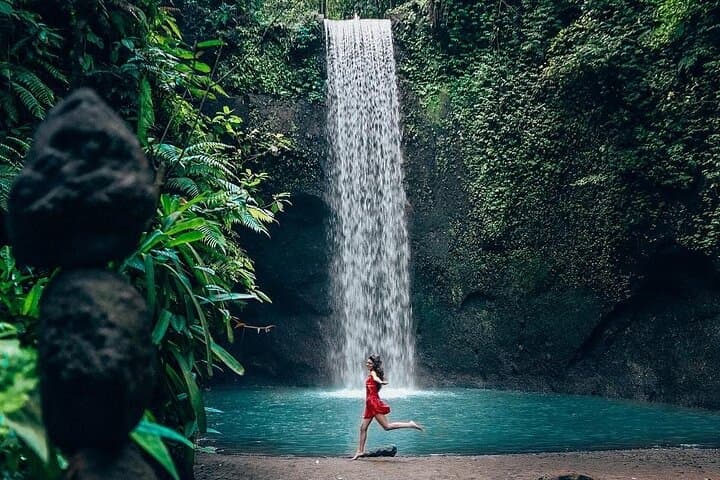
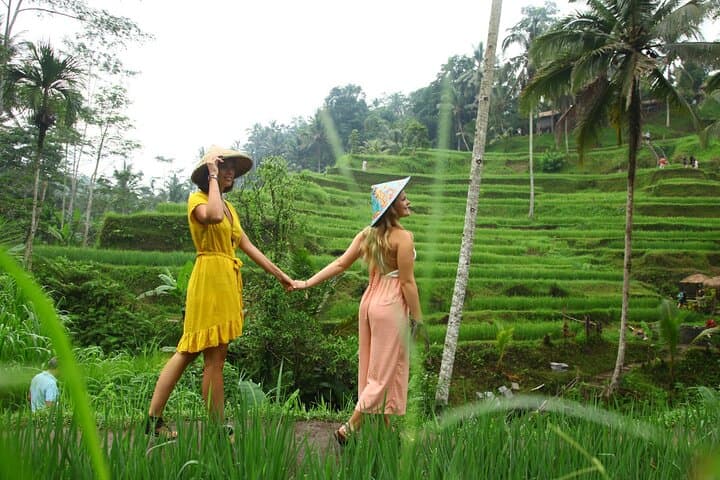
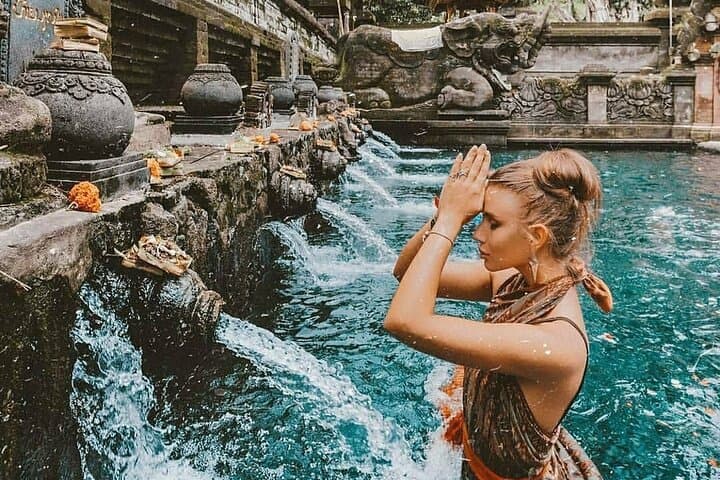
Each stop is compact but distinct. Tukad Cepung’s cave mouth funnels sunbeams into a green-lit chamber where the waterfall acts like a moving lens; Kanto Lampo puts you on the rock, feeling spray and velocity through your clothes; Tibumana offers quieter jungle pools where the current seems to welcome a slow wade. Tirta Empul’s pools are active with worshippers; respect and simple modesty keep the moment intact. Tegalalang’s terraces, by contrast, are theatrical—paths and narrow ridgelines afford long views and a practical lesson in small-scale hydraulics.
Practical edge: expect a long, full day—pickups across south Bali are common so plan for a 9–10 hour schedule. Paths around waterfalls are wet and uneven; bring shoes with real grip and a small dry bag for electronics. Cultural etiquette matters: shoulder-covering and sarongs are often required at temples (sarongs are sometimes available on site but bring your own if you prefer). Hydration is easy—guides typically supply mineral water—but food stops vary: pack snacks if you prefer a specific diet.
Timing and light make or break the photos—early morning and late afternoon yield the softest, most dimensional light at the rice terraces and cave shafts. Above all, pace the day to match the site: move quickly through photo moments at crowded viewpoints and slow down for the temple and the quiet of Tibumana. This is a tour that balances motion with stillness: waterfalls daring you into the present, terraces asking you to read generations of labor in green rows, and a temple that will ask nothing of you but a little reverence.
NearbyCity: Ubud
moderate.
9–10 hours.
Comfortable walking fitness—able to manage 2–4 km on uneven trails and stairs; some short climbs and slippery sections.
Yes—this private tour includes pickup and drop-off from many hotels across south Bali; confirm your exact pickup point when booking.
Entrance fees and parking are listed as included in the tour price—your booking should cover site admissions and local parking charges.
Visitors may observe and often participate; modest dress and respectful behavior are required—your guide will explain local customs and loan sarongs in some cases.
Walking is mostly short and manageable but includes stairs, uneven rock, and slippery zones near waterfalls, so moderate fitness and good footwear are recommended.
At some sites (like Tibumana) shallow swimming or wading is possible depending on conditions; follow your guide’s directions and avoid entering during heavy flow.
Bring a camera or phone with a waterproof case, a small tripod if you use long exposures, and extra batteries—golden hour light is best for terraces and cave shafts.
Tirta Empul dates back to the 10th century and sits within the subak irrigation culture that’s governed Bali’s terrace farming for centuries.
High visitation pressures affect terraces and waterfall trails—stick to marked paths, avoid stepping on rice ridges, and carry out waste to protect fragile terraces and temple sites.
Bali Agung Tours operates guided outdoor trips and adventures with an emphasis on safety, stewardship, and memorable experiences.
You arrive before the motorbike and minivan traffic swells—a narrow road lined with frangipani and small shrines leads away from Ubud’s center and into greener country. By midmorning the group has already traded the town’s incense-scented bustle for jungle hush: limestone cliffs frame shafts of sunlight at Tukad Cepung, water drums down mossy steps at Kanto Lampo, and the rice terraces of Tegalalang fall away in geometric, living shelves that the light seems to carve into topography.
You arrive before the motorbike and minivan traffic swells—a narrow road lined with frangipani and small shrines leads away from Ubud’s center and into greener country. By midmorning the group has already traded the town’s incense-scented bustle for jungle hush: limestone cliffs frame shafts of sunlight at Tukad Cepung, water drums down mossy steps at Kanto Lampo, and the rice terraces of Tegalalang fall away in geometric, living shelves that the light seems to carve into topography.
This private day tour stitches together three different faces of central Bali: the island’s volcanic geology that carves caves and waterfalls through basalt and tuff; the living engineering of the subak rice-irrigation system that shaped terraces like those at Tegalalang; and Tirta Empul, a temple whose holy spring has been a pilgrimage site since roughly the 10th century. Balinese Hindu ritual threads through the day—offerings at stone altars, the measured cadence of purification, and farmers bending low in paddies that still follow time-honored practice.
Each stop is compact but distinct. Tukad Cepung’s cave mouth funnels sunbeams into a green-lit chamber where the waterfall acts like a moving lens; Kanto Lampo puts you on the rock, feeling spray and velocity through your clothes; Tibumana offers quieter jungle pools where the current seems to welcome a slow wade. Tirta Empul’s pools are active with worshippers; respect and simple modesty keep the moment intact. Tegalalang’s terraces, by contrast, are theatrical—paths and narrow ridgelines afford long views and a practical lesson in small-scale hydraulics.
Practical edge: expect a long, full day—pickups across south Bali are common so plan for a 9–10 hour schedule. Paths around waterfalls are wet and uneven; bring shoes with real grip and a small dry bag for electronics. Cultural etiquette matters: shoulder-covering and sarongs are often required at temples (sarongs are sometimes available on site but bring your own if you prefer). Hydration is easy—guides typically supply mineral water—but food stops vary: pack snacks if you prefer a specific diet.
Timing and light make or break the photos—early morning and late afternoon yield the softest, most dimensional light at the rice terraces and cave shafts. Above all, pace the day to match the site: move quickly through photo moments at crowded viewpoints and slow down for the temple and the quiet of Tibumana. This is a tour that balances motion with stillness: waterfalls daring you into the present, terraces asking you to read generations of labor in green rows, and a temple that will ask nothing of you but a little reverence.
NearbyCity: Ubud