THE ADVENTURE COLLECTIVE® · Independent discovery and booking for outdoor travel

Spend a private half day exploring Ubud’s key sights: the Sacred Monkey Forest, terraced rice fields, a mountain-fed waterfall and Tirta Empul holy springs. This all-inclusive tour pairs efficient transport with local guidance and cultural context.
Spend a private half day exploring Ubud’s key sights: the Sacred Monkey Forest, terraced rice fields, a mountain-fed waterfall and Tirta Empul holy springs. This all-inclusive tour pairs efficient transport with local guidance and cultural context.
You step out of the car into a warm, humid morning and the road exhales rice-scented air — Ubud’s green pockets pull you in immediately. The private half-day route threads through a living landscape: a dim, temple-filled forest where long-tailed macaques inspect your shoes; sculpted rice terraces that rise and fall like folded green steps; a mountain-fed waterfall throwing sheets of white water into a cool pool; and the tiled pools of a holy spring where locals perform purification.
Verified experiences and guided adventures in the surrounding area.
Operated by Smile Bali Tours · Ubud, Bali
You step out of the car into a warm, humid morning and the road exhales rice-scented air — Ubud’s green pockets pull you in immediately. The private half-day route threads through a living landscape: a dim, temple-filled forest where long-tailed macaques inspect your shoes; sculpted rice terraces that rise and fall like folded green steps; a mountain-fed waterfall throwing sheets of white water into a cool pool; and the tiled pools of a holy spring where locals perform purification.
These stops connect to Bali’s layered history. Tirta Empul, founded around 962 CE, remains central to Balinese Hindu ritual. The rice terraces are part of the island’s traditional subak irrigation system — a community water-management practice recognized by UNESCO. Geologically, the island’s volcanics feed the springs and rivers, so waterfalls here can swell dramatically after tropical rains.
Culturally the landscape is active: temple ceremonies, offerings on low stone shrines, and rice farmers tending paddies remind you that this is lived-in country, not just scenery. Guides will explain etiquette at temples and why monkeys are both sacred and opportunistic.
Practicalities are straightforward. The private tour covers transport, AC vehicle, entrance fees for main sites, and bottled water, and lasts about six hours. Wear good walking shoes for uneven steps and a quick-dry shirt for humidity. Keep pockets zipped and cameras secured around monkeys. Aim for morning light to avoid heat and crowds and bring a small amount of cash for optional offerings or tips. With a local guide you’ll move efficiently through these dense cultural and natural highlights — a compact, high-value way to experience Ubud’s essential scenes.
easy.
6 hours.
Suitable for most fitness levels; involves short walks at uneven temple sites and terraces
Private transport with air-conditioning, English-speaking guide/driver, entrance/admission fees per the itinerary, and bottled mineral water are included.
You may observe them at close range, but do not feed, touch, or provoke the macaques; follow guide instructions to reduce risk of bites or theft of items.
The tour is classified as easy and family-friendly, but it’s not recommended for those with serious back or heart conditions; some walking involves steps and uneven ground.
The fixed duration is about six hours; pickup times vary by booking and hotel location — confirm exact pickup during reservation.
Tirta Empul was established in the 10th century and remains a focal point for Balinese water-purification rites.
Respect temple rules, avoid feeding wildlife, and support local guides; the subak rice terraces depend on careful water use and community stewardship.
Smile Bali Tours operates guided outdoor trips and adventures with an emphasis on safety, stewardship, and memorable experiences.
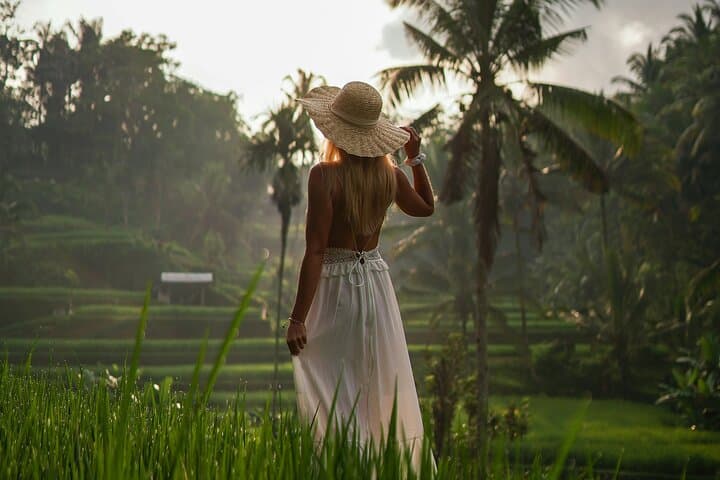


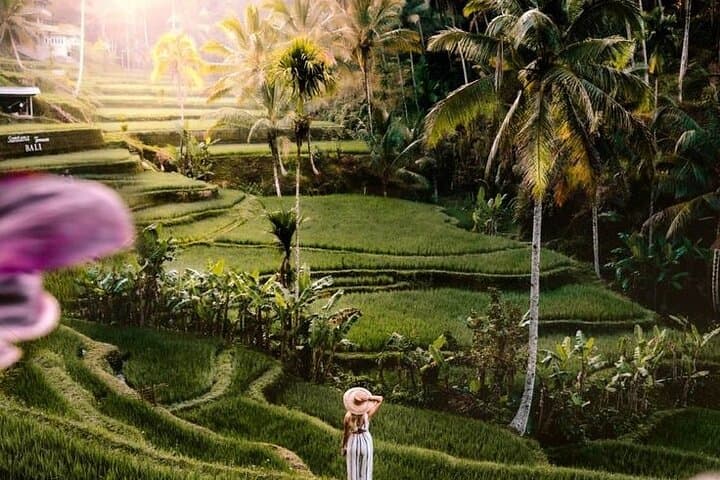
You step out of the car into a warm, humid morning and the road exhales rice-scented air — Ubud’s green pockets pull you in immediately. The private half-day route threads through a living landscape: a dim, temple-filled forest where long-tailed macaques inspect your shoes; sculpted rice terraces that rise and fall like folded green steps; a mountain-fed waterfall throwing sheets of white water into a cool pool; and the tiled pools of a holy spring where locals perform purification.
You step out of the car into a warm, humid morning and the road exhales rice-scented air — Ubud’s green pockets pull you in immediately. The private half-day route threads through a living landscape: a dim, temple-filled forest where long-tailed macaques inspect your shoes; sculpted rice terraces that rise and fall like folded green steps; a mountain-fed waterfall throwing sheets of white water into a cool pool; and the tiled pools of a holy spring where locals perform purification.
These stops connect to Bali’s layered history. Tirta Empul, founded around 962 CE, remains central to Balinese Hindu ritual. The rice terraces are part of the island’s traditional subak irrigation system — a community water-management practice recognized by UNESCO. Geologically, the island’s volcanics feed the springs and rivers, so waterfalls here can swell dramatically after tropical rains.
Culturally the landscape is active: temple ceremonies, offerings on low stone shrines, and rice farmers tending paddies remind you that this is lived-in country, not just scenery. Guides will explain etiquette at temples and why monkeys are both sacred and opportunistic.
Practicalities are straightforward. The private tour covers transport, AC vehicle, entrance fees for main sites, and bottled water, and lasts about six hours. Wear good walking shoes for uneven steps and a quick-dry shirt for humidity. Keep pockets zipped and cameras secured around monkeys. Aim for morning light to avoid heat and crowds and bring a small amount of cash for optional offerings or tips. With a local guide you’ll move efficiently through these dense cultural and natural highlights — a compact, high-value way to experience Ubud’s essential scenes.