THE ADVENTURE COLLECTIVE® · Independent discovery and booking for outdoor travel

Spend a compact half-day exploring Ubud’s living culture: macaques in a sacred forest, sculpted Tegalalang rice terraces, and the refreshing Tegenungan Waterfall. This practical guide covers what to expect, local context, and smart preparation for the trip.
Spend a compact half-day exploring Ubud’s living culture: macaques in a sacred forest, sculpted Tegalalang rice terraces, and the refreshing Tegenungan Waterfall. This practical guide covers what to expect, local context, and smart preparation for the trip.
Morning light brakes through palm fronds as a driver threads narrow lanes toward Ubud’s green heart — the sound of scooters gives way to birds and the rustle of long-tailed macaques. This half-day loop starts at the Padangtegal Monkey Forest, where paths wind between three centuries-old temples and curious monkeys that move like small, watchful crowds. The tour then climbs into the sculpted bowls of Tegalalang, where terraced rice paddies step down a valley carved by community irrigation practices, and finishes at Tegenungan Waterfall, a 15-meter cascade that throws cool mist into a shaded plunge pool.
Verified experiences and guided adventures in the surrounding area.
Operated by Bali Local Host · Ubud, Bali
Morning light brakes through palm fronds as a driver threads narrow lanes toward Ubud’s green heart — the sound of scooters gives way to birds and the rustle of long-tailed macaques. This half-day loop starts at the Padangtegal Monkey Forest, where paths wind between three centuries-old temples and curious monkeys that move like small, watchful crowds. The tour then climbs into the sculpted bowls of Tegalalang, where terraced rice paddies step down a valley carved by community irrigation practices, and finishes at Tegenungan Waterfall, a 15-meter cascade that throws cool mist into a shaded plunge pool.
These sites show Bali’s layered story: Hindu temple culture woven into rainforest ecology, rice terraces shaped by the subak irrigation system that dates back to the 8th century, and waterfalls fed by volcanic terrain and the Petanu River. Local guides explain temple rituals and rice farming while pointing out stone carvings and irrigation channels that keep terraces productive.
Practical guidance: wear sturdy, closed-toe shoes for slippery temple paths and the stairs into Tegenungan; bring a swim suit and quick-dry towel if you plan to enter the pool; carry small change for entrance fees and offerings; keep valuables secured and avoid direct eye contact with monkeys. Expect several short walks and stair sections — moderate mobility required. Aim for early morning or late afternoon to avoid the midday heat and the busiest crowds. The route balances culture, geology and wildlife into a compact, accessible outdoor half-day that introduces the region’s rhythms without demanding full-day trekking.
moderate.
5–6 hours.
Moderate — comfortable walking, some stair climbs, and brief uneven terrain require basic fitness.
The tour lasts about 5–6 hours with short walks at each stop and some stair climbs; it’s a relaxed, guided pace but expect moderate activity.
Macaques can be aggressive around food and valuables — avoid feeding, keep distance, and follow guide instructions to reduce risk of bites or theft.
Swimming is usually possible year-round, though water depth and current change with the rains; follow local warning signs and avoid strong flows during heavy rain.
Yes — bring or borrow a sarong and sash if you plan to enter temple areas; modest clothing is required for religious sites.
The rice terraces reflect the subak cooperative irrigation system, a centuries-old agrarian practice tied to Balinese Hindu temple networks and recognized by UNESCO.
Respect temple boundaries and avoid feeding wildlife; remaining on marked paths reduces erosion on terraces and protects riparian vegetation near the waterfall.
Bali Local Host operates guided outdoor trips and adventures with an emphasis on safety, stewardship, and memorable experiences.
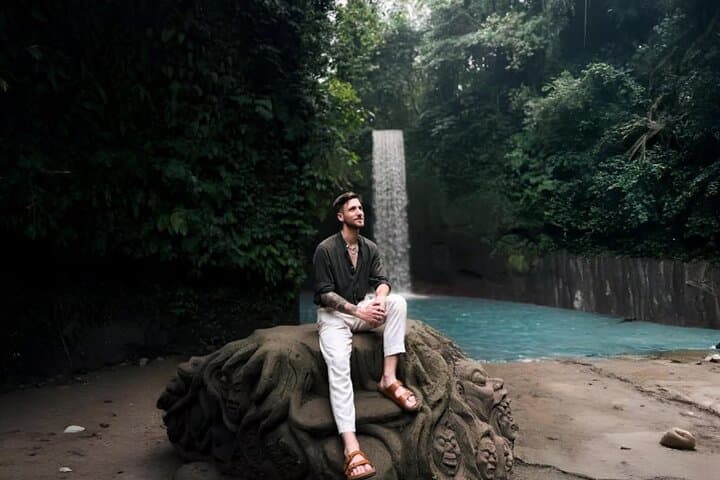
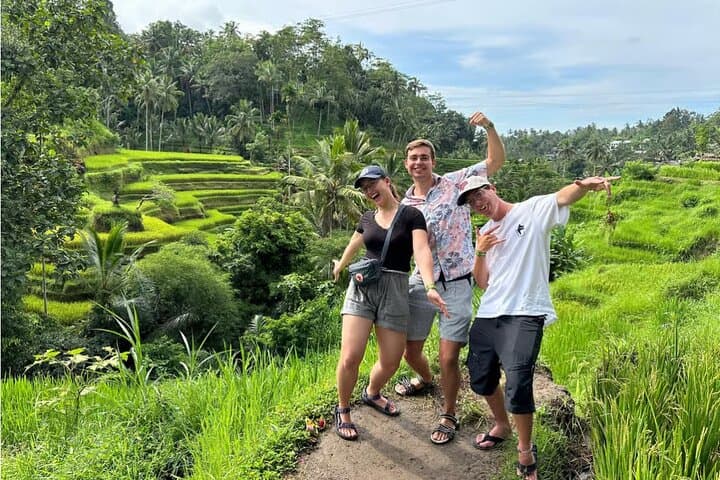
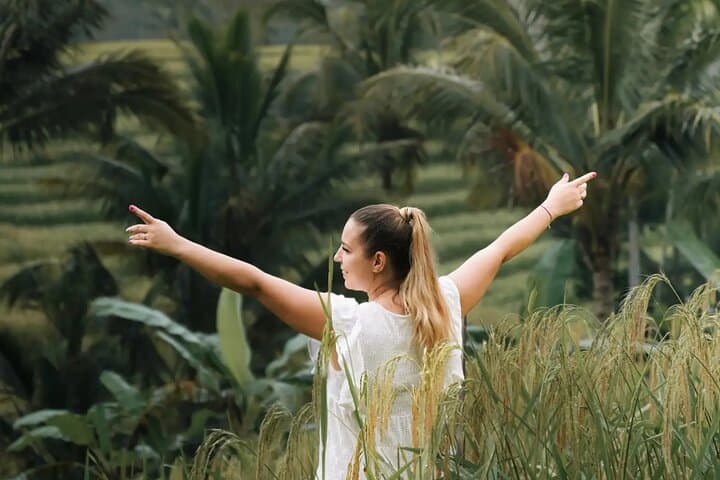
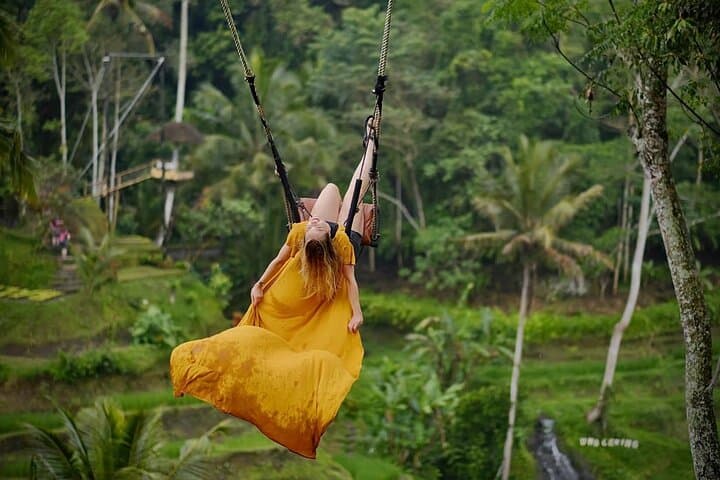
Morning light brakes through palm fronds as a driver threads narrow lanes toward Ubud’s green heart — the sound of scooters gives way to birds and the rustle of long-tailed macaques. This half-day loop starts at the Padangtegal Monkey Forest, where paths wind between three centuries-old temples and curious monkeys that move like small, watchful crowds. The tour then climbs into the sculpted bowls of Tegalalang, where terraced rice paddies step down a valley carved by community irrigation practices, and finishes at Tegenungan Waterfall, a 15-meter cascade that throws cool mist into a shaded plunge pool.
Morning light brakes through palm fronds as a driver threads narrow lanes toward Ubud’s green heart — the sound of scooters gives way to birds and the rustle of long-tailed macaques. This half-day loop starts at the Padangtegal Monkey Forest, where paths wind between three centuries-old temples and curious monkeys that move like small, watchful crowds. The tour then climbs into the sculpted bowls of Tegalalang, where terraced rice paddies step down a valley carved by community irrigation practices, and finishes at Tegenungan Waterfall, a 15-meter cascade that throws cool mist into a shaded plunge pool.
These sites show Bali’s layered story: Hindu temple culture woven into rainforest ecology, rice terraces shaped by the subak irrigation system that dates back to the 8th century, and waterfalls fed by volcanic terrain and the Petanu River. Local guides explain temple rituals and rice farming while pointing out stone carvings and irrigation channels that keep terraces productive.
Practical guidance: wear sturdy, closed-toe shoes for slippery temple paths and the stairs into Tegenungan; bring a swim suit and quick-dry towel if you plan to enter the pool; carry small change for entrance fees and offerings; keep valuables secured and avoid direct eye contact with monkeys. Expect several short walks and stair sections — moderate mobility required. Aim for early morning or late afternoon to avoid the midday heat and the busiest crowds. The route balances culture, geology and wildlife into a compact, accessible outdoor half-day that introduces the region’s rhythms without demanding full-day trekking.