THE ADVENTURE COLLECTIVE® · Independent discovery and booking for outdoor travel

Spend a day around Ubud visiting Goa Gajah, Kintamani’s Mount Batur viewpoint, Tegalalang rice terraces and the Monkey Forest. This full-day loop mixes volcanic scenery, Balinese ritual and easy walks suitable for most travelers.
Spend a day around Ubud visiting Goa Gajah, Kintamani’s Mount Batur viewpoint, Tegalalang rice terraces and the Monkey Forest. This full-day loop mixes volcanic scenery, Balinese ritual and easy walks suitable for most travelers.
You step out of an air-conditioned vehicle into a cooler highland breeze—rice paddies ripple like a living map to your left while Mount Batur looms across the lake, its crater silhouette cutting the sky. The day moves as a sequence of vivid tableaux: dancers in barong masks stilled mid-gesture, monks blessing holy springs, monkeys threading through sacred banyans, and terraces folding down the slopes in near-geometric steps.
Verified experiences and guided adventures in the surrounding area.
Operated by Best Bali Things To Do · Ubud, Bali
You step out of an air-conditioned vehicle into a cooler highland breeze—rice paddies ripple like a living map to your left while Mount Batur looms across the lake, its crater silhouette cutting the sky. The day moves as a sequence of vivid tableaux: dancers in barong masks stilled mid-gesture, monks blessing holy springs, monkeys threading through sacred banyans, and terraces folding down the slopes in near-geometric steps.
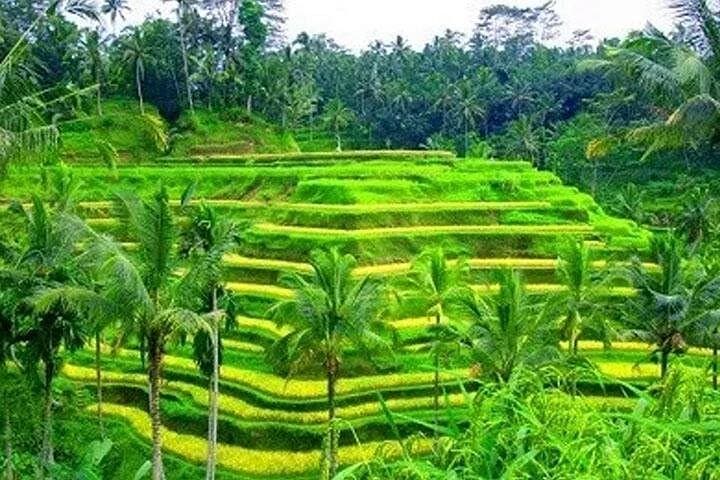
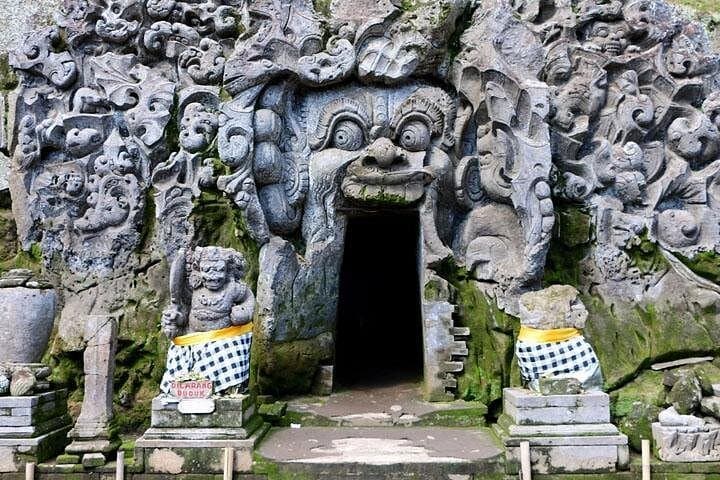
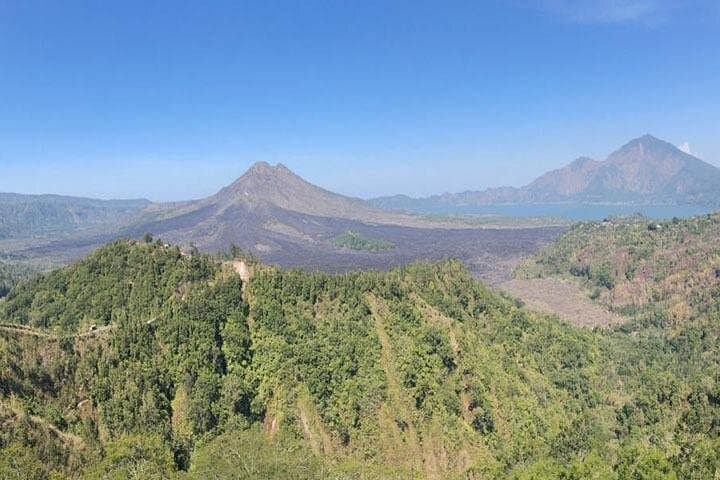
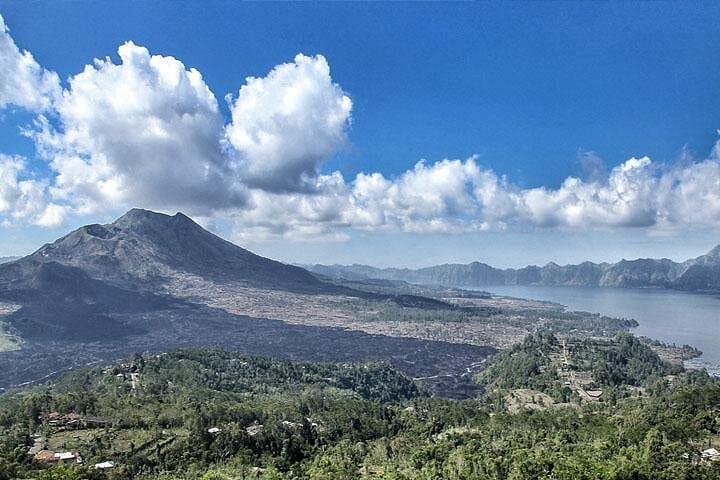
This loop through central Bali blends living Hindu ritual with volcanic geology. Goa Gajah’s carved portal hints at 11th-century ritual practices; the Barong and Kris dance dramatizes Balinese myth drawn from the Mahabharata; and the subak rice-irrigation visible at Tegalalang reflects centuries of cooperative farming. Mount Batur and Lake Batur occupy a caldera formed by massive eruptions, offering a cool, volcanic highland climate that contrasts sharply with Bali’s southern beaches.
Expect short walks and many photo stops rather than strenuous hiking—most sites have steps, stone pathways and modest climbs. Practicalities: temple visits require sarong or modest clothing (often available to rent), carry cash for local entry fees and tips, and bring a light layer for Kintamani’s cooler air. Hydrate between stops and respect wildlife rules at the Monkey Forest—don’t feed or provoke macaques.
Timing matters: an early start keeps the light soft and the crowds thin. If you want deeper context, ask local guides about subak management or Balinese purification rituals; these conversations turn sightseeing into informed appreciation. This is a full-day cultural and landscape sampler—simple to navigate, rich in sensory detail, and anchored in local customs and geology.
easy.
8–10 hours.
Light fitness; able to handle multiple short walks, stone steps, and standing during performances
Most local entrance fees are not included in the base price—expect to pay modest fees for temples, Monkey Forest and some viewpoints in cash.
Yes—private transport typically includes hotel pickup and return within designated areas; specific pickup points will be confirmed at booking.
This is primarily a driving-based tour with short walks of 10–30 minutes at each site; stairs and uneven surfaces are common but no long hikes are required.
Basic English-speaking drivers are usually included; a dedicated guide in other languages may be available for an additional fee—ask when booking.
Goa Gajah and the Barong dance reflect centuries of Balinese Hindu ritual; Tegalalang’s terraces are managed through the traditional subak irrigation system developed by local communities.
The Monkey Forest operates as a protected sanctuary—follow signage and keep a respectful distance; support local conservation by avoiding single-use plastics and using licensed guides.
Best Bali Things To Do operates guided outdoor trips and adventures with an emphasis on safety, stewardship, and memorable experiences.
You step out of an air-conditioned vehicle into a cooler highland breeze—rice paddies ripple like a living map to your left while Mount Batur looms across the lake, its crater silhouette cutting the sky. The day moves as a sequence of vivid tableaux: dancers in barong masks stilled mid-gesture, monks blessing holy springs, monkeys threading through sacred banyans, and terraces folding down the slopes in near-geometric steps.
You step out of an air-conditioned vehicle into a cooler highland breeze—rice paddies ripple like a living map to your left while Mount Batur looms across the lake, its crater silhouette cutting the sky. The day moves as a sequence of vivid tableaux: dancers in barong masks stilled mid-gesture, monks blessing holy springs, monkeys threading through sacred banyans, and terraces folding down the slopes in near-geometric steps.
This loop through central Bali blends living Hindu ritual with volcanic geology. Goa Gajah’s carved portal hints at 11th-century ritual practices; the Barong and Kris dance dramatizes Balinese myth drawn from the Mahabharata; and the subak rice-irrigation visible at Tegalalang reflects centuries of cooperative farming. Mount Batur and Lake Batur occupy a caldera formed by massive eruptions, offering a cool, volcanic highland climate that contrasts sharply with Bali’s southern beaches.
Expect short walks and many photo stops rather than strenuous hiking—most sites have steps, stone pathways and modest climbs. Practicalities: temple visits require sarong or modest clothing (often available to rent), carry cash for local entry fees and tips, and bring a light layer for Kintamani’s cooler air. Hydrate between stops and respect wildlife rules at the Monkey Forest—don’t feed or provoke macaques.
Timing matters: an early start keeps the light soft and the crowds thin. If you want deeper context, ask local guides about subak management or Balinese purification rituals; these conversations turn sightseeing into informed appreciation. This is a full-day cultural and landscape sampler—simple to navigate, rich in sensory detail, and anchored in local customs and geology.