THE ADVENTURE COLLECTIVE® · Independent discovery and booking for outdoor travel

Spend a day with a private driver exploring Ubud’s essentials: playful macaques at the Sacred Monkey Forest, a jungle-fringed dip at Kanto Lampo Waterfall, spiritual learning at a Balinese temple, and the sweeping stair-steps of Tegalalang Rice Terrace. This full-day tour pairs cultural insight with easy walking and local logistics handled for you.
Spend a day with a private driver exploring Ubud’s essentials: playful macaques at the Sacred Monkey Forest, a jungle-fringed dip at Kanto Lampo Waterfall, spiritual learning at a Balinese temple, and the sweeping stair-steps of Tegalalang Rice Terrace. This full-day tour pairs cultural insight with easy walking and local logistics handled for you.
The van pulls away from quiet hotel compound gates while the valley is still cool, and by the time you reach Ubud the air smells of damp earth and jasmine. At the Sacred Monkey Forest Sanctuary, long-tailed macaques move like small, impatient royals—curious, quick, and entirely unconcerned with the human choreography around them. Later, a narrow road dives into green; the driver eases to a stop and you climb through ferns to Kanto Lampo Waterfall, where water threads over volcanic rock and dares you closer with a sudden spray.
Verified experiences and guided adventures in the surrounding area.
Operated by My Travel Bali Trip · Ubud, Bali
The van pulls away from quiet hotel compound gates while the valley is still cool, and by the time you reach Ubud the air smells of damp earth and jasmine. At the Sacred Monkey Forest Sanctuary, long-tailed macaques move like small, impatient royals—curious, quick, and entirely unconcerned with the human choreography around them. Later, a narrow road dives into green; the driver eases to a stop and you climb through ferns to Kanto Lampo Waterfall, where water threads over volcanic rock and dares you closer with a sudden spray.
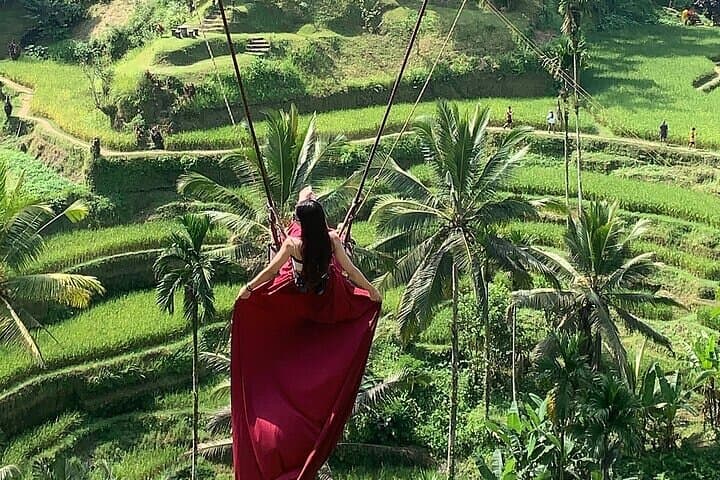
This private full-day loop—about eight to nine hours—maps Ubud’s defining landscapes and cultural stops into a single, easy day. Ubud rose in the early 20th century as a center of art and ritual; its rice terraces are the product of the subak system, a cooperative irrigation practice that has shaped Bali’s hills for centuries and is now recognized by UNESCO. Geologically, the region is young: volcanic soils from Mount Agung and nearby cones yield fertile paddies and quick-moving streams, which carve the stepped terraces that Tegalalang is famous for.
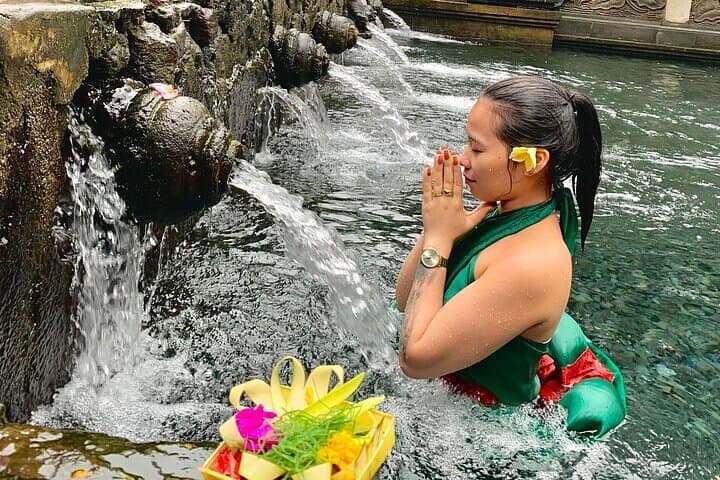
The temple visit in the afternoon cuts into a different rhythm. Offerings of woven palm and frangipani crowd the courtyard; your guide explains the temple calendar and the sense of balance between wet and dry seasons that governs planting, prayers, and daily life. Food is local and immediate—rice, spice, coconut—served at a warung where rice farmers may still pause between tasks.
On the practical side: this tour is private with hotel pick-up, bottled water, and entrance fees included. Wear closed-toe shoes for the waterfall approaches and sturdy sandals for the rice-terrace trails. Keep loose items secure in the Monkey Forest—macaques are deft and opportunistic. Bring small bills for temple donations, and carry a lightweight rain shell if you travel in the monsoon months. Move with patience; narrow paths and local traffic sometimes slow the schedule, but the pace is part of the rhythm here.
For photographers, Tegalalang is best late afternoon when terraces catch the sun’s angle; the waterfall rewards long-exposure shots; the Monkey Forest offers close animal portraits if you keep still and avoid feeding. Above all, treat each site with the same simple respect: no flashes at temples, no sudden moves near the monkeys, and support local vendors when you can. Taken together, the day feels like a compact primer on why Ubud remains Bali’s cultural and agricultural heart—an active landscape that responds to each visitor’s steps.
The private tour runs approximately 8–9 hours with typical pickup around 8:00 AM; exact pickup time can be confirmed when booking.
Entrance fees and bottled water are included; lunch is at your own expense so you can choose from local warung options.
Yes—the activity level is easy with short walks; however, some terrain at waterfalls and terraces can be uneven so notify the operator of mobility concerns.
Photography is allowed but avoid sudden moves and do not feed the macaques; feeding encourages aggressive behavior and is discouraged for safety and conservation reasons.
Modest clothing is required—bring a sarong or wear long pants/shoulders covered; sarongs are often available for rent but bringing your own speeds the visit.
Tours may be canceled or rescheduled in heavy rain or unsafe conditions; the operator follows local safety practices and offers refunds per their policy.
My Travel Bali Trip operates guided outdoor trips and adventures with an emphasis on safety, stewardship, and memorable experiences.
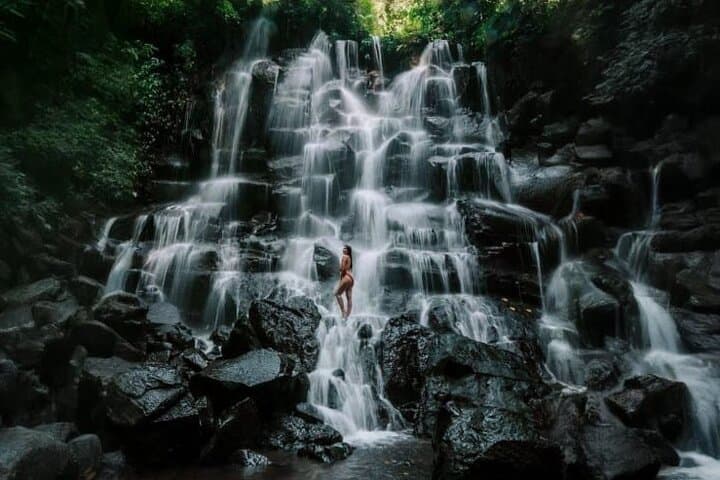
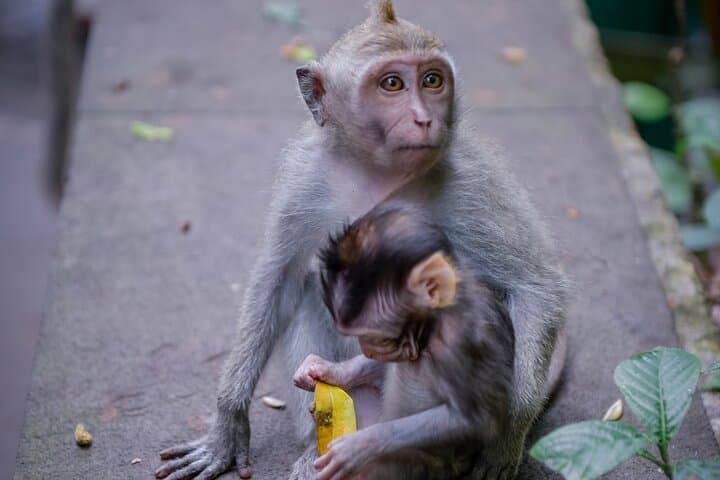
The van pulls away from quiet hotel compound gates while the valley is still cool, and by the time you reach Ubud the air smells of damp earth and jasmine. At the Sacred Monkey Forest Sanctuary, long-tailed macaques move like small, impatient royals—curious, quick, and entirely unconcerned with the human choreography around them. Later, a narrow road dives into green; the driver eases to a stop and you climb through ferns to Kanto Lampo Waterfall, where water threads over volcanic rock and dares you closer with a sudden spray.
The van pulls away from quiet hotel compound gates while the valley is still cool, and by the time you reach Ubud the air smells of damp earth and jasmine. At the Sacred Monkey Forest Sanctuary, long-tailed macaques move like small, impatient royals—curious, quick, and entirely unconcerned with the human choreography around them. Later, a narrow road dives into green; the driver eases to a stop and you climb through ferns to Kanto Lampo Waterfall, where water threads over volcanic rock and dares you closer with a sudden spray.
This private full-day loop—about eight to nine hours—maps Ubud’s defining landscapes and cultural stops into a single, easy day. Ubud rose in the early 20th century as a center of art and ritual; its rice terraces are the product of the subak system, a cooperative irrigation practice that has shaped Bali’s hills for centuries and is now recognized by UNESCO. Geologically, the region is young: volcanic soils from Mount Agung and nearby cones yield fertile paddies and quick-moving streams, which carve the stepped terraces that Tegalalang is famous for.
The temple visit in the afternoon cuts into a different rhythm. Offerings of woven palm and frangipani crowd the courtyard; your guide explains the temple calendar and the sense of balance between wet and dry seasons that governs planting, prayers, and daily life. Food is local and immediate—rice, spice, coconut—served at a warung where rice farmers may still pause between tasks.
On the practical side: this tour is private with hotel pick-up, bottled water, and entrance fees included. Wear closed-toe shoes for the waterfall approaches and sturdy sandals for the rice-terrace trails. Keep loose items secure in the Monkey Forest—macaques are deft and opportunistic. Bring small bills for temple donations, and carry a lightweight rain shell if you travel in the monsoon months. Move with patience; narrow paths and local traffic sometimes slow the schedule, but the pace is part of the rhythm here.
For photographers, Tegalalang is best late afternoon when terraces catch the sun’s angle; the waterfall rewards long-exposure shots; the Monkey Forest offers close animal portraits if you keep still and avoid feeding. Above all, treat each site with the same simple respect: no flashes at temples, no sudden moves near the monkeys, and support local vendors when you can. Taken together, the day feels like a compact primer on why Ubud remains Bali’s cultural and agricultural heart—an active landscape that responds to each visitor’s steps.