THE ADVENTURE COLLECTIVE® · Independent discovery and booking for outdoor travel

Take the throttle through Bali’s jungle tracks and rice fields on an automatic buggy that handles mud, river crossings, and short climbs. This guided off‑road loop includes a safety briefing, practice session, and a route past the Crocodile Cave rock formation.
Take the throttle through Bali’s jungle tracks and rice fields on an automatic buggy that handles mud, river crossings, and short climbs. This guided off‑road loop includes a safety briefing, practice session, and a route past the Crocodile Cave rock formation.
You roar away from the briefing area, mud spraying the sides of your automatic buggy as the canopy of tropical forest closes over the narrow track.
Verified experiences and guided adventures in the surrounding area.
Operated by Batour Net Bali · Ubud, Bali
You roar away from the briefing area, mud spraying the sides of your automatic buggy as the canopy of tropical forest closes over the narrow track.
The route moves between open rice paddies and tighter jungle corridors, briefly opening onto river crossings and a shallow water pit that dares you to pick up speed. The Crocodile Cave section is more a rocky outcrop beside the trail than a deep cavern—its rough limestone edges and nearby bamboo groves add a raw, elemental contrast to the cultivated terraces.
Ubud sits at the heart of central Bali, a region shaped by volcanic soils and the Subak irrigation system introduced centuries ago by Balinese farmers. That human imprint—rice terraces, village tracks, small temples—sits side by side with native teak and bamboo stands and occasional sightings of macaques and water buffalo grazing at field edges.
Practically, the operation runs a thorough safety briefing and practice loop before a roughly two‑hour off‑road circuit across 7 km of track; total on‑site time is about 3–3.5 hours including briefing and transfers. Terrain varies from packed dirt to deep mud, shallow stream crossings, and short climbs—perfect for drivers with basic vehicle skills who want an active, slightly messy outdoor experience.
Bring closed‑toe shoes, a dry change of clothes, and a secure phone case; listen to guides for speed on slick sections and respect rice field boundaries. Midday heat makes early morning or late afternoon departures most comfortable, and staying on designated trails minimizes damage to irrigation and crops. This is an approachable, fun way to sample Bali’s countryside energy with skilled guides and safety gear provided.
moderate.
3–3.5 hours total (includes briefing).
Basic fitness—able to climb in/out of a buggy and handle short walks on uneven ground
Drivers must be able to operate a vehicle; a local driving license is not typically required but the operator will confirm ability during briefing.
The ride is suitable for beginners; minimum driver age is 17 and passengers can be as young as 6 with safety gear and tandem options available.
Closed‑toe shoes and quick‑dry clothing are recommended; most operators provide lockers, towels, soap and showers on site.
Expect muddy sections and shallow river/stream crossings—boots are provided or recommended and guides will advise speed and lines.
Ubud’s landscape is heavily influenced by Bali’s Subak irrigation tradition and volcanic soils that have supported rice cultivation and village settlement for centuries.
Stick to designated tracks to protect irrigation channels and rice paddies; choose operators that follow local waste‑management practices and support community guides.
Batour Net Bali operates guided outdoor trips and adventures with an emphasis on safety, stewardship, and memorable experiences.
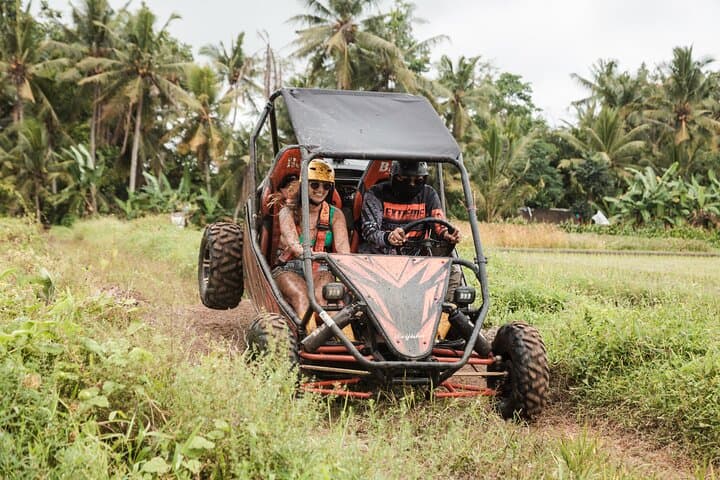



You roar away from the briefing area, mud spraying the sides of your automatic buggy as the canopy of tropical forest closes over the narrow track.
You roar away from the briefing area, mud spraying the sides of your automatic buggy as the canopy of tropical forest closes over the narrow track.
The route moves between open rice paddies and tighter jungle corridors, briefly opening onto river crossings and a shallow water pit that dares you to pick up speed. The Crocodile Cave section is more a rocky outcrop beside the trail than a deep cavern—its rough limestone edges and nearby bamboo groves add a raw, elemental contrast to the cultivated terraces.
Ubud sits at the heart of central Bali, a region shaped by volcanic soils and the Subak irrigation system introduced centuries ago by Balinese farmers. That human imprint—rice terraces, village tracks, small temples—sits side by side with native teak and bamboo stands and occasional sightings of macaques and water buffalo grazing at field edges.
Practically, the operation runs a thorough safety briefing and practice loop before a roughly two‑hour off‑road circuit across 7 km of track; total on‑site time is about 3–3.5 hours including briefing and transfers. Terrain varies from packed dirt to deep mud, shallow stream crossings, and short climbs—perfect for drivers with basic vehicle skills who want an active, slightly messy outdoor experience.
Bring closed‑toe shoes, a dry change of clothes, and a secure phone case; listen to guides for speed on slick sections and respect rice field boundaries. Midday heat makes early morning or late afternoon departures most comfortable, and staying on designated trails minimizes damage to irrigation and crops. This is an approachable, fun way to sample Bali’s countryside energy with skilled guides and safety gear provided.