THE ADVENTURE COLLECTIVE® · Independent discovery and booking for outdoor travel

Launch over the coconut canopy at Bali Swing, meet the macaques in Ubud’s sacred forest, then cool off beneath Tibumana and Kanto Lampo waterfalls — all in a single, well-paced day. Read on for what to expect, local context, and how to pack light for the best photos.
Launch over the coconut canopy at Bali Swing, meet the macaques in Ubud’s sacred forest, then cool off beneath Tibumana and Kanto Lampo waterfalls — all in a single, well-paced day. Read on for what to expect, local context, and how to pack light for the best photos.
You step out of the air-conditioned van and the valley greets you — the air thick with wet earth and the faint tangle of roosters and distant motors. A row of swings hangs at the lip of a ridge, ropes creaking as attendants cast quick smiles and hand over harnesses. On the highest platform, the island opens: coconut palms drop away into rice terraces, a slow river threads the canyon, and the swing literally launches you into that view, the world tilting as the camera clicks.
Verified experiences and guided adventures in the surrounding area.
Operated by Bali Hiking Tour · Ubud, Bali
You step out of the air-conditioned van and the valley greets you — the air thick with wet earth and the faint tangle of roosters and distant motors. A row of swings hangs at the lip of a ridge, ropes creaking as attendants cast quick smiles and hand over harnesses. On the highest platform, the island opens: coconut palms drop away into rice terraces, a slow river threads the canyon, and the swing literally launches you into that view, the world tilting as the camera clicks.
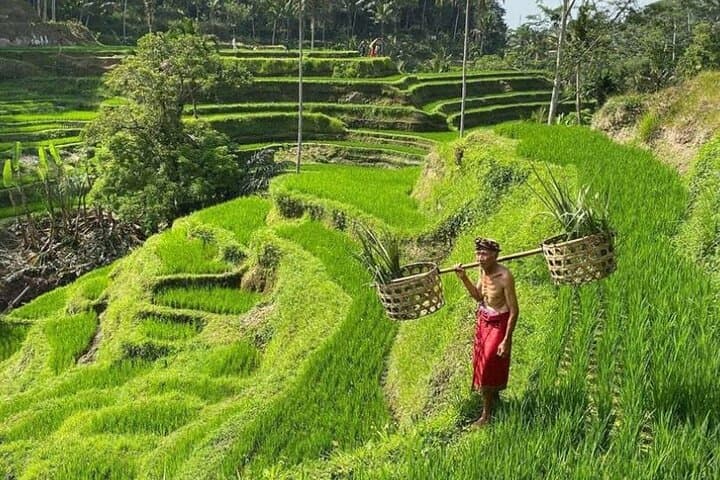
This full-day route — a compact loop from Ubud — stitches together three very different faces of central Bali: adrenaline and photo-ops at the Bali Swing, the ritual and fauna of the Sacred Monkey Forest, and the cool, green hush of Tibumana and Kanto Lampo waterfalls. Geologically, you’re in the volcanic spine of Bali; centuries of eruptions have left steep ravines and abundant springs, which farmers have coaxed into the layered fields you’ll see at Tegalalang. Culturally, Ubud is the island’s spiritual workshop: temples inside the Monkey Forest still play roles in village ceremonies, and every path seems to pass a shrine painted or carved by local artisans.
A practical rhythm governs the day. Pickup from most Ubud accommodations is around 8:30 a.m., and the group size stays small — this operator limits shared tours to about 15 people — so the pace is steady: swings first for better light and fewer crowds, then the monkey sanctuary, followed by rice terrace overlooks and two waterfall stops where short jungle walks drop you to pools cool enough for a quick dip.
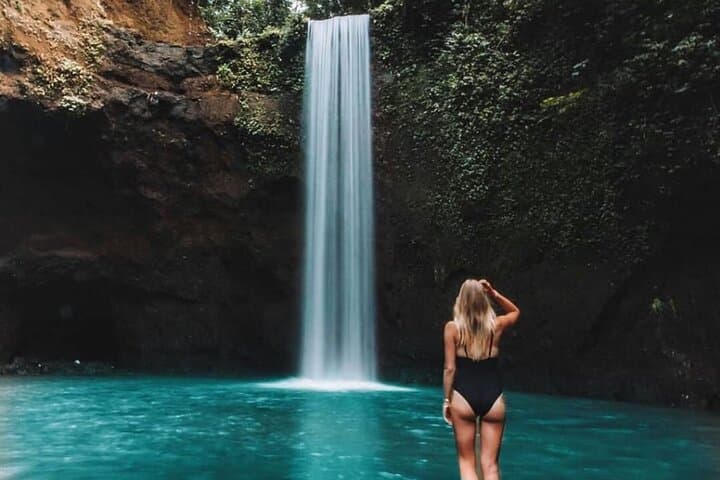
Expect uneven steps at Kanto Lampo and a short jungle approach to Tibumana; both places reward modest effort with photographic angles and splash-friendly pools. At the Monkey Forest, the macaques are charismatic but opportunistic — treat them like curious toddlers: don’t feed them and store loose items. The swing is photo-focused; bring patience and a clue for composition (and a friend to press the shutter).
For planning: close-toed shoes for the waterfalls, swimwear under your clothes if you want to enter a pool, sun protection for the rice terraces, and small bills for souvenirs or warung snacks along the way. The operator provides bottled water, entrance tickets to the main stops, and an air-conditioned vehicle for the transfers — useful if you’re packing a lot into one day.
This itinerary works well as a single, accessible introduction to central Bali — a day that pairs small adventures with cultural context and leaves the evening free for Ubud’s cafés, massages, and rice-side sunsets.
moderate.
6 hours.
Suitable for travelers in average physical condition; involves short walks, steps and light hiking to waterfall pools.
The tour lasts about 6 hours with typical pickup from Ubud hotels around 8:30 a.m.; confirm exact pickup when booking.
Yes — entrance tickets to the Bali Swing, Monkey Forest, Tegalalang and the two waterfalls are included in this tour.
Yes — Tibumana and Kanto Lampo have natural pools suitable for swimming; bring swimwear and be cautious on wet rocks.
Macaques are wild and can be bold; they aren’t typically aggressive but will take food and loose items. Follow guide instructions and avoid direct feeding or sudden movements.
Safety measures vary by park; harnesses are used and attendants assist, but children should be supervised and meet any age/height rules at the swing operator.
Guides commonly speak English and local staff are friendly; transport between stops is in an air-conditioned vehicle.
The Tegalalang terraces are part of Bali’s traditional subak irrigation system — a centuries-old cooperative water management practice tied to Balinese Hindu rituals.
Visitors are encouraged to respect temple areas and avoid littering; the Monkey Forest works on monkey rehabilitation and habitat protection, so follow local rules to reduce human-wildlife conflict.
Bali Hiking Tour operates guided outdoor trips and adventures with an emphasis on safety, stewardship, and memorable experiences.
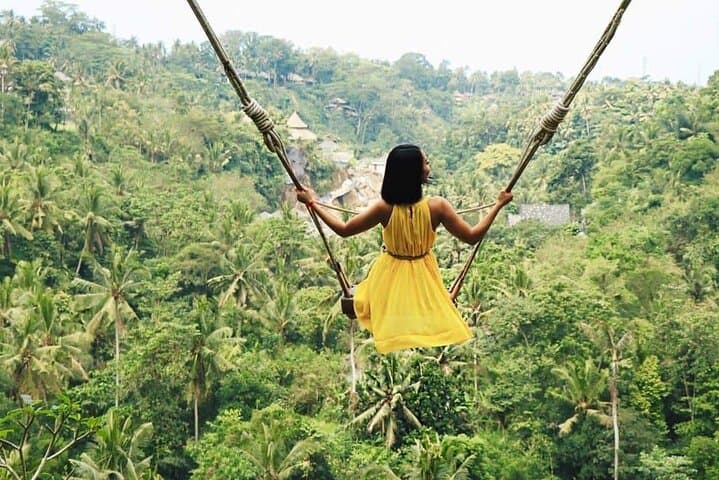
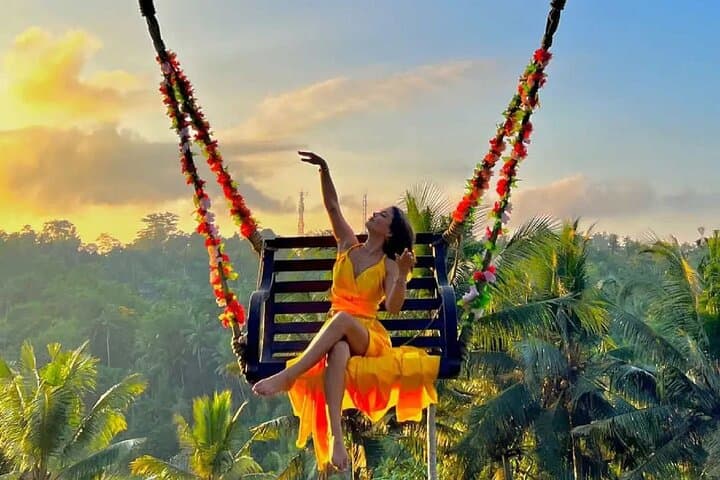
You step out of the air-conditioned van and the valley greets you — the air thick with wet earth and the faint tangle of roosters and distant motors. A row of swings hangs at the lip of a ridge, ropes creaking as attendants cast quick smiles and hand over harnesses. On the highest platform, the island opens: coconut palms drop away into rice terraces, a slow river threads the canyon, and the swing literally launches you into that view, the world tilting as the camera clicks.
You step out of the air-conditioned van and the valley greets you — the air thick with wet earth and the faint tangle of roosters and distant motors. A row of swings hangs at the lip of a ridge, ropes creaking as attendants cast quick smiles and hand over harnesses. On the highest platform, the island opens: coconut palms drop away into rice terraces, a slow river threads the canyon, and the swing literally launches you into that view, the world tilting as the camera clicks.
This full-day route — a compact loop from Ubud — stitches together three very different faces of central Bali: adrenaline and photo-ops at the Bali Swing, the ritual and fauna of the Sacred Monkey Forest, and the cool, green hush of Tibumana and Kanto Lampo waterfalls. Geologically, you’re in the volcanic spine of Bali; centuries of eruptions have left steep ravines and abundant springs, which farmers have coaxed into the layered fields you’ll see at Tegalalang. Culturally, Ubud is the island’s spiritual workshop: temples inside the Monkey Forest still play roles in village ceremonies, and every path seems to pass a shrine painted or carved by local artisans.
A practical rhythm governs the day. Pickup from most Ubud accommodations is around 8:30 a.m., and the group size stays small — this operator limits shared tours to about 15 people — so the pace is steady: swings first for better light and fewer crowds, then the monkey sanctuary, followed by rice terrace overlooks and two waterfall stops where short jungle walks drop you to pools cool enough for a quick dip.
Expect uneven steps at Kanto Lampo and a short jungle approach to Tibumana; both places reward modest effort with photographic angles and splash-friendly pools. At the Monkey Forest, the macaques are charismatic but opportunistic — treat them like curious toddlers: don’t feed them and store loose items. The swing is photo-focused; bring patience and a clue for composition (and a friend to press the shutter).
For planning: close-toed shoes for the waterfalls, swimwear under your clothes if you want to enter a pool, sun protection for the rice terraces, and small bills for souvenirs or warung snacks along the way. The operator provides bottled water, entrance tickets to the main stops, and an air-conditioned vehicle for the transfers — useful if you’re packing a lot into one day.
This itinerary works well as a single, accessible introduction to central Bali — a day that pairs small adventures with cultural context and leaves the evening free for Ubud’s cafés, massages, and rice-side sunsets.