THE ADVENTURE COLLECTIVE® · Independent discovery and booking for outdoor travel

A full‑day circuit from Ubud that blends the adrenaline of Bali Swing with cultural stops at the Sacred Monkey Forest and the calm of Tibumana and Kanto Lampo waterfalls. Ideal for travelers who want a compact taste of central Bali’s landscapes, temples and rice terraces in one active day.
A full‑day circuit from Ubud that blends the adrenaline of Bali Swing with cultural stops at the Sacred Monkey Forest and the calm of Tibumana and Kanto Lampo waterfalls. Ideal for travelers who want a compact taste of central Bali’s landscapes, temples and rice terraces in one active day.
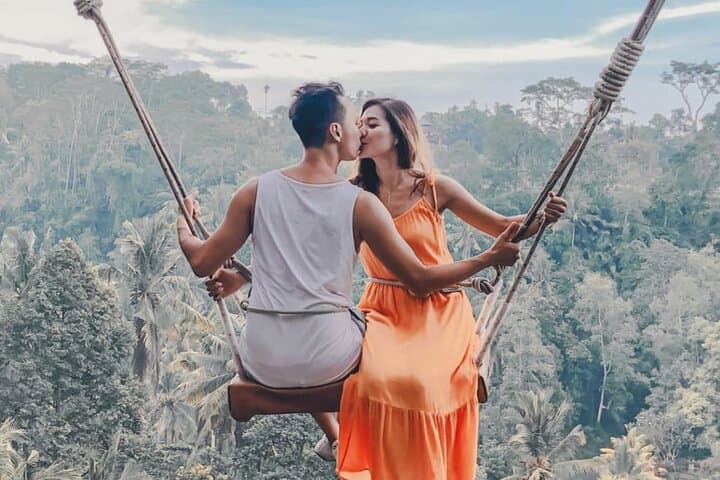
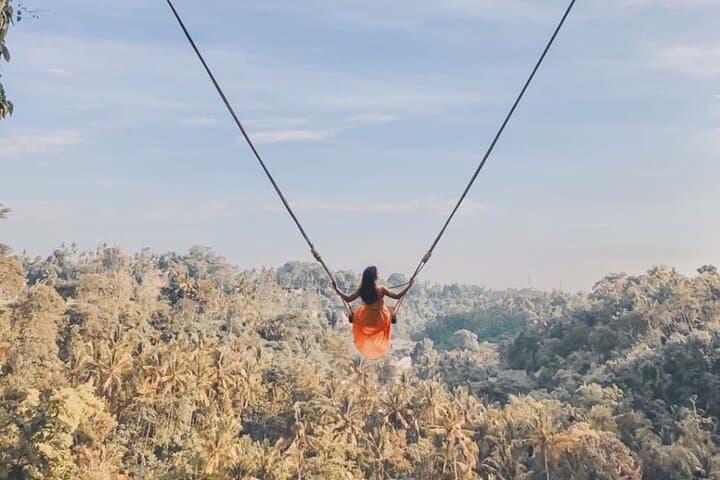
You step off the van before sunrise and the air is already warm, carrying the scent of wet earth and frying tempeh from a roadside warung. A rope swing hangs above a carved valley; a local attendant steadies the platform while the valley below waits—rice terraces like a series of green steps and a river threading the bottom. This is the opening act of a ten‑hour loop out of Ubud that stitches together adrenaline, culture and a handful of Bali’s best short hikes.
Verified experiences and guided adventures in the surrounding area.
Operated by Ubud Driver · Ubud, Bali
You step off the van before sunrise and the air is already warm, carrying the scent of wet earth and frying tempeh from a roadside warung. A rope swing hangs above a carved valley; a local attendant steadies the platform while the valley below waits—rice terraces like a series of green steps and a river threading the bottom. This is the opening act of a ten‑hour loop out of Ubud that stitches together adrenaline, culture and a handful of Bali’s best short hikes.
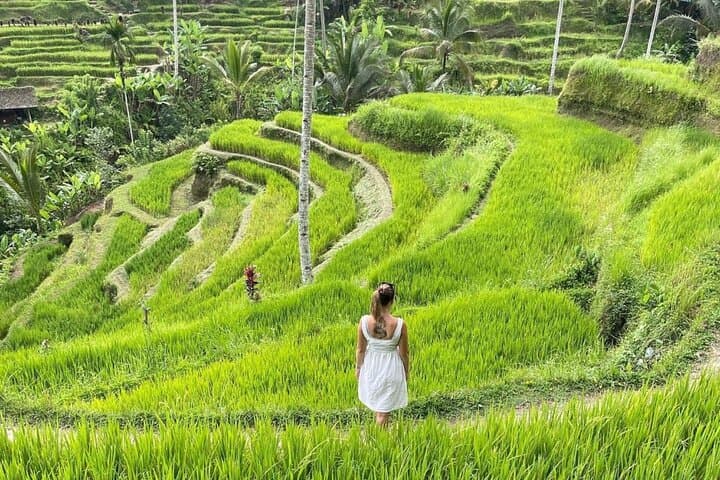
The itinerary moves like a curated film reel: the Bali Swing first, where engineered photo platforms throw you into landscape-scale perspectives; then the Sacred Monkey Forest, a living temple complex where long‑tailed macaques roam around 14th‑century shrines. From there the route climbs—figuratively—into the agricultural heart of the island at Tegalalang, whose terraces run on the subak system, a cooperative irrigation model that dates back a millennium and explains how Balinese communities turned steep volcanic slopes into sustainable paddies.
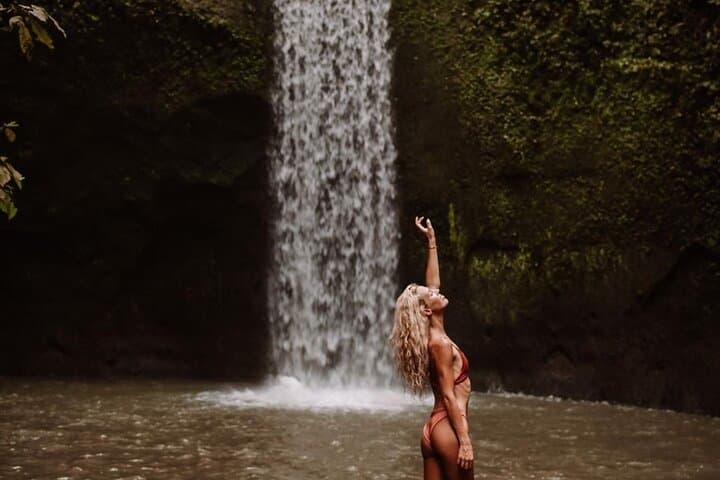
Geology is visible at every stop. The region’s volcanic soils make ricefields intensely green and waterfalls possible: Tibumana drops from a narrow lip into a calm pool framed by dense jungle, while Kanto Lampo spills across irregular rock steps, breaking the flow into photo‑friendly cascades. Culturally the day loops through Hindu temple rites, rice cultivation rituals and contemporary tourist ecosystems—local guides, entrance fees that maintain sites, and small businesses hawking coffee and sarongs.
Practically, expect a lot of short walks—uneven stone steps, river‑rock approaches and muddy patches after rain. You’ll spend 10–12 minutes swinging or posing at Bali Swing photo spots, 60–90 minutes wandering the Monkey Forest paths, and another hour at each waterfall if you linger and swim.
Bring sturdy, grippy footwear for wet rocks, a swimsuit and quick‑dry towel for Tibumana and Kanto Lampo, and a lightweight daypack for water, sunscreen and a change of clothes. Hydration is easy—bottled water is provided—but dress in layers: mornings can be cool in the valleys and midday humid.
Timing matters: start early to avoid Ubud traffic and the largest crowds at Bali Swing and Tegalalang. Respect the monkeys—no sudden movements or loose food—and honor temple areas by observing any signage and wearing a sarong where requested. This route gives an efficient, sensory tour of central Bali: thrill, history, geology and a clear set of steps to enjoy them without wasting a day.
moderate.
10–12 hours.
Light to moderate fitness—must be able to walk on uneven steps and short jungle paths; swimming is optional but recommended.
The tour is about 10 hours from pickup to return—expect multiple 30–120 minute stops with short walks and light hiking between viewpoints.
Entrance tickets for the Monkey Forest, Tegalalang, Tibumana and some Bali Swing packages are included as listed in the tour inclusions.
Yes—Tibumana has a calm pool suitable for swimming; Kanto Lampo is shallower but can be waded safely. Use caution on rocks and currents.
Children can enjoy the sanctuary but must be supervised closely—monkeys are wild and may grab food or belongings if not managed.
Bring small change for optional purchases—coffee, snacks or local tips—as some vendors or additional photo services may not accept cards.
Modest clothing is preferred; sarongs are sometimes required for temple areas—guides or onsite vendors often rent them if needed.
The rice terraces around Tegalalang operate on Bali’s ancient subak irrigation system, a community approach to water management tied to local temples and rituals.
Visitors are asked not to feed monkeys, to stay on designated paths through rice terraces, and to minimize plastic waste to protect water quality and local ecosystems.
Ubud Driver operates guided outdoor trips and adventures with an emphasis on safety, stewardship, and memorable experiences.
You step off the van before sunrise and the air is already warm, carrying the scent of wet earth and frying tempeh from a roadside warung. A rope swing hangs above a carved valley; a local attendant steadies the platform while the valley below waits—rice terraces like a series of green steps and a river threading the bottom. This is the opening act of a ten‑hour loop out of Ubud that stitches together adrenaline, culture and a handful of Bali’s best short hikes.
You step off the van before sunrise and the air is already warm, carrying the scent of wet earth and frying tempeh from a roadside warung. A rope swing hangs above a carved valley; a local attendant steadies the platform while the valley below waits—rice terraces like a series of green steps and a river threading the bottom. This is the opening act of a ten‑hour loop out of Ubud that stitches together adrenaline, culture and a handful of Bali’s best short hikes.
The itinerary moves like a curated film reel: the Bali Swing first, where engineered photo platforms throw you into landscape-scale perspectives; then the Sacred Monkey Forest, a living temple complex where long‑tailed macaques roam around 14th‑century shrines. From there the route climbs—figuratively—into the agricultural heart of the island at Tegalalang, whose terraces run on the subak system, a cooperative irrigation model that dates back a millennium and explains how Balinese communities turned steep volcanic slopes into sustainable paddies.
Geology is visible at every stop. The region’s volcanic soils make ricefields intensely green and waterfalls possible: Tibumana drops from a narrow lip into a calm pool framed by dense jungle, while Kanto Lampo spills across irregular rock steps, breaking the flow into photo‑friendly cascades. Culturally the day loops through Hindu temple rites, rice cultivation rituals and contemporary tourist ecosystems—local guides, entrance fees that maintain sites, and small businesses hawking coffee and sarongs.
Practically, expect a lot of short walks—uneven stone steps, river‑rock approaches and muddy patches after rain. You’ll spend 10–12 minutes swinging or posing at Bali Swing photo spots, 60–90 minutes wandering the Monkey Forest paths, and another hour at each waterfall if you linger and swim.
Bring sturdy, grippy footwear for wet rocks, a swimsuit and quick‑dry towel for Tibumana and Kanto Lampo, and a lightweight daypack for water, sunscreen and a change of clothes. Hydration is easy—bottled water is provided—but dress in layers: mornings can be cool in the valleys and midday humid.
Timing matters: start early to avoid Ubud traffic and the largest crowds at Bali Swing and Tegalalang. Respect the monkeys—no sudden movements or loose food—and honor temple areas by observing any signage and wearing a sarong where requested. This route gives an efficient, sensory tour of central Bali: thrill, history, geology and a clear set of steps to enjoy them without wasting a day.