THE ADVENTURE COLLECTIVE® · Independent discovery and booking for outdoor travel

Throttle up and cross rice fields, rivers, and shaded forest trails on an ATV around Ubud. This two-hour loop blends short technical climbs, village lanes and fast open tracks—perfect for riders who want a compact, high-adrenaline view of Bali’s countryside.
Throttle up and cross rice fields, rivers, and shaded forest trails on an ATV around Ubud. This two-hour loop blends short technical climbs, village lanes and fast open tracks—perfect for riders who want a compact, high-adrenaline view of Bali’s countryside.
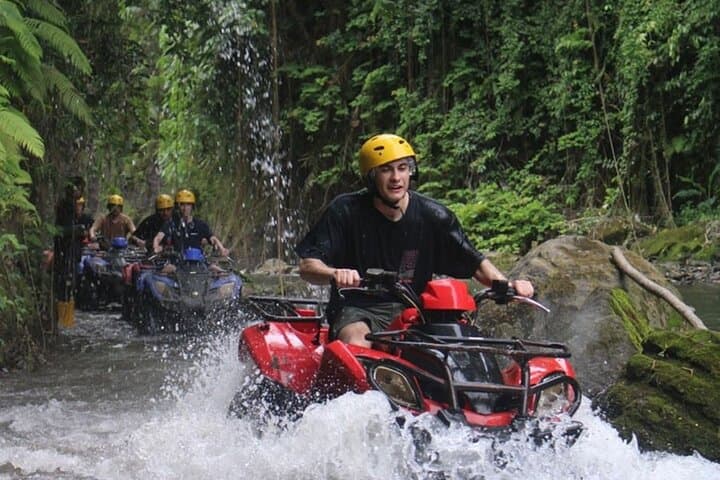
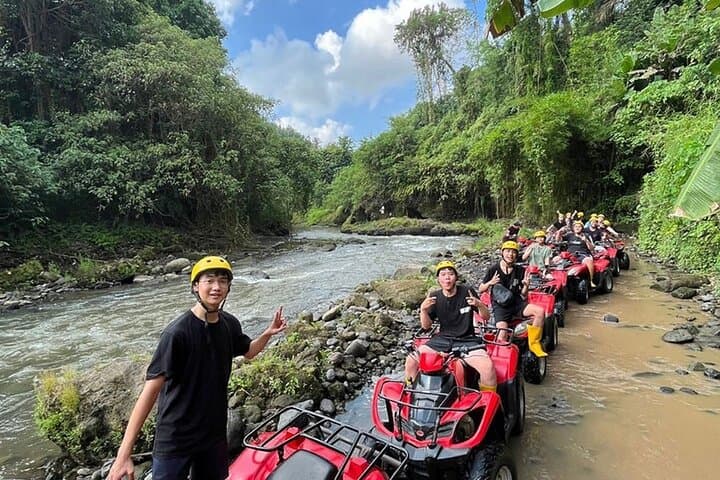
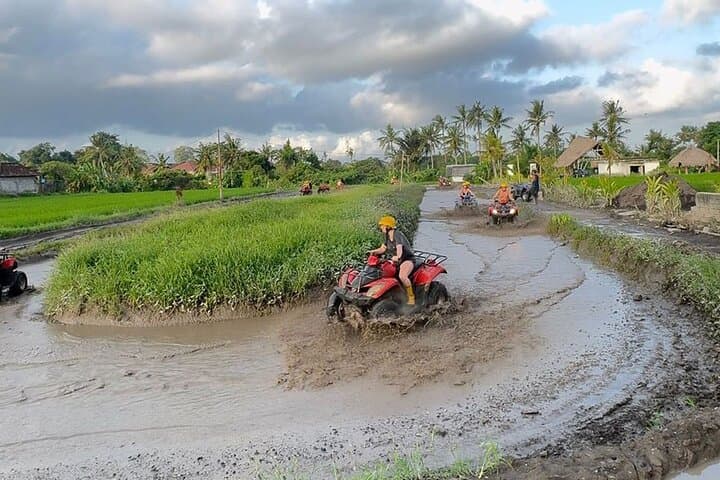
You kick the throttle and the world narrows to churned earth and a ribbon of track. Palms skim past, a river dares you at a shallow ford, and terraces of rice run in green steps to the valley below. In two hours the route threads village lanes, muddy climbs and shaded trails—an up-close, noisy way to read Ubud’s countryside.
Verified experiences and guided adventures in the surrounding area.
Operated by Bali Touristic · Ubud, Bali
You kick the throttle and the world narrows to churned earth and a ribbon of track. Palms skim past, a river dares you at a shallow ford, and terraces of rice run in green steps to the valley below. In two hours the route threads village lanes, muddy climbs and shaded trails—an up-close, noisy way to read Ubud’s countryside.
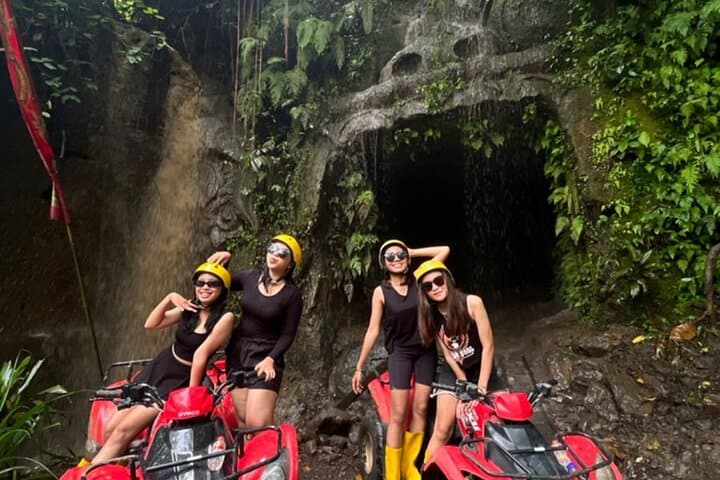
This area of central Bali sits on volcanic soils shaped by ancient eruptions; terraces and streams follow the gentle gradients carved by runoff and human engineering. Ubud itself grew as an arts and ritual center, and many of the tiny villages you pass still maintain temple shrines, rice-irrigation channels (subak) and wooden houses with carved gates.
Expect off-road technical sections: short, steep climbs, undulating single-track and occasional water crossings. Guides brief beginners on basic throttle control and braking; the machines are sturdy but require attention on loose rock and wet clay. The route is compact—roughly 8–12 kilometers of track depending on operator routing—but dense with variety.
Plan for heat and mud: arrive early to avoid mid-day sun, wear long pants and closed-toe shoes, and bring a small daypack with water and your camera. Pay attention to the safety briefing, follow the guide’s line through tricky sections, and leave space between riders to handle sudden stops. The ride is best in the dry months when traction is predictable; during the rains mud adds challenge and cleanup.
For travelers seeking a short, high-adrenaline way to see Bali’s agricultural landscapes, an Ubud ATV run delivers tactile, immediate contact with the island’s living countryside.
moderate.
2 hours.
Suitable for most activity levels; you should be steady on your feet and able to handle short bursts of core engagement to shift weight on the ATV.
No—operators provide a safety briefing and basic instruction; guided rides accommodate beginners and first-time riders.
Not recommended for pregnant travelers or those with recent back/neck injuries or serious heart conditions; weight limits may apply for tandem rides.
Yes—standard helmets and often ATV boots are provided; bring your own goggles if you prefer tighter eye protection.
Tours may be canceled or modified in heavy rain for safety; many operators allow free cancellation up to 24 hours prior.
Ubud’s surrounding villages are part of centuries-old rice-growing systems; the subak irrigation cooperative shaped local settlement and ceremonial life.
Stick to established tracks to avoid damaging terraces and young crops; many operators support local communities and follow rules to minimize erosion and litter.
Bali Touristic operates guided outdoor trips and adventures with an emphasis on safety, stewardship, and memorable experiences.
You kick the throttle and the world narrows to churned earth and a ribbon of track. Palms skim past, a river dares you at a shallow ford, and terraces of rice run in green steps to the valley below. In two hours the route threads village lanes, muddy climbs and shaded trails—an up-close, noisy way to read Ubud’s countryside.
You kick the throttle and the world narrows to churned earth and a ribbon of track. Palms skim past, a river dares you at a shallow ford, and terraces of rice run in green steps to the valley below. In two hours the route threads village lanes, muddy climbs and shaded trails—an up-close, noisy way to read Ubud’s countryside.
This area of central Bali sits on volcanic soils shaped by ancient eruptions; terraces and streams follow the gentle gradients carved by runoff and human engineering. Ubud itself grew as an arts and ritual center, and many of the tiny villages you pass still maintain temple shrines, rice-irrigation channels (subak) and wooden houses with carved gates.
Expect off-road technical sections: short, steep climbs, undulating single-track and occasional water crossings. Guides brief beginners on basic throttle control and braking; the machines are sturdy but require attention on loose rock and wet clay. The route is compact—roughly 8–12 kilometers of track depending on operator routing—but dense with variety.
Plan for heat and mud: arrive early to avoid mid-day sun, wear long pants and closed-toe shoes, and bring a small daypack with water and your camera. Pay attention to the safety briefing, follow the guide’s line through tricky sections, and leave space between riders to handle sudden stops. The ride is best in the dry months when traction is predictable; during the rains mud adds challenge and cleanup.
For travelers seeking a short, high-adrenaline way to see Bali’s agricultural landscapes, an Ubud ATV run delivers tactile, immediate contact with the island’s living countryside.