THE ADVENTURE COLLECTIVE® · Independent discovery and booking for outdoor travel

Spend a full day tracing Bali’s cultural spine from Celuk’s carving workshops to the sacred pools of Tirta Empul, the layered courtyards of Besakih Mother Temple, and the light-drenched canyon of Tukad Cepung. This private tour blends craft, ritual, and dramatic landscapes into one long, accessible day.
Spend a full day tracing Bali’s cultural spine from Celuk’s carving workshops to the sacred pools of Tirta Empul, the layered courtyards of Besakih Mother Temple, and the light-drenched canyon of Tukad Cepung. This private tour blends craft, ritual, and dramatic landscapes into one long, accessible day.
The morning begins on rice-lined roads outside Ubud as the driver eases the air-conditioned van through villages toward the island’s volcanic spine. Humidity lifts off banana leaves; temple bells and rooster calls punctuate the ride. In Celuk, the steady rhythm of chisels and mallets creates a human soundtrack — artisans coaxing wood into masks and reliefs that carry centuries of ritual meaning.
Verified experiences and guided adventures in the surrounding area.
Operated by Bali Exotic Trip · Ubud, Bali
The morning begins on rice-lined roads outside Ubud as the driver eases the air-conditioned van through villages toward the island’s volcanic spine. Humidity lifts off banana leaves; temple bells and rooster calls punctuate the ride. In Celuk, the steady rhythm of chisels and mallets creates a human soundtrack — artisans coaxing wood into masks and reliefs that carry centuries of ritual meaning.
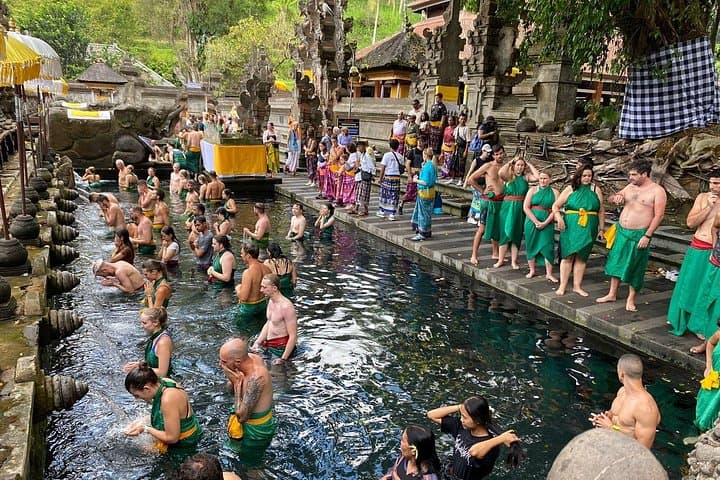
From craft alleys the route climbs toward Tirta Empul, where cool spring water threads through stone showers. The temple’s pools invite a deliberate pause: pilgrims move through cleansing jets with practiced ritual, and visitors watch a living practice of Balinese Hindu devotion beside mossed shrines.
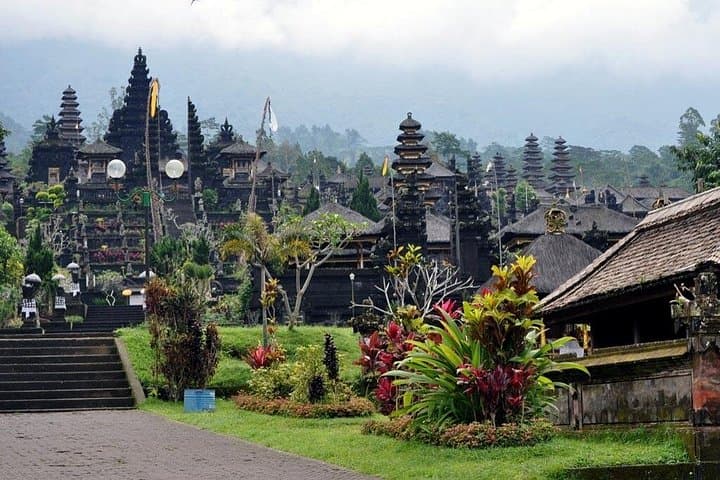
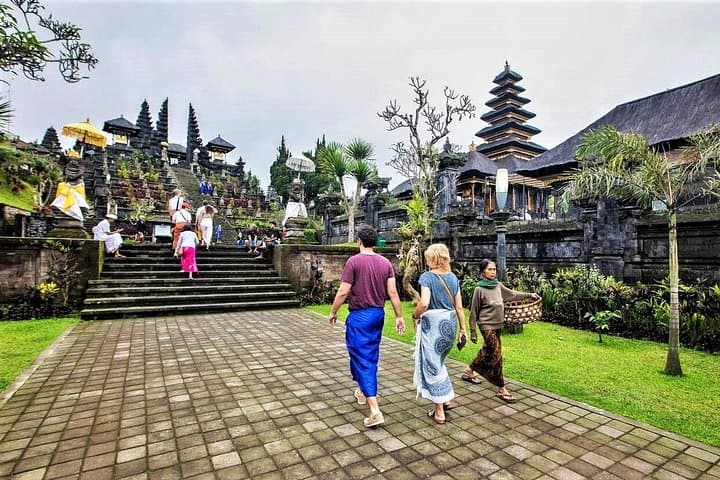
Further east, the terraces open toward Mount Agung. Besakih, the Mother Temple, sits on a lava-formed slope, its layered courtyards encoding Bali’s ritual geography and linking islanders to the volcano’s presence. The complex’s stonework and procession paths reflect temple-building traditions repeated across generations.
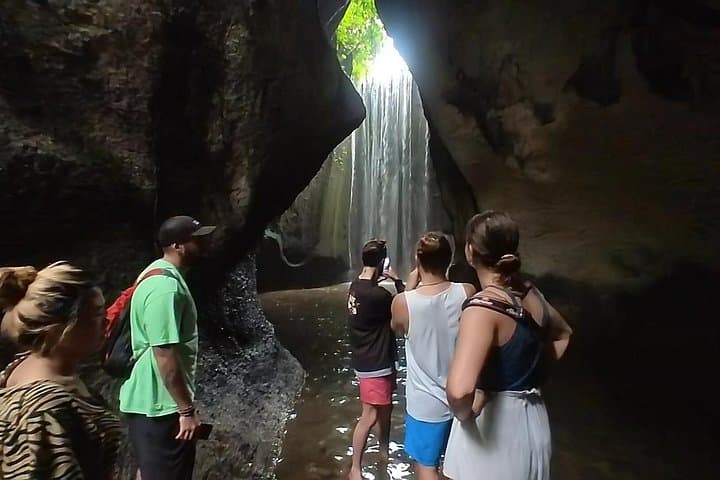
After a panoramic lunch, the itinerary shifts to a hidden canyon at Tukad Cepung. Light slices through an overhead opening; spray and shadow trade places as water falls into a cool pool — a sensory reset after a day of cultural immersion.
Practical guidance: expect a full 10–11 hour day with multiple short walks, steps at temple compounds, and uneven paths at the waterfall. Dress respectfully for temples (sash and sarong available at many sites), carry sun protection, and bring a reusable water bottle. Maintain a calm pace to absorb both craftsmanship and ceremony — the route rewards curiosity and quiet observation.
moderate.
10–11 hours.
Requires moderate fitness: able to walk short staircases and uneven paths repeatedly throughout the day.
Tirta Empul and Besakih admission are typically included on organized tours, but confirm with your operator before booking.
Families can join; infant seats are sometimes available, but expect a long day and some walking—check child policies when booking.
Modest clothing is required: cover shoulders and knees. Many sites provide sarongs and sashes if you arrive without them.
Yes, there is a pool beneath the fall with shallow areas for wading and cooling off; water can be chilly and the approach involves rocks and steps.
Besakih is Bali’s largest temple complex with roots in pre-Hindu indigenous and later Hindu practices; Tirta Empul’s spring has been used for ritual purification since at least the 10th century.
Temples face wear from heavy visitation—follow local rules, avoid single-use plastics, and support local artisans directly to keep cultural economies sustainable.
Bali Exotic Trip operates guided outdoor trips and adventures with an emphasis on safety, stewardship, and memorable experiences.
The morning begins on rice-lined roads outside Ubud as the driver eases the air-conditioned van through villages toward the island’s volcanic spine. Humidity lifts off banana leaves; temple bells and rooster calls punctuate the ride. In Celuk, the steady rhythm of chisels and mallets creates a human soundtrack — artisans coaxing wood into masks and reliefs that carry centuries of ritual meaning.
The morning begins on rice-lined roads outside Ubud as the driver eases the air-conditioned van through villages toward the island’s volcanic spine. Humidity lifts off banana leaves; temple bells and rooster calls punctuate the ride. In Celuk, the steady rhythm of chisels and mallets creates a human soundtrack — artisans coaxing wood into masks and reliefs that carry centuries of ritual meaning.
From craft alleys the route climbs toward Tirta Empul, where cool spring water threads through stone showers. The temple’s pools invite a deliberate pause: pilgrims move through cleansing jets with practiced ritual, and visitors watch a living practice of Balinese Hindu devotion beside mossed shrines.
Further east, the terraces open toward Mount Agung. Besakih, the Mother Temple, sits on a lava-formed slope, its layered courtyards encoding Bali’s ritual geography and linking islanders to the volcano’s presence. The complex’s stonework and procession paths reflect temple-building traditions repeated across generations.
After a panoramic lunch, the itinerary shifts to a hidden canyon at Tukad Cepung. Light slices through an overhead opening; spray and shadow trade places as water falls into a cool pool — a sensory reset after a day of cultural immersion.
Practical guidance: expect a full 10–11 hour day with multiple short walks, steps at temple compounds, and uneven paths at the waterfall. Dress respectfully for temples (sash and sarong available at many sites), carry sun protection, and bring a reusable water bottle. Maintain a calm pace to absorb both craftsmanship and ceremony — the route rewards curiosity and quiet observation.