THE ADVENTURE COLLECTIVE® · Independent discovery and booking for outdoor travel

Spend a day from Ubud visiting Tegenungan Waterfall, Goa Gajah, Gunung Kawi and Tirta Empul, finishing with a coffee plantation tasting. This private, full‑day tour pairs cultural temples with scenic rice terraces and a hands‑on look at local coffee production.
Spend a day from Ubud visiting Tegenungan Waterfall, Goa Gajah, Gunung Kawi and Tirta Empul, finishing with a coffee plantation tasting. This private, full‑day tour pairs cultural temples with scenic rice terraces and a hands‑on look at local coffee production.
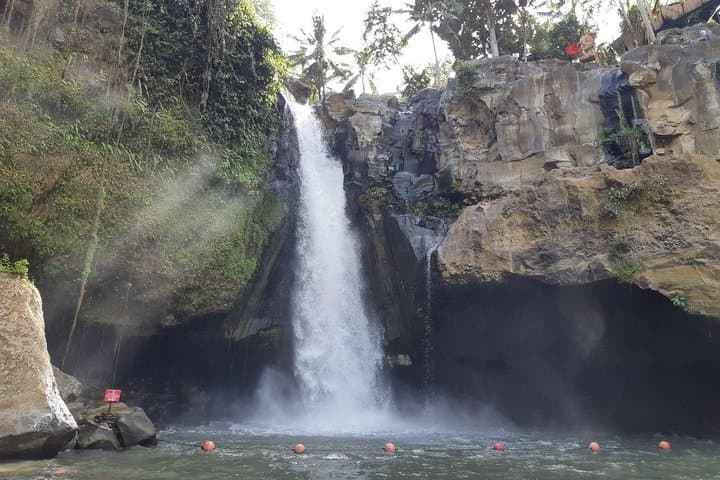
You step out of the air‑conditioned van and the smell of wet stone and wood smoke meets you—Tegenungan’s cascade is throwing a curtain of spray into the humid Balinese air, while carved temple gates appear like thresholds to older worlds.
Verified experiences and guided adventures in the surrounding area.
Operated by Tour Bali Gili · Ubud, Bali
You step out of the air‑conditioned van and the smell of wet stone and wood smoke meets you—Tegenungan’s cascade is throwing a curtain of spray into the humid Balinese air, while carved temple gates appear like thresholds to older worlds.
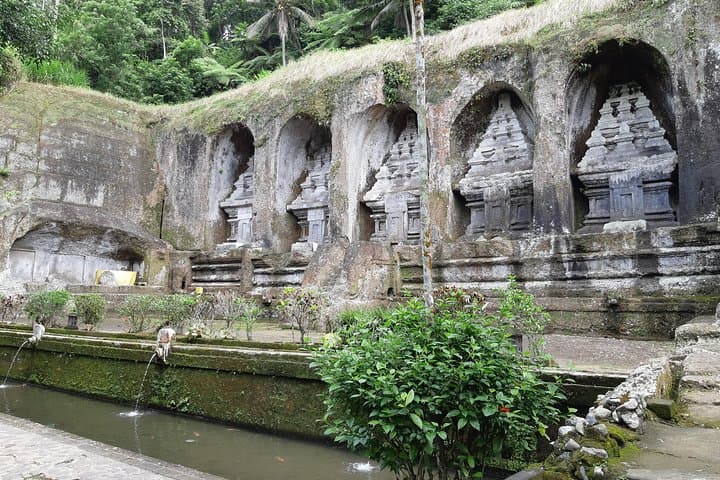
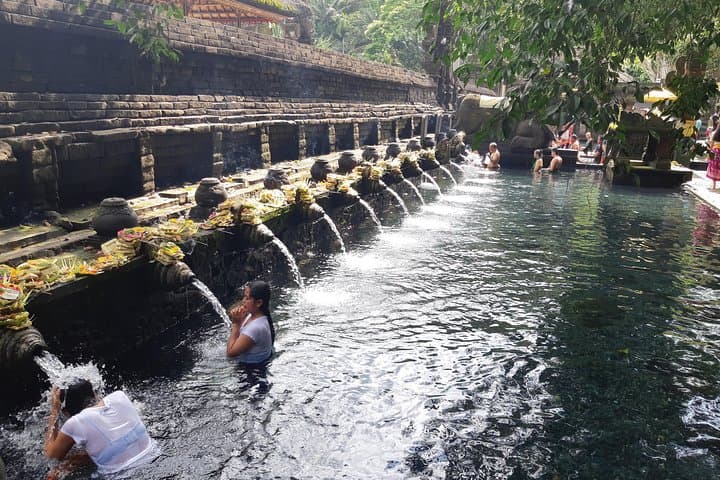
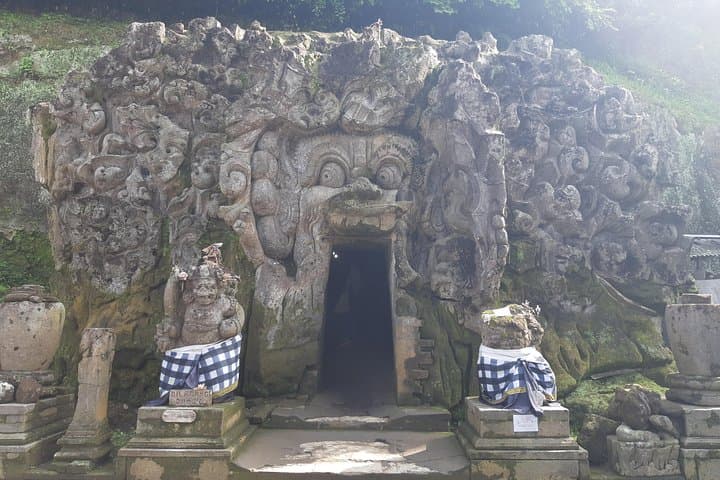
This full‑day loop from central Ubud threads through Bali’s cultural heart: 11th‑century rock shrines at Gunung Kawi, the ritual pools of Tirta Empul, the carved mouth of Goa Gajah and the rice‑lined slopes outside town. Geologically, the valley is a product of volcanic soils and river incision; temple complexes are carved into soft tuff and river terraces, which is why the stonework reads as much like architecture as it does landscape.
Culturally, these sites are living places of worship—expect incense, offerings, and the cadence of daily purification rites. Coffee plantations you’ll visit specialize in robusta and arabica grown on rich volcanic loam; tasting sessions often include locally roasted beans and the controversial kopi luwak history, explained with practical context.
Practical guidance: the day runs about eight hours with several short stair descents at Gunung Kawi and Tegenungan—sturdy footwear and a modest sarong (often provided) for temple entry are necessary. Carry water, sun protection and a small daypack; cameras are welcome but be respectful during ceremonies. Pickup and private transport simplify logistics and keep the schedule tight, but expect some walking on uneven steps and river paths. Plan for early starts to avoid midday heat and busy temple queues—this route blends natural spectacle and centuries of ritual into a compact, approachable day in Bali.
moderate.
7–8 hours.
Moderate—able to handle repeated short stair descents and 1–3 miles of walking across uneven terrain
Most organized tours include standard admission fees; confirm at booking and keep small change for incidental offerings.
Yes—private transport reduces walking distance, but stairs at Gunung Kawi and riverside paths may be strenuous for limited mobility.
Yes—coffee plantation stops typically include guided tastings of several local brews and an explanation of processing methods.
Private tours generally offer flexibility—operators will alter the order of sites for weather, crowds, or guest needs if notified in advance.
Many sites date from between the 9th and 11th centuries and reflect overlapping Hindu‑Buddhist traditions; rock‑cut shrines like Gunung Kawi served both sanctuary and funerary roles.
Respect temple rules and stay on paths to protect fragile carvings and riverbanks; favor operators who minimize single‑use plastics and support local communities.
Tour Bali Gili operates guided outdoor trips and adventures with an emphasis on safety, stewardship, and memorable experiences.
You step out of the air‑conditioned van and the smell of wet stone and wood smoke meets you—Tegenungan’s cascade is throwing a curtain of spray into the humid Balinese air, while carved temple gates appear like thresholds to older worlds.
You step out of the air‑conditioned van and the smell of wet stone and wood smoke meets you—Tegenungan’s cascade is throwing a curtain of spray into the humid Balinese air, while carved temple gates appear like thresholds to older worlds.
This full‑day loop from central Ubud threads through Bali’s cultural heart: 11th‑century rock shrines at Gunung Kawi, the ritual pools of Tirta Empul, the carved mouth of Goa Gajah and the rice‑lined slopes outside town. Geologically, the valley is a product of volcanic soils and river incision; temple complexes are carved into soft tuff and river terraces, which is why the stonework reads as much like architecture as it does landscape.
Culturally, these sites are living places of worship—expect incense, offerings, and the cadence of daily purification rites. Coffee plantations you’ll visit specialize in robusta and arabica grown on rich volcanic loam; tasting sessions often include locally roasted beans and the controversial kopi luwak history, explained with practical context.
Practical guidance: the day runs about eight hours with several short stair descents at Gunung Kawi and Tegenungan—sturdy footwear and a modest sarong (often provided) for temple entry are necessary. Carry water, sun protection and a small daypack; cameras are welcome but be respectful during ceremonies. Pickup and private transport simplify logistics and keep the schedule tight, but expect some walking on uneven steps and river paths. Plan for early starts to avoid midday heat and busy temple queues—this route blends natural spectacle and centuries of ritual into a compact, approachable day in Bali.