THE ADVENTURE COLLECTIVE® · Independent discovery and booking for outdoor travel

Watch the sun transform Ubirr’s sandstone galleries and Arnhem Land floodplain on a guided sunset tour. Expect rock art panel visits, crocodile‑watching at Cahills Crossing, and a short walk to a sweeping sunset lookout with cultural interpretation.
Watch the sun transform Ubirr’s sandstone galleries and Arnhem Land floodplain on a guided sunset tour. Expect rock art panel visits, crocodile‑watching at Cahills Crossing, and a short walk to a sweeping sunset lookout with cultural interpretation.
The sun slides low over the East Alligator floodplain, gilding the orange sandstone faces of Ubirr while the river dares the horizon to hold its reflection. You step off the coach and follow a short, rocky climb to a lookout where Arnhem Land unfurls as a flat, bright plane punctuated by paperbark islands and silver water.
Verified experiences and guided adventures in the surrounding area.
Operated by Never Never Safari Tours · Jabiru, Northern Territory
The sun slides low over the East Alligator floodplain, gilding the orange sandstone faces of Ubirr while the river dares the horizon to hold its reflection. You step off the coach and follow a short, rocky climb to a lookout where Arnhem Land unfurls as a flat, bright plane punctuated by paperbark islands and silver water.
Ubirr sits on ancient Burrungkuy sandstone shaped by millennia of erosion; the rock shelters host panels painted by Bininj/Mungguy artists for thousands of years. Guides on local sunset tours bring that heritage to life, pointing out Dreaming figures, hunting scenes and later contact-era additions. Geology and culture are visible in one sweep: the escarpment’s strata, the tidal wetlands, and rock art that records both environment and law.
On this 3–4 hour outing you'll visit Cahills Crossing, a crocodile-lined channel of ecological drama, then move to Ubirr’s art galleries and the sunset lookout. The light shifts quickly; colors deepen as wind and water negotiate the day’s last movement.
Practical: plan for insects, windy evenings and uneven sandstone underfoot. Bring water, a headlamp for the return to the coach if the trail grows dim, and keep to designated paths — the rock art is fragile and culturally significant. Tours usually include transport from Cooinda or Jabiru and run with local operators familiar with access rules and seasonal closures. Aim to arrive early on the lookout to secure a good vantage point; your guide times the visit around the sun but local weather and wet-season flood warnings can alter plans.
easy.
3–4 hours.
Light fitness required; short rocky climbs and uneven sandstone steps but manageable for most people.
The tour runs about 3–4 hours and typically departs Cooinda with pickups in Jabiru; check your booking for exact pickup times and locations.
No—walks are short but include uneven sandstone and steps; comfortable shoes and a moderate mobility level are recommended.
Yes, photography is generally allowed but do not use flash on some panels if requested by your guide; always follow signage and guidance from traditional owners.
You may see estuarine (saltwater) crocodiles from a safe distance at Cahills Crossing—do not approach the water and follow guide instructions.
Ubirr’s rock art records thousands of years of Indigenous occupation by Bininj/Mungguy people and includes imagery tied to Dreaming stories and ancient landscape change.
Kakadu is jointly managed with traditional owners; stick to paths, avoid touching art, and respect seasonal closures to protect cultural sites and vulnerable wetland habitats.
Never Never Safari Tours operates guided outdoor trips and adventures with an emphasis on safety, stewardship, and memorable experiences.
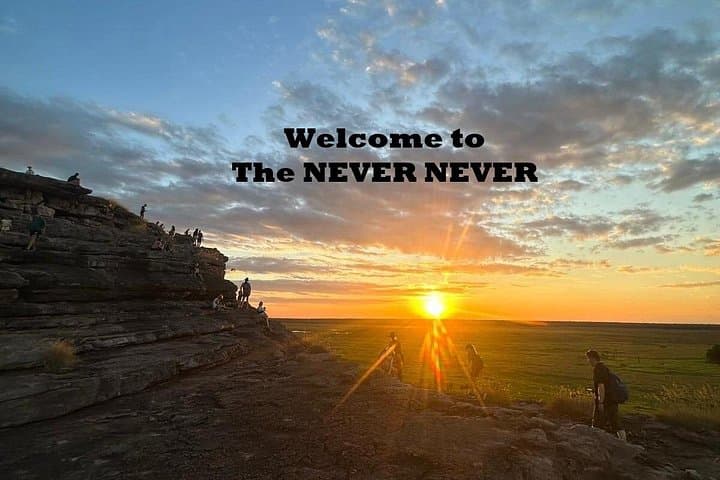
The sun slides low over the East Alligator floodplain, gilding the orange sandstone faces of Ubirr while the river dares the horizon to hold its reflection. You step off the coach and follow a short, rocky climb to a lookout where Arnhem Land unfurls as a flat, bright plane punctuated by paperbark islands and silver water.
The sun slides low over the East Alligator floodplain, gilding the orange sandstone faces of Ubirr while the river dares the horizon to hold its reflection. You step off the coach and follow a short, rocky climb to a lookout where Arnhem Land unfurls as a flat, bright plane punctuated by paperbark islands and silver water.
Ubirr sits on ancient Burrungkuy sandstone shaped by millennia of erosion; the rock shelters host panels painted by Bininj/Mungguy artists for thousands of years. Guides on local sunset tours bring that heritage to life, pointing out Dreaming figures, hunting scenes and later contact-era additions. Geology and culture are visible in one sweep: the escarpment’s strata, the tidal wetlands, and rock art that records both environment and law.
On this 3–4 hour outing you'll visit Cahills Crossing, a crocodile-lined channel of ecological drama, then move to Ubirr’s art galleries and the sunset lookout. The light shifts quickly; colors deepen as wind and water negotiate the day’s last movement.
Practical: plan for insects, windy evenings and uneven sandstone underfoot. Bring water, a headlamp for the return to the coach if the trail grows dim, and keep to designated paths — the rock art is fragile and culturally significant. Tours usually include transport from Cooinda or Jabiru and run with local operators familiar with access rules and seasonal closures. Aim to arrive early on the lookout to secure a good vantage point; your guide times the visit around the sun but local weather and wet-season flood warnings can alter plans.