THE ADVENTURE COLLECTIVE® · Independent discovery and booking for outdoor travel

Two guided dives off St. Thomas take you to coral reefs and shipwrecks in a single 3.5‑hour trip. Small boat, pro Dive Masters, and all core gear provided make this an efficient, marine-rich way to dive the U.S. Virgin Islands.
Two guided dives off St. Thomas take you to coral reefs and shipwrecks in a single 3.5‑hour trip. Small boat, pro Dive Masters, and all core gear provided make this an efficient, marine-rich way to dive the U.S. Virgin Islands.
The boat slips out of the harbor at first light and the Caribbean opens like a room with the windows thrown wide: clear water, the hum of the engine, and the crew checking gear with practiced calm.
Verified experiences and guided adventures in the surrounding area.
Operated by Aqua Action Dive Center · Charlotte Amalie, U.S. Virgin Islands
The boat slips out of the harbor at first light and the Caribbean opens like a room with the windows thrown wide: clear water, the hum of the engine, and the crew checking gear with practiced calm.
Over the next three and a half hours you’ll make two guided dives around St. Thomas’ coral reefs and nearby wrecks. Geologically the region is a mix of volcanic bedrock and carbonate platforms where corals build upward over centuries; historically these waters collected ships from colonial trade and storms, leaving wrecks that now host turtles and schools of reef fish.
Local dive operators blend island hospitality with technical know‑how—the pace is friendly but professional. Expect a small-boat rhythm: gear rigging on deck, a taught safety brief, an easy entry and descent with a Dive Master leading each group. Visibility in the Caribbean is generally generous compared with temperate waters, and many sites sit in the recreational depth range (to ~30 m/100 ft), with abundant topography and swim-throughs on some wrecks.
Practical notes: the tour is about 3.5 hours, limited to a dozen guests, and includes tanks, BCDs, regulators, wetsuits and basic kit. Bring your certification card, logbook, and a charged dive computer if you have one. Hydrate before boarding, consider a short motion‑sickness preventive if you’re prone, and treat the reef with respect—no touching, no fin‑kicks near coral.
This is a straightforward, rewarding way to sample Caribbean diving: organized, accessible for certified divers, and rich in marine life and maritime history.
moderate.
3.5 hours.
Moderate fitness: you should be a comfortable swimmer and able to carry/secure scuba gear with crew assistance.
Yes. Operators require proof of Open Water SCUBA certification and recent logged dives within the past two years.
The trip includes tanks, weights, BCDs, regulators, wetsuits, masks, fins and snorkels—personal items like dive computers and gloves are recommended but optional.
Most recreational sites are within standard certified limits (commonly to ~30 m/100 ft); Caribbean visibility is typically good but varies by site and weather.
Tell the crew immediately—trips are brief and crew can accommodate recovery on deck; for seasickness prevention, take medication before boarding.
Wreck sites around the Virgin Islands often date to colonial trade routes and storms; many sunken vessels now function as artificial reefs.
The region emphasizes reef protection—use reef-safe products, avoid touching or standing on coral, and follow dive-operator briefings to minimize impact.
Aqua Action Dive Center operates guided outdoor trips and adventures with an emphasis on safety, stewardship, and memorable experiences.
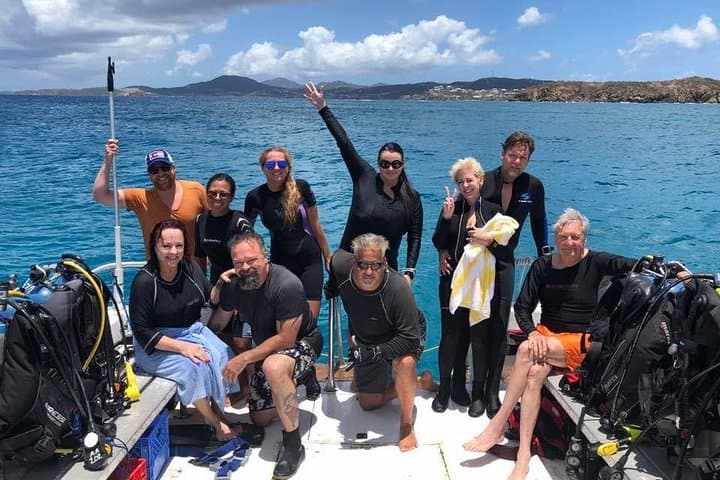
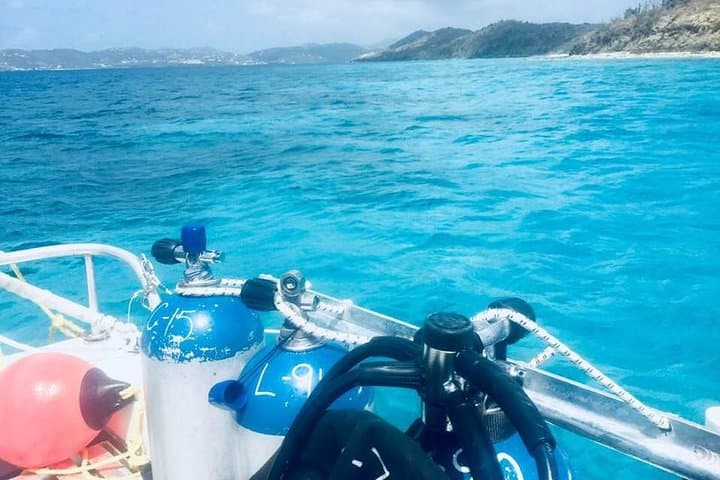
The boat slips out of the harbor at first light and the Caribbean opens like a room with the windows thrown wide: clear water, the hum of the engine, and the crew checking gear with practiced calm.
The boat slips out of the harbor at first light and the Caribbean opens like a room with the windows thrown wide: clear water, the hum of the engine, and the crew checking gear with practiced calm.
Over the next three and a half hours you’ll make two guided dives around St. Thomas’ coral reefs and nearby wrecks. Geologically the region is a mix of volcanic bedrock and carbonate platforms where corals build upward over centuries; historically these waters collected ships from colonial trade and storms, leaving wrecks that now host turtles and schools of reef fish.
Local dive operators blend island hospitality with technical know‑how—the pace is friendly but professional. Expect a small-boat rhythm: gear rigging on deck, a taught safety brief, an easy entry and descent with a Dive Master leading each group. Visibility in the Caribbean is generally generous compared with temperate waters, and many sites sit in the recreational depth range (to ~30 m/100 ft), with abundant topography and swim-throughs on some wrecks.
Practical notes: the tour is about 3.5 hours, limited to a dozen guests, and includes tanks, BCDs, regulators, wetsuits and basic kit. Bring your certification card, logbook, and a charged dive computer if you have one. Hydrate before boarding, consider a short motion‑sickness preventive if you’re prone, and treat the reef with respect—no touching, no fin‑kicks near coral.
This is a straightforward, rewarding way to sample Caribbean diving: organized, accessible for certified divers, and rich in marine life and maritime history.