THE ADVENTURE COLLECTIVE® · Independent discovery and booking for outdoor travel

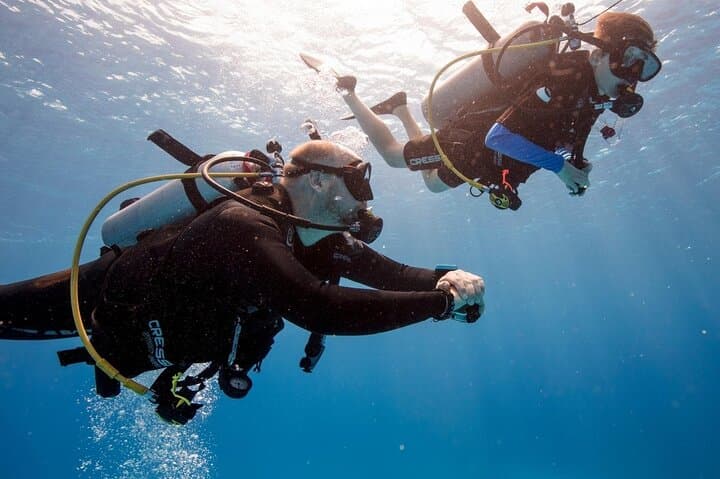
Try scuba for the first time on a guided two-tank experience in Montego Bay Marine Park. Learn basic skills in calm water, explore shallow coral gardens, and see colorful reef life under PADI-certified supervision.
Try scuba for the first time on a guided two-tank experience in Montego Bay Marine Park. Learn basic skills in calm water, explore shallow coral gardens, and see colorful reef life under PADI-certified supervision.
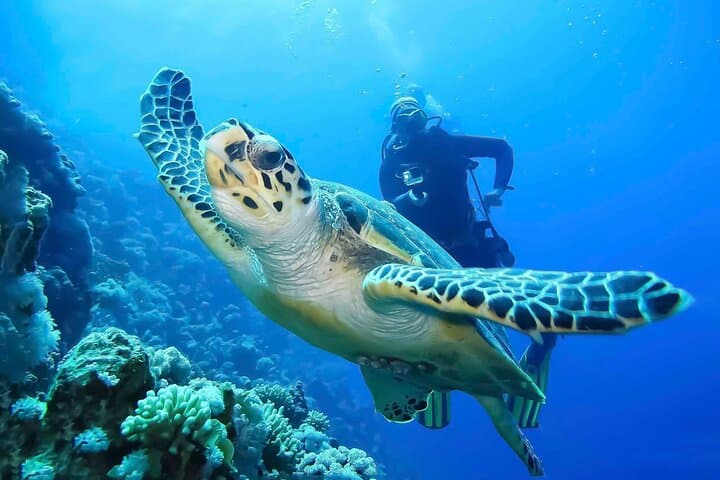
The morning light strips the pier to silver and the Caribbean pushes a slow, steady current against the hull as your instructor checks regulators and gauges. On a two-tank Discover Scuba outing in Montego Bay, you trade the surface glare for the hush of shallow reef: fingers of coral rising like city blocks, parrotfish scraping algae, and sunlight slicing into blue.
Verified experiences and guided adventures in the surrounding area.
Operated by Scuba Diving in Montego Bay - Dive for Fun Watersport · Montego Bay, St. James Parish
The morning light strips the pier to silver and the Caribbean pushes a slow, steady current against the hull as your instructor checks regulators and gauges. On a two-tank Discover Scuba outing in Montego Bay, you trade the surface glare for the hush of shallow reef: fingers of coral rising like city blocks, parrotfish scraping algae, and sunlight slicing into blue.
Montego Bay sits on a limestone shelf carved by ancient seas; its modern reefs are part of the protected Montego Bay Marine Park, created to conserve coral, seagrass and mangroves. The Bay’s maritime history — from colonial trade routes to today’s tourism economy — shaped a coastline where small-scale fishers and dive operators now share stewardship of nearshore reefs.
Expect a structured progression: shore or boat briefing, skill practice in calm water, then two guided open-water dives totaling roughly 40–60 minutes bottom time depending on air consumption. Depths for Discover Scuba are conservative (often 12–18 meters/40–60 feet), with instructors actively supervising buoyancy and comfort. Water temperatures hover in the high 20s°C (mid-70s–80s°F) year-round; currents are generally mild inside the marine park but can pick up near passes.
Practical edge: use reef-safe sunscreen, bring a snug mask (mask squeeze is real), and pace your surface intervals—no flying for 18–24 hours post-dive. This is an approachable first step toward certification: it shows you the rhythm of diving without the paperwork, and leaves you ready to decide whether to commit to an Open Water course.
moderate.
3 hours.
Basic swimming ability and reasonable mobility; comfortable with short surface swims and ladder entries.
No—this program is designed for first-time divers; a PADI instructor guides you through skills and supervises the dives.
Discover Scuba dives are typically limited to about 12–18 meters (40–60 feet), depending on operator policy and conditions.
Duplicate field removed
Yes—Montego Bay operators commonly run excursions that accommodate cruise passengers; allow extra time for transfers and embarkation.
Montego Bay’s reefs lie along a coastline long used as a trading port; the Montego Bay Marine Park was established in the early 1990s to protect coral and coastal habitats.
Operators emphasize no-touch rules and reef-safe sunscreen; supporting certified guides helps limit anchor damage and overuse of fragile sites.
Scuba Diving in Montego Bay - Dive for Fun Watersport operates guided outdoor trips and adventures with an emphasis on safety, stewardship, and memorable experiences.
The morning light strips the pier to silver and the Caribbean pushes a slow, steady current against the hull as your instructor checks regulators and gauges. On a two-tank Discover Scuba outing in Montego Bay, you trade the surface glare for the hush of shallow reef: fingers of coral rising like city blocks, parrotfish scraping algae, and sunlight slicing into blue.
The morning light strips the pier to silver and the Caribbean pushes a slow, steady current against the hull as your instructor checks regulators and gauges. On a two-tank Discover Scuba outing in Montego Bay, you trade the surface glare for the hush of shallow reef: fingers of coral rising like city blocks, parrotfish scraping algae, and sunlight slicing into blue.
Montego Bay sits on a limestone shelf carved by ancient seas; its modern reefs are part of the protected Montego Bay Marine Park, created to conserve coral, seagrass and mangroves. The Bay’s maritime history — from colonial trade routes to today’s tourism economy — shaped a coastline where small-scale fishers and dive operators now share stewardship of nearshore reefs.
Expect a structured progression: shore or boat briefing, skill practice in calm water, then two guided open-water dives totaling roughly 40–60 minutes bottom time depending on air consumption. Depths for Discover Scuba are conservative (often 12–18 meters/40–60 feet), with instructors actively supervising buoyancy and comfort. Water temperatures hover in the high 20s°C (mid-70s–80s°F) year-round; currents are generally mild inside the marine park but can pick up near passes.
Practical edge: use reef-safe sunscreen, bring a snug mask (mask squeeze is real), and pace your surface intervals—no flying for 18–24 hours post-dive. This is an approachable first step toward certification: it shows you the rhythm of diving without the paperwork, and leaves you ready to decide whether to commit to an Open Water course.