THE ADVENTURE COLLECTIVE® · Independent discovery and booking for outdoor travel

Spend an evening with a local tanguero as you visit two authentic milongas in Buenos Aires. Learn the history, etiquette and rhythms of tango while enjoying local beverages and private transport between venues.
Spend an evening with a local tanguero as you visit two authentic milongas in Buenos Aires. Learn the history, etiquette and rhythms of tango while enjoying local beverages and private transport between venues.
The night arrives slow and electric in Buenos Aires: streetlamps throw long rectangles across cobblestones, and a river of conversation spills from corner cafés toward two milongas waiting for you. Your guide—a seasoned tanguero—moves through the room like a local map, pointing out the subtle language of the dance floor as the band warms up and the first dancers find their place.
Verified experiences and guided adventures in the surrounding area.
Operated by Immersion Tours · Buenos Aires, Buenos Aires
The night arrives slow and electric in Buenos Aires: streetlamps throw long rectangles across cobblestones, and a river of conversation spills from corner cafés toward two milongas waiting for you. Your guide—a seasoned tanguero—moves through the room like a local map, pointing out the subtle language of the dance floor as the band warms up and the first dancers find their place.
Tango was born here in the late 19th century, in portside neighborhoods where immigrants, Afro-Argentine musicians and criollo culture collided. Milongas preserved that social code: the cabeceo (a nod to invite a dance), the cortinas that break sets, and an etiquette that keeps the floor moving. Geology and climate matter less than the city’s layout—tight blocks, plazas and cafés that funnel strangers into shared evening rituals.
Expect two distinct venues: one intimate, community-run salón where regulars know the repertoire, and a second with a livelier bar atmosphere. Both offer a single drink per person and entrance covered; pick-up from most hotels is included. The tour runs about 3¾ hours—enough to watch, ask questions, and try a few steps under the patient eye of your guide.
Practical notes: dress smart-casual and bring soft-soled shoes if you plan to dance; avoid flash photography and follow the cabeceo. Traffic can slow transfers in the city center, so allow time if you’ve got late plans. This is an evening of culture more than cardio—arrive curious and leave with a clearer sense of tango’s rules, rhythm and community.
easy.
3–4 hours.
Suitable for all fitness levels—mostly standing, walking short distances between venues; light dancing optional.
No—this is primarily a cultural evening. You can watch, ask questions, and try a few steps under guidance; no prior skill required.
Yes—private transportation from most centrally located hotels is included, though port pickup is not available.
Minimum drinking age is 18; one alcoholic or non-alcoholic drink is included per person at each milonga.
Infants in strollers are permitted, but infants must sit on an adult’s lap during the milonga.
Tango emerged in Buenos Aires’ late 19th-century port barrios as a hybrid music and dance created by immigrants, Afro-Argentine and local communities; milongas preserved its social rules and repertoire.
Support small, local milongas and bars to help preserve cultural venues; be mindful of noise and neighborhood rules when arriving or departing to minimize impact.
Immersion Tours operates guided outdoor trips and adventures with an emphasis on safety, stewardship, and memorable experiences.
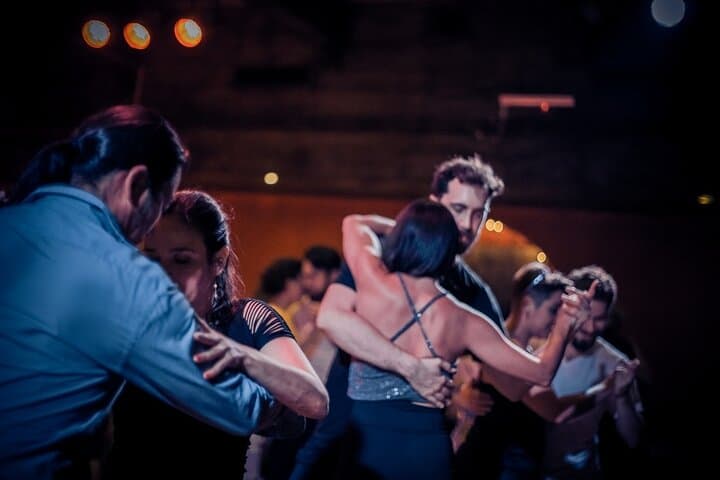
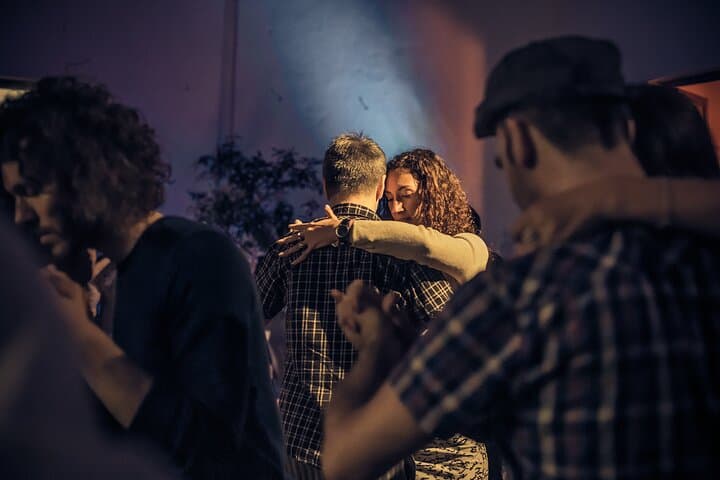
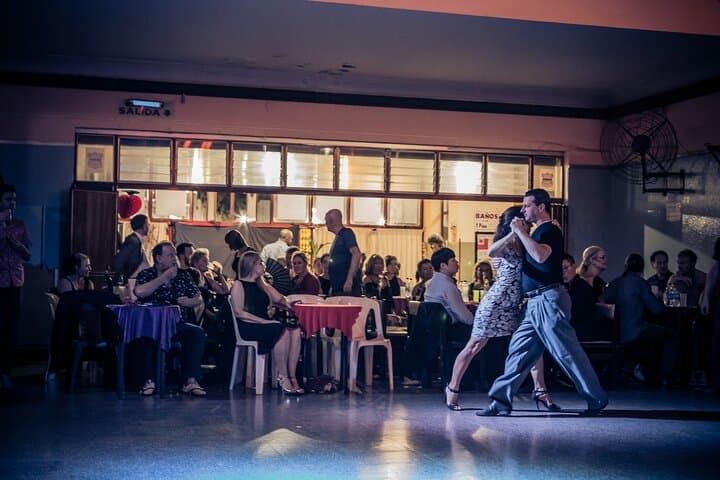
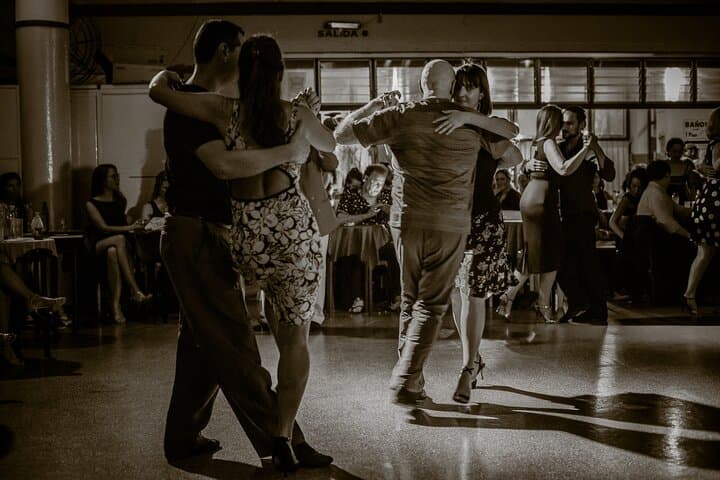
The night arrives slow and electric in Buenos Aires: streetlamps throw long rectangles across cobblestones, and a river of conversation spills from corner cafés toward two milongas waiting for you. Your guide—a seasoned tanguero—moves through the room like a local map, pointing out the subtle language of the dance floor as the band warms up and the first dancers find their place.
The night arrives slow and electric in Buenos Aires: streetlamps throw long rectangles across cobblestones, and a river of conversation spills from corner cafés toward two milongas waiting for you. Your guide—a seasoned tanguero—moves through the room like a local map, pointing out the subtle language of the dance floor as the band warms up and the first dancers find their place.
Tango was born here in the late 19th century, in portside neighborhoods where immigrants, Afro-Argentine musicians and criollo culture collided. Milongas preserved that social code: the cabeceo (a nod to invite a dance), the cortinas that break sets, and an etiquette that keeps the floor moving. Geology and climate matter less than the city’s layout—tight blocks, plazas and cafés that funnel strangers into shared evening rituals.
Expect two distinct venues: one intimate, community-run salón where regulars know the repertoire, and a second with a livelier bar atmosphere. Both offer a single drink per person and entrance covered; pick-up from most hotels is included. The tour runs about 3¾ hours—enough to watch, ask questions, and try a few steps under the patient eye of your guide.
Practical notes: dress smart-casual and bring soft-soled shoes if you plan to dance; avoid flash photography and follow the cabeceo. Traffic can slow transfers in the city center, so allow time if you’ve got late plans. This is an evening of culture more than cardio—arrive curious and leave with a clearer sense of tango’s rules, rhythm and community.