THE ADVENTURE COLLECTIVE® · Independent discovery and booking for outdoor travel

Swap the Nile for open desert on a two-hour quad safari from Luxor. Expect rocky plateaus, short canyons, quick tea breaks with a guide and strong sun—perfect for a high-energy half-day escape.
Swap the Nile for open desert on a two-hour quad safari from Luxor. Expect rocky plateaus, short canyons, quick tea breaks with a guide and strong sun—perfect for a high-energy half-day escape.
The engine rattles to life and the desert opens — a wide, sun-bleached plain rimmed by low, weathered ridges. On a two-hour quad safari outside Luxor, riders trade the Nile’s calm green for the dry, raw geometry of the Eastern Desert: stony plateaus, scattered wadis and short scrub that the wind scours into clean lines.
Verified experiences and guided adventures in the surrounding area.
Operated by very nice holiday · Luxor, Luxor Governorate
The engine rattles to life and the desert opens — a wide, sun-bleached plain rimmed by low, weathered ridges. On a two-hour quad safari outside Luxor, riders trade the Nile’s calm green for the dry, raw geometry of the Eastern Desert: stony plateaus, scattered wadis and short scrub that the wind scours into clean lines.
This landscape sits just beyond the city of temples, where ancient caravan routes once threaded between Nile settlements and mineral-rich hills. Geologically the ground is mostly sedimentary rock with pockets of wind-polished sandstone; sights include small canyons and gravelly terraces rather than soft dunes. The area’s culture is shaped by Bedouin experience of the desert — hospitality, quick tea breaks, and pragmatic route knowledge — and guides often pause to point out faint tracks, isolated falaj wells or viewpoints facing the river corridor.
Practically, expect two hours of riding with at least brief stops for photos and tea. Terrain is uneven but accessible: dry stream beds, packed gravel and occasional loose rock. Riders should be comfortable operating an automatic ATV, able to shift weight for turns and to stand on pegs when needed. Midday heat is the main hazard — shade is rare and the sun is blunt.
Plan for early morning or late afternoon departures, bring ample water, sturdy closed-toe shoes, sun protection and a light layer for the wind. Respect archaeological sites, follow your guide’s line, and leave no trace: the desert recovers slowly, and small footprints can last for years.
moderate.
2 hours.
Basic aerobic fitness and core stability; able to mount/dismount an ATV and handle short bursts of standing or leaning.
The outing is two hours total, typically including short stops for photos and a tea break.
No formal experience is required, but riders should be comfortable with basic vehicle control; guides provide a safety briefing.
Policies vary by operator; many allow teens with parental consent and have maximum weight limits—confirm at booking and for any child seats needed.
Most operators include pickup and return from central Luxor hotels; confirm your pickup point when booking.
The Eastern Desert routes near Luxor were historically used for trade and access to mineral outcrops, sitting in the shadow of one of Egypt’s richest ancient cultural centers.
Stick to established tracks and pack out all waste; desert soils and sparse plants recover slowly, and archaeological remnants can be fragile.
very nice holiday operates guided outdoor trips and adventures with an emphasis on safety, stewardship, and memorable experiences.
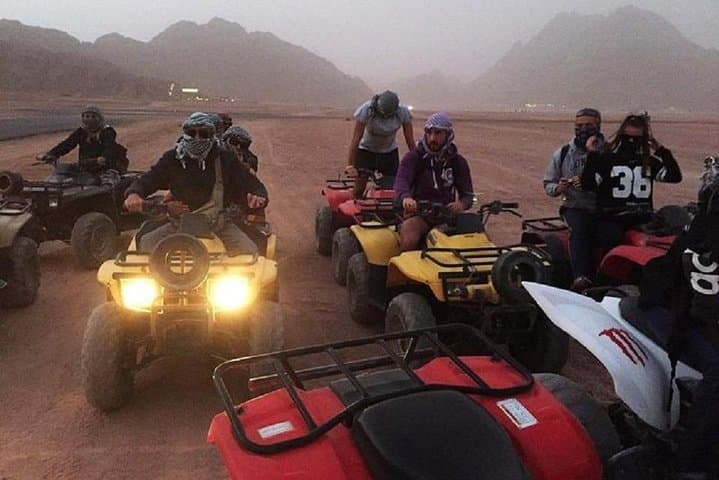
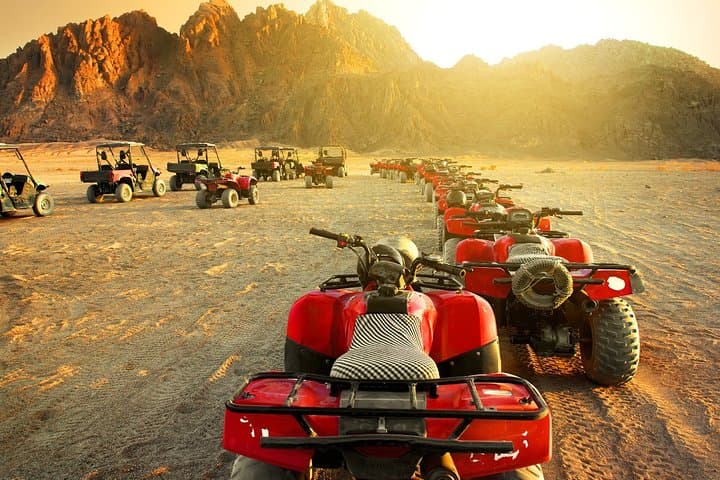
The engine rattles to life and the desert opens — a wide, sun-bleached plain rimmed by low, weathered ridges. On a two-hour quad safari outside Luxor, riders trade the Nile’s calm green for the dry, raw geometry of the Eastern Desert: stony plateaus, scattered wadis and short scrub that the wind scours into clean lines.
The engine rattles to life and the desert opens — a wide, sun-bleached plain rimmed by low, weathered ridges. On a two-hour quad safari outside Luxor, riders trade the Nile’s calm green for the dry, raw geometry of the Eastern Desert: stony plateaus, scattered wadis and short scrub that the wind scours into clean lines.
This landscape sits just beyond the city of temples, where ancient caravan routes once threaded between Nile settlements and mineral-rich hills. Geologically the ground is mostly sedimentary rock with pockets of wind-polished sandstone; sights include small canyons and gravelly terraces rather than soft dunes. The area’s culture is shaped by Bedouin experience of the desert — hospitality, quick tea breaks, and pragmatic route knowledge — and guides often pause to point out faint tracks, isolated falaj wells or viewpoints facing the river corridor.
Practically, expect two hours of riding with at least brief stops for photos and tea. Terrain is uneven but accessible: dry stream beds, packed gravel and occasional loose rock. Riders should be comfortable operating an automatic ATV, able to shift weight for turns and to stand on pegs when needed. Midday heat is the main hazard — shade is rare and the sun is blunt.
Plan for early morning or late afternoon departures, bring ample water, sturdy closed-toe shoes, sun protection and a light layer for the wind. Respect archaeological sites, follow your guide’s line, and leave no trace: the desert recovers slowly, and small footprints can last for years.