THE ADVENTURE COLLECTIVE® · Independent discovery and booking for outdoor travel

Spend two hours walking Seoul’s political and cultural center to connect five centuries of history with modern Korean life. This guided route through Gwanghwamun, Samcheong-dong and Bukchon clarifies why social norms, coffee culture and preservation debates matter today.
Spend two hours walking Seoul’s political and cultural center to connect five centuries of history with modern Korean life. This guided route through Gwanghwamun, Samcheong-dong and Bukchon clarifies why social norms, coffee culture and preservation debates matter today.
You step out of the subway into a wide stone plaza where the statue of Admiral Yi looks toward the Han River and the city’s gate—Gwanghwamun—stands like a civic watchman. Traffic hums, but the square carves a clearing in the city’s momentum; your guide leads the group into alleys where contemporary coffee shops front narrow lanes and traditional tiles peek over low walls.
Verified experiences and guided adventures in the surrounding area.
Operated by SeoulDude's Walking tours · Seoul, Seoul
You step out of the subway into a wide stone plaza where the statue of Admiral Yi looks toward the Han River and the city’s gate—Gwanghwamun—stands like a civic watchman. Traffic hums, but the square carves a clearing in the city’s momentum; your guide leads the group into alleys where contemporary coffee shops front narrow lanes and traditional tiles peek over low walls.
This two-hour walk threads 600 years of Seoul’s story. Gwanghwamun Square anchors the Joseon capital’s political heart; Bukchon’s hanok houses show the friction between preservation and development; Samcheong-dong’s retro streets map the city’s modern leisure economy. A stop at the College of North Korean Studies frames how national division and geopolitics shape everyday conversation—how opinions about the U.S., Japan and the North filter into values, hierarchy and work culture.
Expect broad, paved streets punctuated by short uphill sections and cobbled lanes. The guide will interpret visible architecture, point out coffee-house rituals, and explain social norms like age-based speech and communal bath (jjimjilbang) habits.
Practical notes: this is an easy-paced, urban walking tour—comfortable shoes, a refillable water bottle and a light jacket in spring or autumn keep you present. Public transit is excellent; tours often meet near Gwanghwamun Station. Bring questions: the tour’s value is in connecting historical facts to contemporary behavior, so come ready to listen and engage.
easy.
2 hours (120 minutes).
Light urban walking ability; suitable for most fitness levels though some short uphill stretches occur.
The tour lasts about 120 minutes and involves easy urban walking with a few short uphill sections—suitable for most participants.
Yes; the pace is relaxed and stops are frequent, but participants should be comfortable walking on uneven pavement for up to two hours.
No—this itinerary focuses on public spaces, streets, and viewpoints; entrance fees are not included.
Gwanghwamun is served by multiple subway lines (Gwanghwamun Station); public transport is the easiest option and the guide will confirm an exact meeting landmark in booking details.
Gwanghwamun has been the ceremonial gate and political center since the Joseon dynasty; the plaza and surrounding neighborhoods reflect successive layers of colonization, war and rapid modernization.
Bukchon faces wear from heavy foot traffic—visitors are encouraged to stay on public paths, avoid entering private homes, and support local conservation efforts by following posted rules.
SeoulDude's Walking tours operates guided outdoor trips and adventures with an emphasis on safety, stewardship, and memorable experiences.
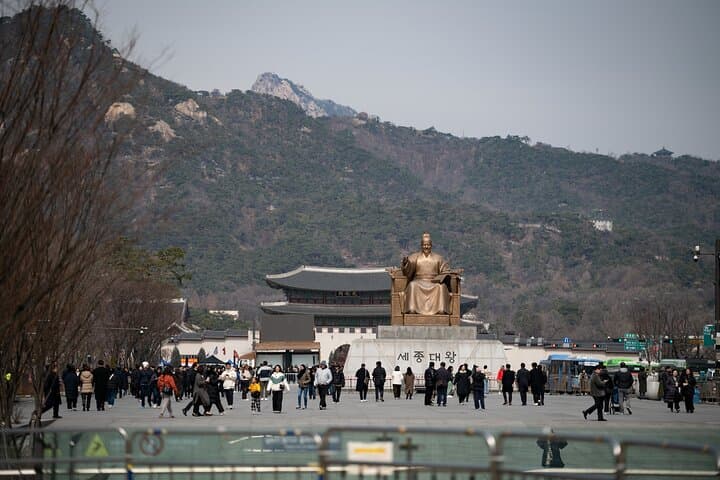
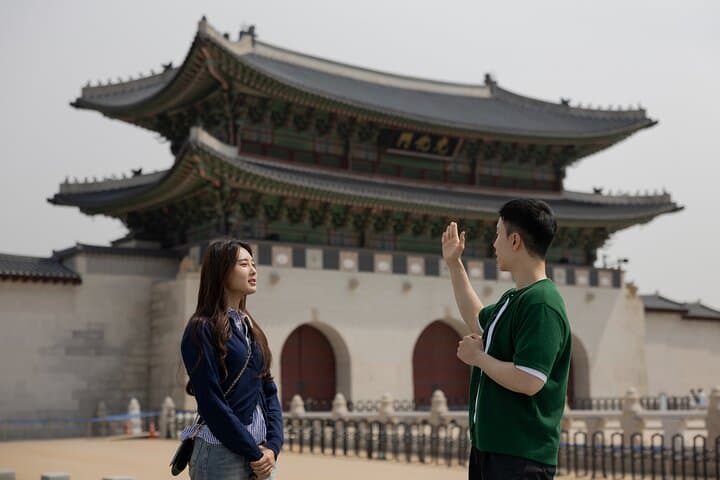
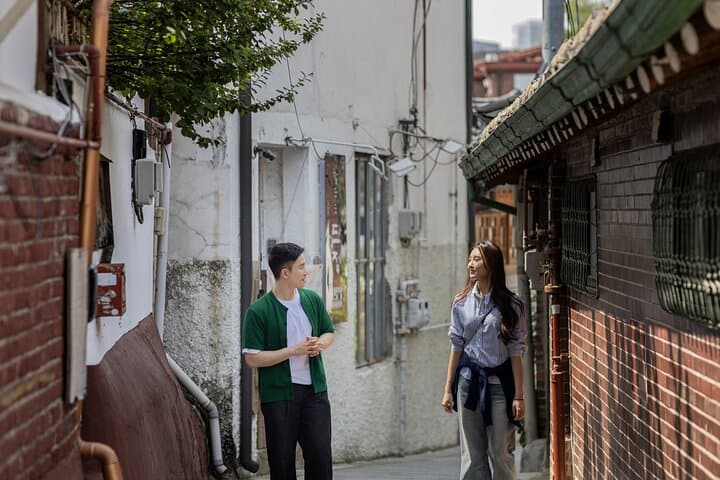
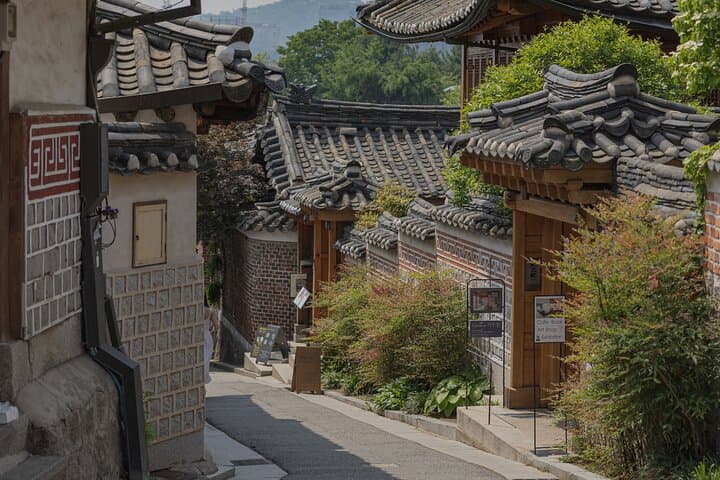
You step out of the subway into a wide stone plaza where the statue of Admiral Yi looks toward the Han River and the city’s gate—Gwanghwamun—stands like a civic watchman. Traffic hums, but the square carves a clearing in the city’s momentum; your guide leads the group into alleys where contemporary coffee shops front narrow lanes and traditional tiles peek over low walls.
You step out of the subway into a wide stone plaza where the statue of Admiral Yi looks toward the Han River and the city’s gate—Gwanghwamun—stands like a civic watchman. Traffic hums, but the square carves a clearing in the city’s momentum; your guide leads the group into alleys where contemporary coffee shops front narrow lanes and traditional tiles peek over low walls.
This two-hour walk threads 600 years of Seoul’s story. Gwanghwamun Square anchors the Joseon capital’s political heart; Bukchon’s hanok houses show the friction between preservation and development; Samcheong-dong’s retro streets map the city’s modern leisure economy. A stop at the College of North Korean Studies frames how national division and geopolitics shape everyday conversation—how opinions about the U.S., Japan and the North filter into values, hierarchy and work culture.
Expect broad, paved streets punctuated by short uphill sections and cobbled lanes. The guide will interpret visible architecture, point out coffee-house rituals, and explain social norms like age-based speech and communal bath (jjimjilbang) habits.
Practical notes: this is an easy-paced, urban walking tour—comfortable shoes, a refillable water bottle and a light jacket in spring or autumn keep you present. Public transit is excellent; tours often meet near Gwanghwamun Station. Bring questions: the tour’s value is in connecting historical facts to contemporary behavior, so come ready to listen and engage.