THE ADVENTURE COLLECTIVE® · Independent discovery and booking for outdoor travel

Spend two hours on camelback through Marrakech’s Palmeraie, following shaded tracks past palm groves and small villages. A mint-tea break and private transport make this an accessible introduction to rural life at the city’s edge.
Spend two hours on camelback through Marrakech’s Palmeraie, following shaded tracks past palm groves and small villages. A mint-tea break and private transport make this an accessible introduction to rural life at the city’s edge.
You climb into the wooden saddle, the camel rocks forward and the palm grove opens—rows of date palms march out across low, sandy soil while the city’s ochre walls sit distant and still. The Palmeraie feels like an island of shade; leaves whisper and light fractures into long, slatted shadows as your guide steers a slow, steady line through tracks only camels and farmers use.
Verified experiences and guided adventures in the surrounding area.
Operated by AdmireMarrakech.com · Marrakech, Marrakech-Safi
You climb into the wooden saddle, the camel rocks forward and the palm grove opens—rows of date palms march out across low, sandy soil while the city’s ochre walls sit distant and still. The Palmeraie feels like an island of shade; leaves whisper and light fractures into long, slatted shadows as your guide steers a slow, steady line through tracks only camels and farmers use.
The Palmeraie has been shaped by irrigation and human hands for centuries, an agricultural fringe at Marrakech’s northern edge where shallow alluvial soils and controlled water channels support palm cultivation. The route skirts small farming plots and a handful of villages—simple homes where mint tea is still the customary welcome—offering a compact glimpse of rural life outside the medina.
Expect a relaxed, two-hour loop: walking pace on camelback, short stops for photos, and a mint-tea break hosted by locals. Terrain is flat packed sand and hardpan; the biggest challenges are sun and dust rather than elevation. Guides commonly include private transport from central Marrakech and basic safety briefings for first-time riders.
Practical notes: wear closed-toe shoes and shorts or light pants, bring a brimmed hat and sunscreen, and carry a small water bottle. Cameras are fine but secure straps—camel bounces can tug gear. If you have limited mobility or small children, ask about mounting assistance; infants are usually required to sit on laps. Respect local customs: accept tea politely, tip guides, and leave no litter. The ride is short, scenic, and sociable—an accessible way to move from Marrakech’s bustle into the slower rhythm of the palms.
easy.
2 hours.
Suitable for most fitness levels; you should be able to mount with minor assistance and sit comfortably for short periods.
Most operators include private transport from central Marrakech; confirm pickup point and time when booking.
Yes—infants often ride on an adult’s lap and some operators provide infant seats; bring ID and check age policies in advance.
The activity is rated easy: low exertion at a walking pace, but mounting and camel motion require basic mobility and balance.
Light, modest clothing, closed-toe shoes, sun protection, and a light layer for cooler mornings or winter evenings.
The Palmeraie evolved as an irrigation-fed oasis on Marrakech’s outskirts; palms supported dates, shade and small-scale agriculture for centuries, with expansion under later Moroccan dynasties.
Water use and development pressures affect the oasis; choose operators who respect local land, avoid littering, and support village hosts directly.
AdmireMarrakech.com operates guided outdoor trips and adventures with an emphasis on safety, stewardship, and memorable experiences.
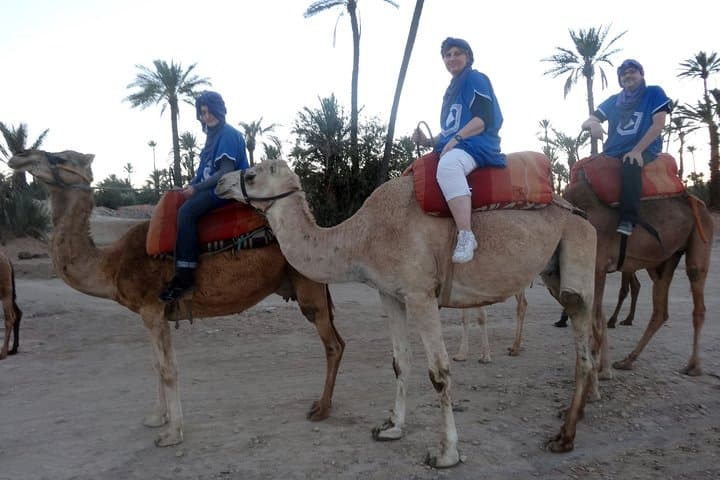


You climb into the wooden saddle, the camel rocks forward and the palm grove opens—rows of date palms march out across low, sandy soil while the city’s ochre walls sit distant and still. The Palmeraie feels like an island of shade; leaves whisper and light fractures into long, slatted shadows as your guide steers a slow, steady line through tracks only camels and farmers use.
You climb into the wooden saddle, the camel rocks forward and the palm grove opens—rows of date palms march out across low, sandy soil while the city’s ochre walls sit distant and still. The Palmeraie feels like an island of shade; leaves whisper and light fractures into long, slatted shadows as your guide steers a slow, steady line through tracks only camels and farmers use.
The Palmeraie has been shaped by irrigation and human hands for centuries, an agricultural fringe at Marrakech’s northern edge where shallow alluvial soils and controlled water channels support palm cultivation. The route skirts small farming plots and a handful of villages—simple homes where mint tea is still the customary welcome—offering a compact glimpse of rural life outside the medina.
Expect a relaxed, two-hour loop: walking pace on camelback, short stops for photos, and a mint-tea break hosted by locals. Terrain is flat packed sand and hardpan; the biggest challenges are sun and dust rather than elevation. Guides commonly include private transport from central Marrakech and basic safety briefings for first-time riders.
Practical notes: wear closed-toe shoes and shorts or light pants, bring a brimmed hat and sunscreen, and carry a small water bottle. Cameras are fine but secure straps—camel bounces can tug gear. If you have limited mobility or small children, ask about mounting assistance; infants are usually required to sit on laps. Respect local customs: accept tea politely, tip guides, and leave no litter. The ride is short, scenic, and sociable—an accessible way to move from Marrakech’s bustle into the slower rhythm of the palms.