THE ADVENTURE COLLECTIVE® · Independent discovery and booking for outdoor travel

Two full days of dramatic rock formations, vineyard tastings and high Andean roadscapes from Salta. Visit Quebrada de las Conchas and Cafayate’s wineries, then climb the Cuesta del Obispo to colonial Cachi.
Two full days of dramatic rock formations, vineyard tastings and high Andean roadscapes from Salta. Visit Quebrada de las Conchas and Cafayate’s wineries, then climb the Cuesta del Obispo to colonial Cachi.
A dust-sweet wind pushes across the Lerma Valley as the bus takes the first turn onto National Route 68. Ahead, the ochre walls of the Quebrada de las Conchas rise in layered ribs—sculpted by wind and water into amphitheatres, windows and towers that seem to defy scale.
Verified experiences and guided adventures in the surrounding area.
Operated by La Quebrada Turismo · Salta, Salta
A dust-sweet wind pushes across the Lerma Valley as the bus takes the first turn onto National Route 68. Ahead, the ochre walls of the Quebrada de las Conchas rise in layered ribs—sculpted by wind and water into amphitheatres, windows and towers that seem to defy scale.
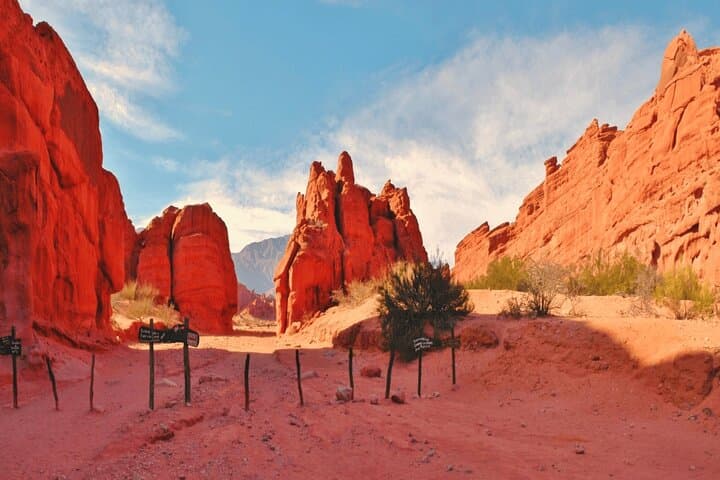
This two-day loop from Salta threads geology, colonial-era towns and high Andean roadscapes. Day one follows the Wine Route into Cafayate, where the arid gorge gives way to irrigated vineyards and Torrontés-scented cellars. The rock formations—La Garganta del Diablo, El Anfiteatro, Los Castillos—are classic examples of fluvial and aeolian erosion in the Calchaquí Valleys, exposed where the Andes’ eastern flank thins into the puna.
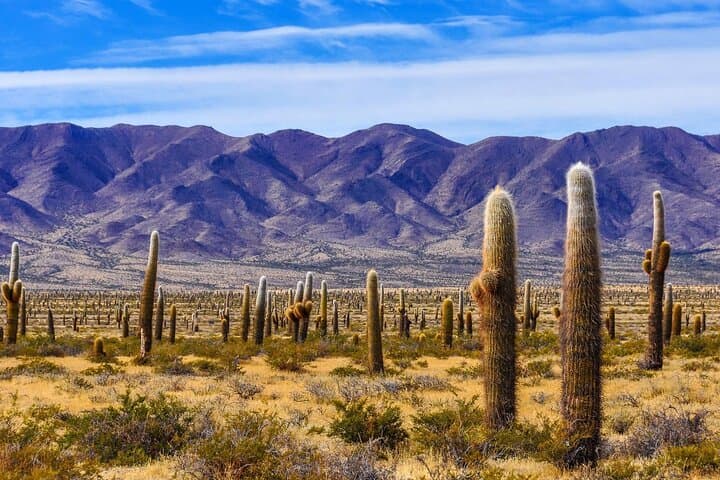
Day two climbs the Quebrada de Escoipe and the Cuesta del Obispo toward Piedra del Molino and Los Cardones National Park, where giant columnar cacti punctuate the plateau and Cachi’s colonial streets offer a low-key finish beneath a snow-capped massif.
Travelers can expect long drives with scheduled stops, short walks at viewpoints, winery visits with tastings (18+), and free time for lunch in both towns. Altitude reaches roughly 3,400 m at high points; pacing and hydration matter. Practical gear is simple: sun protection, comfortable walking shoes for cobbles, a lightweight insulating layer for the colder highlands, and cash for small purchases.
The tour is ideal for travelers who want dramatic landscapes and accessible cultural stops without technical hiking—an effective way to sample northern Argentina’s geology, wine culture and mountain villages in two full, image-rich days.
easy.
2 days (each day ~8–10 hours including drives and stops).
Suitable for travelers in light to moderate fitness who can sit for long drives and walk short uneven stretches
Most tours include pickup from central Salta meeting points; confirm your exact pickup location and time when booking.
Yes—entrance and a tasting at one winery in Cafayate are included, but lunch and additional drinks are not.
High points reach roughly 3,400 m; most travelers feel only mild effects—rest, hydrate and avoid alcohol before and during the ascent.
No—lunches are not included. The itinerary provides two-hour free periods in Cafayate and Cachi to buy food.
The Calchaquí Valleys were home to Diaguita-Calchaquí communities and later Spanish colonial settlers; the area’s wine culture expanded in the 19th century using mountain irrigation techniques.
The region’s arid landscapes and high-altitude ecosystems are fragile—stay on designated stops, avoid littering and support small, responsible wineries.
La Quebrada Turismo operates guided outdoor trips and adventures with an emphasis on safety, stewardship, and memorable experiences.
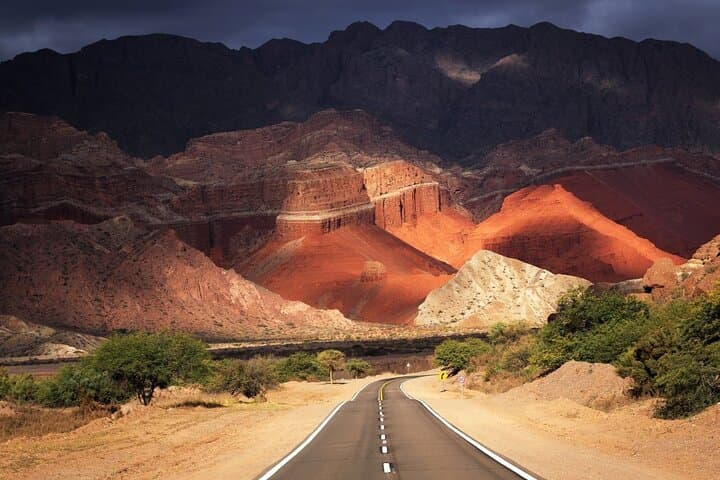
A dust-sweet wind pushes across the Lerma Valley as the bus takes the first turn onto National Route 68. Ahead, the ochre walls of the Quebrada de las Conchas rise in layered ribs—sculpted by wind and water into amphitheatres, windows and towers that seem to defy scale.
A dust-sweet wind pushes across the Lerma Valley as the bus takes the first turn onto National Route 68. Ahead, the ochre walls of the Quebrada de las Conchas rise in layered ribs—sculpted by wind and water into amphitheatres, windows and towers that seem to defy scale.
This two-day loop from Salta threads geology, colonial-era towns and high Andean roadscapes. Day one follows the Wine Route into Cafayate, where the arid gorge gives way to irrigated vineyards and Torrontés-scented cellars. The rock formations—La Garganta del Diablo, El Anfiteatro, Los Castillos—are classic examples of fluvial and aeolian erosion in the Calchaquí Valleys, exposed where the Andes’ eastern flank thins into the puna.
Day two climbs the Quebrada de Escoipe and the Cuesta del Obispo toward Piedra del Molino and Los Cardones National Park, where giant columnar cacti punctuate the plateau and Cachi’s colonial streets offer a low-key finish beneath a snow-capped massif.
Travelers can expect long drives with scheduled stops, short walks at viewpoints, winery visits with tastings (18+), and free time for lunch in both towns. Altitude reaches roughly 3,400 m at high points; pacing and hydration matter. Practical gear is simple: sun protection, comfortable walking shoes for cobbles, a lightweight insulating layer for the colder highlands, and cash for small purchases.
The tour is ideal for travelers who want dramatic landscapes and accessible cultural stops without technical hiking—an effective way to sample northern Argentina’s geology, wine culture and mountain villages in two full, image-rich days.