THE ADVENTURE COLLECTIVE® · Independent discovery and booking for outdoor travel

Two guided reef dives off Punta Cancun take certified divers to deeper coral ledges, swim-throughs and rich marine life at 15–17 m. Small-group boats, full tanks and snacks keep the focus on diving—ideal for those wanting organized, off-shore reef exploration.
Two guided reef dives off Punta Cancun take certified divers to deeper coral ledges, swim-throughs and rich marine life at 15–17 m. Small-group boats, full tanks and snacks keep the focus on diving—ideal for those wanting organized, off-shore reef exploration.
The boat slips from the Hotel Zone and the shoreline—sun-steeped hotels shrinking into the distance—leaves you eye-to-eye with open Caribbean water. Salt and engine hum give way to the hush of bubbles as certified divers roll into 24–26°C water south of Punta Cancun. At 15–17 meters (50–56 ft) the light shifts; coral outcrops become rooms and swim-throughs, and schools of snapper and parrotfish circle like living mosaics.
Verified experiences and guided adventures in the surrounding area.
Operated by Go Diving Cancun · Cancun, Quintana Roo
The boat slips from the Hotel Zone and the shoreline—sun-steeped hotels shrinking into the distance—leaves you eye-to-eye with open Caribbean water. Salt and engine hum give way to the hush of bubbles as certified divers roll into 24–26°C water south of Punta Cancun. At 15–17 meters (50–56 ft) the light shifts; coral outcrops become rooms and swim-throughs, and schools of snapper and parrotfish circle like living mosaics.
These dives follow reefs that lie outside the protective bay—sites such as San Toribio, El Túnel and La Herradura are formed on Pleistocene limestone platforms where currents sculpt ledges, overhangs and tunnels. The area’s reef development reflects both the Caribbean’s warm, nutrient-poor water and historical reef growth shaped by sea-level changes and coastal development. Local fishing villages and the modern tourist strip coexist here; diving supports both recreation and a growing awareness of reef health around Cancún.
Practically, expect two guided dives from a small-group boat with two tanks provided; total trip time runs about four hours. Bring a shorty or 3mm wetsuit depending on season, and a dive computer to track no-decompression limits at these depths. Boat handling, surface intervals, and careful buoyancy make swim-throughs comfortable and conserve fragile corals. Plan morning departures to avoid stronger afternoon winds and pack seasickness remedies if you’re roll-sensitive.
These dives reward steady, certified divers with close encounters of vibrant coral gardens, nocturnal sponges, and occasional rays—an efficient, well-supported way to see deeper reef structure without long travel from shore.
moderate.
3–4 hours.
Should be comfortable with repeated descents to 15–17 m and swimming in moderate currents; good cardiovascular fitness helps.
Yes—this trip is reserved for certified scuba divers; proof of certification is required.
Open Water diver certification is the minimum; recent diving activity is recommended and advanced certifications help with deeper navigation.
Yes—two full tanks, weights and use of standard scuba equipment are included; check if specialty items like SMBs or dive computers must be personal.
Operators cancel for unsafe conditions—full refund is typically available if canceled at least 24 hours in advance or by the operator for weather.
The reefs off Cancún are part of the wider Mesoamerican Barrier Reef System, shaped by long-term sea-level changes and local human impacts as tourism grew in the 20th century.
Stick to good buoyancy and avoid touching coral; many operators support reef-cleaning and awareness programs to reduce diver impact.
Go Diving Cancun operates guided outdoor trips and adventures with an emphasis on safety, stewardship, and memorable experiences.
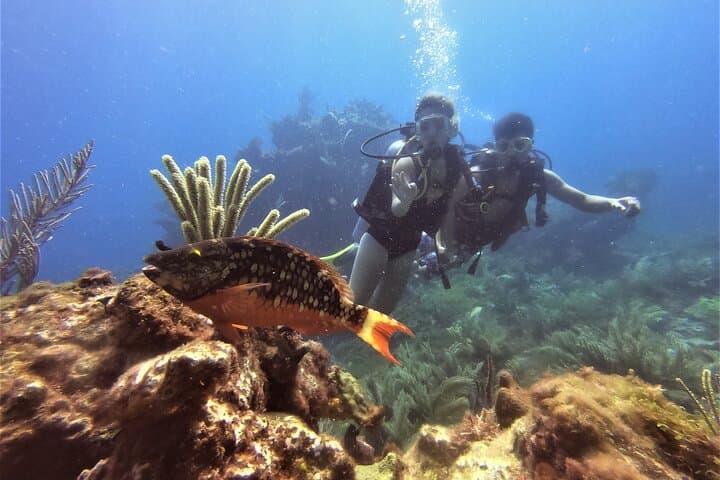
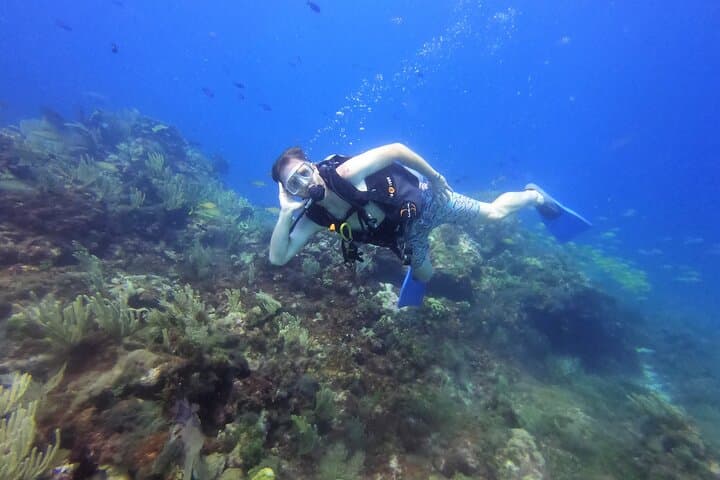
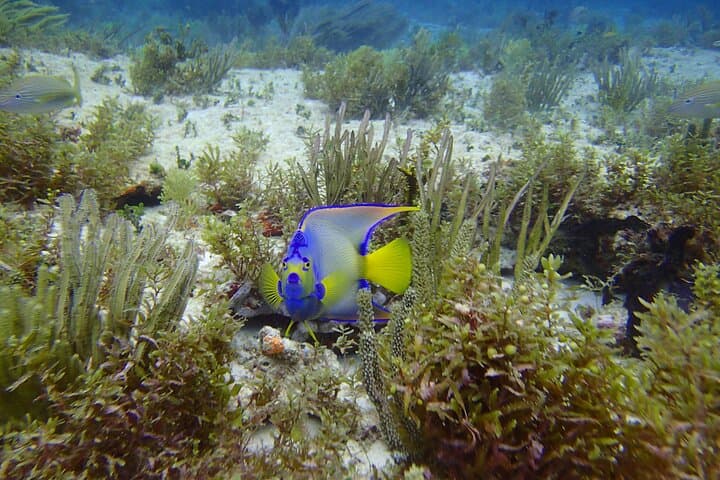
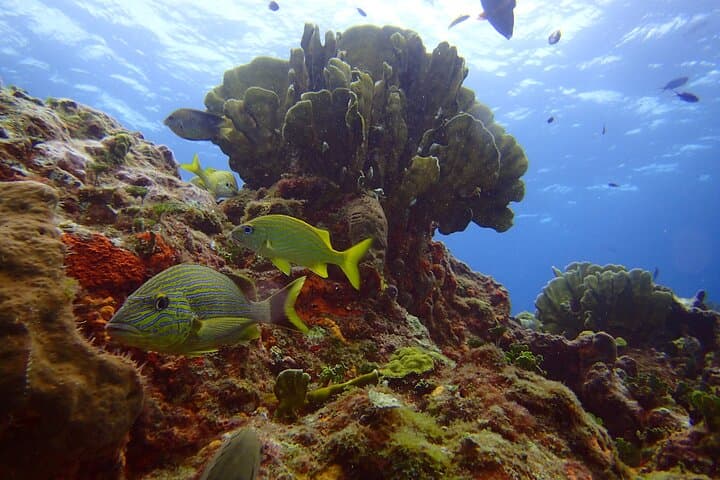
The boat slips from the Hotel Zone and the shoreline—sun-steeped hotels shrinking into the distance—leaves you eye-to-eye with open Caribbean water. Salt and engine hum give way to the hush of bubbles as certified divers roll into 24–26°C water south of Punta Cancun. At 15–17 meters (50–56 ft) the light shifts; coral outcrops become rooms and swim-throughs, and schools of snapper and parrotfish circle like living mosaics.
The boat slips from the Hotel Zone and the shoreline—sun-steeped hotels shrinking into the distance—leaves you eye-to-eye with open Caribbean water. Salt and engine hum give way to the hush of bubbles as certified divers roll into 24–26°C water south of Punta Cancun. At 15–17 meters (50–56 ft) the light shifts; coral outcrops become rooms and swim-throughs, and schools of snapper and parrotfish circle like living mosaics.
These dives follow reefs that lie outside the protective bay—sites such as San Toribio, El Túnel and La Herradura are formed on Pleistocene limestone platforms where currents sculpt ledges, overhangs and tunnels. The area’s reef development reflects both the Caribbean’s warm, nutrient-poor water and historical reef growth shaped by sea-level changes and coastal development. Local fishing villages and the modern tourist strip coexist here; diving supports both recreation and a growing awareness of reef health around Cancún.
Practically, expect two guided dives from a small-group boat with two tanks provided; total trip time runs about four hours. Bring a shorty or 3mm wetsuit depending on season, and a dive computer to track no-decompression limits at these depths. Boat handling, surface intervals, and careful buoyancy make swim-throughs comfortable and conserve fragile corals. Plan morning departures to avoid stronger afternoon winds and pack seasickness remedies if you’re roll-sensitive.
These dives reward steady, certified divers with close encounters of vibrant coral gardens, nocturnal sponges, and occasional rays—an efficient, well-supported way to see deeper reef structure without long travel from shore.