THE ADVENTURE COLLECTIVE® · Independent discovery and booking for outdoor travel

Spend 48 hours on Lake Titicaca exploring floating Uros islands, pre-Inca chullpas at Sillustani and Andean villages. This private itinerary pairs cultural visits with a round-trip boat tour and a domestic flight home.
Spend 48 hours on Lake Titicaca exploring floating Uros islands, pre-Inca chullpas at Sillustani and Andean villages. This private itinerary pairs cultural visits with a round-trip boat tour and a domestic flight home.
A morning fog lifts off Lake Titicaca while the motorboat cuts a silver line across water held at 3,810 meters. Cold air bites at exposed skin and the islands—some built from compacted reeds—rise like living platforms where children wave and llamas graze behind adobe houses. This is high Andean travel: bright sun, thin air, and culture visible at the water’s edge.
Verified experiences and guided adventures in the surrounding area.
Operated by Peru4Fun Servicios Turísticos EIRL · Puno, Puno
A morning fog lifts off Lake Titicaca while the motorboat cuts a silver line across water held at 3,810 meters. Cold air bites at exposed skin and the islands—some built from compacted reeds—rise like living platforms where children wave and llamas graze behind adobe houses. This is high Andean travel: bright sun, thin air, and culture visible at the water’s edge.
The route threads together natural and human history. Lake Titicaca is the world’s highest navigable lake and the National Reserve of Titicaca protects 36,180 hectares of shoreline, wetlands and reed beds. You’ll visit the Uros floating islands and communities such as Uros Titino, see pre-Inca stonework at Pukara, and the Colla-era chullpas of Sillustani—burial towers that once marked elite Aymara territory before Inca expansion. Raqchi’s mixed stone-and-adobe walls show later imperial engineering.
Geology here is Andean: shallow basins, uplifted shorelines and nutrient-rich waters that shaped human settlement for millennia. Local culture remains visible in textiles, reed craft and boatbuilding; the reserve links conservation with community livelihoods.
Practical side: this is a compact, private 48-hour itinerary with private transport from Cusco to Puno, one night in Puno and a round-trip boat tour on Lake Titicaca; a flight from Juliaca to Lima completes the loop. Expect short, flat walks, boat transfers and strong sun. Acclimatize in Cusco or Puno if possible, carry layers, and budget local cash for crafts and tips. The route suits travellers wanting a mix of light water travel, archaeology and direct cultural contact.
moderate.
2 days (48 hours).
Suitable for most fitness levels but plan for short walks at high altitude; basic mobility required for boarding boats.
Yes — a current valid passport is required on the day of travel for ticketing and identification.
Lake Titicaca sits around 3,810 m; mild symptoms (headache, shortness of breath) are common—acclimatize, hydrate and rest if needed.
Aymara and Quechua are widely spoken alongside Spanish; guides often provide basic translation and context.
Yes — tours use regular motorboats with short crossings, but mobility to board boats and tolerance for cool wind is necessary.
The Titicaca basin hosted pre-ceramic and Pucara cultures; Colla chullpas and later Inca constructions at Raqchi illustrate layered Andean history.
The National Reserve balances habitat protection with community-managed tourism; visitors should avoid litter, respect reed island rules and buy locally-made crafts to support livelihoods.
Peru4Fun Servicios Turísticos EIRL operates guided outdoor trips and adventures with an emphasis on safety, stewardship, and memorable experiences.
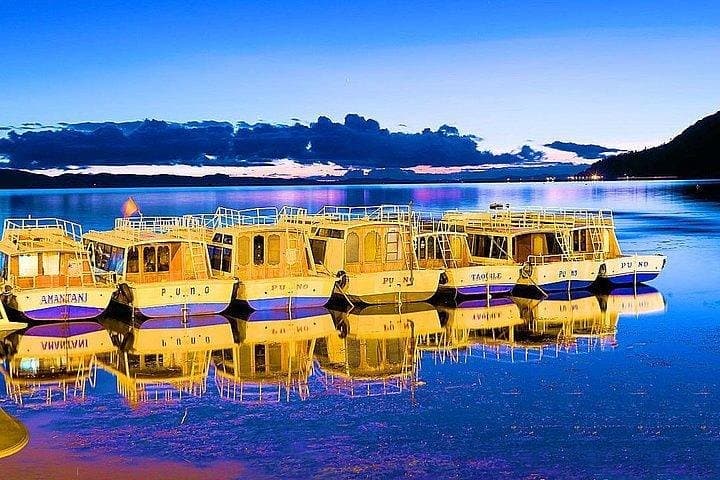
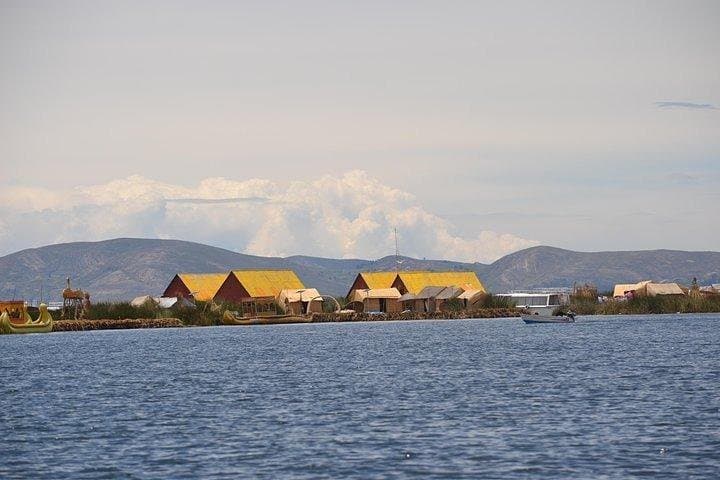
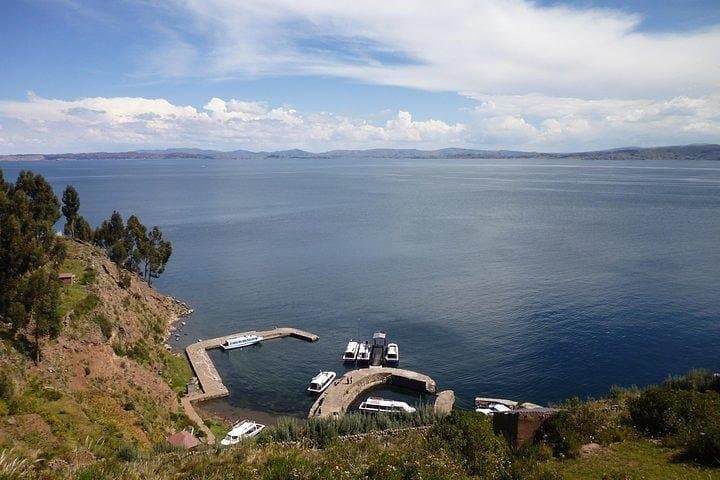
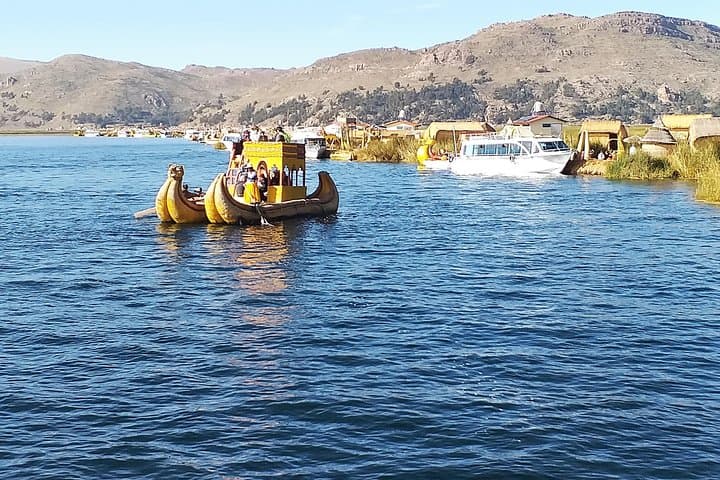
A morning fog lifts off Lake Titicaca while the motorboat cuts a silver line across water held at 3,810 meters. Cold air bites at exposed skin and the islands—some built from compacted reeds—rise like living platforms where children wave and llamas graze behind adobe houses. This is high Andean travel: bright sun, thin air, and culture visible at the water’s edge.
A morning fog lifts off Lake Titicaca while the motorboat cuts a silver line across water held at 3,810 meters. Cold air bites at exposed skin and the islands—some built from compacted reeds—rise like living platforms where children wave and llamas graze behind adobe houses. This is high Andean travel: bright sun, thin air, and culture visible at the water’s edge.
The route threads together natural and human history. Lake Titicaca is the world’s highest navigable lake and the National Reserve of Titicaca protects 36,180 hectares of shoreline, wetlands and reed beds. You’ll visit the Uros floating islands and communities such as Uros Titino, see pre-Inca stonework at Pukara, and the Colla-era chullpas of Sillustani—burial towers that once marked elite Aymara territory before Inca expansion. Raqchi’s mixed stone-and-adobe walls show later imperial engineering.
Geology here is Andean: shallow basins, uplifted shorelines and nutrient-rich waters that shaped human settlement for millennia. Local culture remains visible in textiles, reed craft and boatbuilding; the reserve links conservation with community livelihoods.
Practical side: this is a compact, private 48-hour itinerary with private transport from Cusco to Puno, one night in Puno and a round-trip boat tour on Lake Titicaca; a flight from Juliaca to Lima completes the loop. Expect short, flat walks, boat transfers and strong sun. Acclimatize in Cusco or Puno if possible, carry layers, and budget local cash for crafts and tips. The route suits travellers wanting a mix of light water travel, archaeology and direct cultural contact.