THE ADVENTURE COLLECTIVE® · Independent discovery and booking for outdoor travel

Two days that pair Xi’an’s world-class archaeology with a dramatic mountain visit. This small-group tour combines the Terracotta Army and Big Wild Goose Pagoda with a cable-car-assisted hike on Mt. Huashan—expect cultural depth and exposed alpine trails.
Two days that pair Xi’an’s world-class archaeology with a dramatic mountain visit. This small-group tour combines the Terracotta Army and Big Wild Goose Pagoda with a cable-car-assisted hike on Mt. Huashan—expect cultural depth and exposed alpine trails.
A low, cool wind slides across the North Peak terraces as the cable car eases you up Huashan; below, terraces and knife-edge ridgelines stitch sky to limestone. Two days in Xi’an compress deep history and sudden alpine exposure into a tidy loop: the buried armies of Qin Shi Huang, the Tang-era Big Wild Goose Pagoda, and the granite spires of Huashan.
Verified experiences and guided adventures in the surrounding area.
Operated by China Travel Service · Xi'an, Shaanxi
A low, cool wind slides across the North Peak terraces as the cable car eases you up Huashan; below, terraces and knife-edge ridgelines stitch sky to limestone. Two days in Xi’an compress deep history and sudden alpine exposure into a tidy loop: the buried armies of Qin Shi Huang, the Tang-era Big Wild Goose Pagoda, and the granite spires of Huashan.
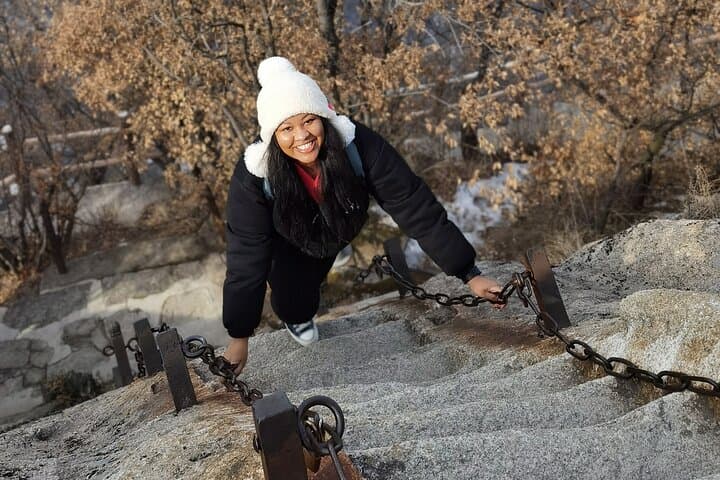
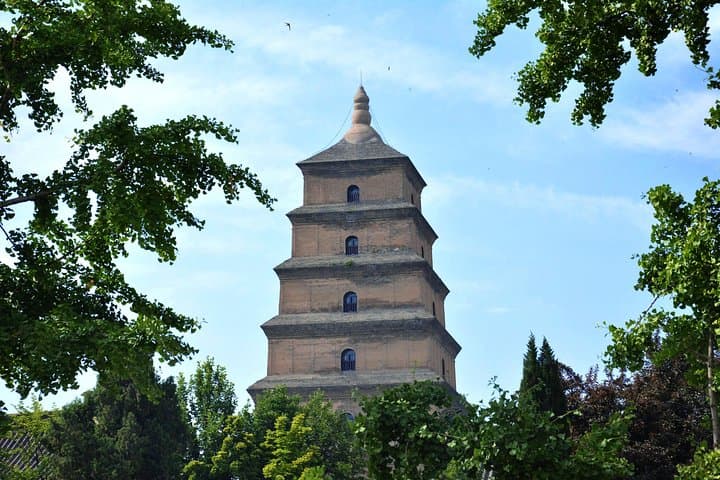
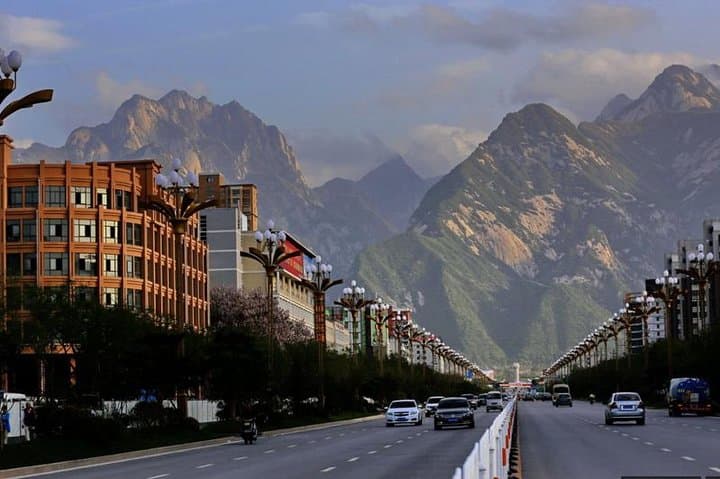
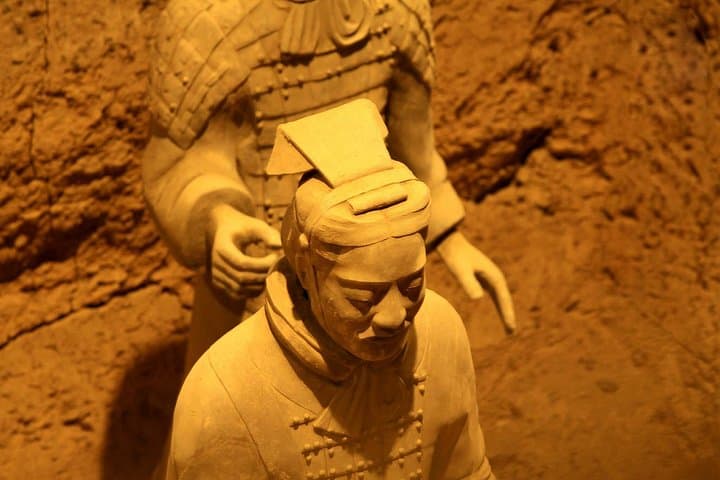
The Terracotta Army was uncovered in 1974 and remains one of the most remarkable funerary projects of the Qin dynasty—life-sized figures arranged in battle formation to accompany China’s first emperor into the afterlife. The Big Wild Goose Pagoda, rebuilt in the Tang period, stands as a reminder of Xi’an’s role on the ancient Silk Road and its Buddhist exchanges with South Asia. Geologically, Huashan is a block of hard, weathered quartz sandstone and granite that has eroded into steep faces and narrow paths that reward careful walkers with sweeping views of the Wei River valley.
Expect museum halls with guided interpretation, busy cultural squares around the pagoda, and a more elemental, physical day on Huashan—cable car access reduces hands-on ascent, but exposed trails and the famous plank walk demand attention. Practical points: carry a packed lunch for Huashan summit time, bring layered clothing for variable mountain wind and sun, and wear sturdy shoes for uneven stone steps. Allow time for hotel pickup logistics in Xi’an and be prepared for crowds at major sites; moving efficiently and respecting local regulations keeps the experience safe and enjoyable.
moderate.
2 days.
Participants should have moderate fitness — able to handle hours of walking and stair climbs and short sections of exposed trail at altitude.
The transfer takes about 1.5–2 hours each way depending on traffic; the tour schedule includes shuttle and cable car time so plan on a full day for Huashan.
Yes — the tour’s inclusions list entrance tickets for the Terracotta Army, Big Wild Goose Pagoda area, and Huashan scenic area along with cable car access for North Peak.
The plank walk is a site feature you may encounter; participation is optional and subject to local safety rules—follow guide instructions and don’t attempt exposed sections if uncomfortable.
This tour is not recommended for those with significant walking disabilities: Huashan includes uneven surfaces and stairs; cable car access reduces but does not remove physical requirements.
Xi’an served as the imperial capital for several dynasties; the Terracotta Army was commissioned by Qin Shi Huang and the Big Wild Goose Pagoda was established in the Tang era to house Buddhist texts brought from India.
High visitor numbers at the pits and Huashan require staying on marked paths and avoiding litter; respect signage to protect fragile archaeological and alpine environments.
China Travel Service operates guided outdoor trips and adventures with an emphasis on safety, stewardship, and memorable experiences.
A low, cool wind slides across the North Peak terraces as the cable car eases you up Huashan; below, terraces and knife-edge ridgelines stitch sky to limestone. Two days in Xi’an compress deep history and sudden alpine exposure into a tidy loop: the buried armies of Qin Shi Huang, the Tang-era Big Wild Goose Pagoda, and the granite spires of Huashan.
A low, cool wind slides across the North Peak terraces as the cable car eases you up Huashan; below, terraces and knife-edge ridgelines stitch sky to limestone. Two days in Xi’an compress deep history and sudden alpine exposure into a tidy loop: the buried armies of Qin Shi Huang, the Tang-era Big Wild Goose Pagoda, and the granite spires of Huashan.
The Terracotta Army was uncovered in 1974 and remains one of the most remarkable funerary projects of the Qin dynasty—life-sized figures arranged in battle formation to accompany China’s first emperor into the afterlife. The Big Wild Goose Pagoda, rebuilt in the Tang period, stands as a reminder of Xi’an’s role on the ancient Silk Road and its Buddhist exchanges with South Asia. Geologically, Huashan is a block of hard, weathered quartz sandstone and granite that has eroded into steep faces and narrow paths that reward careful walkers with sweeping views of the Wei River valley.
Expect museum halls with guided interpretation, busy cultural squares around the pagoda, and a more elemental, physical day on Huashan—cable car access reduces hands-on ascent, but exposed trails and the famous plank walk demand attention. Practical points: carry a packed lunch for Huashan summit time, bring layered clothing for variable mountain wind and sun, and wear sturdy shoes for uneven stone steps. Allow time for hotel pickup logistics in Xi’an and be prepared for crowds at major sites; moving efficiently and respecting local regulations keeps the experience safe and enjoyable.