THE ADVENTURE COLLECTIVE® · Independent discovery and booking for outdoor travel

Cross the Atlas, visit saffron and carpet villages, then ride camels into Zagora’s sand sea for an overnight camp. This two-day tour balances scenic driving with short active moments — sunrise dunes, sandboarding and a night under desert stars.
Cross the Atlas, visit saffron and carpet villages, then ride camels into Zagora’s sand sea for an overnight camp. This two-day tour balances scenic driving with short active moments — sunrise dunes, sandboarding and a night under desert stars.
The first dunes appear like a slow tide on the horizon as the road drops out of the Atlas foothills — wind already sketching ribs into the sand that will greet you at dusk.
Verified experiences and guided adventures in the surrounding area.
Operated by OkeyTours · Zagora, Drâa-Tafilalet
The first dunes appear like a slow tide on the horizon as the road drops out of the Atlas foothills — wind already sketching ribs into the sand that will greet you at dusk.
Across two days, this itinerary carries travelers from Agadir’s Atlantic plain through Taliouine’s saffron fields and Taznakht’s carpet villages into the open sahara around Zagora, finishing with an overnight in a traditional desert camp. The route is a cross-section of southern Morocco: folded red mountains, irrigated palm groves, and clay kasbahs that mark old caravan lines.
Geologically this landscape is recent uplift and erosion — soft sandstone and compacted sands underpinned by pre-Cambrian basement in the High Atlas — which creates the wide, wind-sculpted dunes and broad valleys travelers will walk beside. Culturally, the area remains strongly Berber; you’ll pass small villages where rug-weaving and saffron processing are daily trades and hear local music in the camp after dinner.
Practical guidance: expect long stretches in an air-conditioned minivan between photo stops, followed by short, active segments — mounting camels, climbing small dunes, and optional sandboarding. Nights in the desert are cool; daytime sun is intense. Bring at least 2–3 liters of water per day, a wide-brim hat, and sturdy shoes for mixed terrain. Plan for early starts if you want sunrise over the dunes and keep travel documents and cash accessible for market stops.
This two-day trip balances immersion and comfort: simple desert hospitality paired with accessible adventure for travelers who want the Sahara’s scale without extended trekking.
moderate.
2 days (≈48 hours).
Light to moderate fitness; comfortable with long vehicle transfers and short active segments like mounting camels and climbing dunes.
Expect around 6–8 hours of driving on day one with photo stops and short visits; the journey crosses the Anti-Atlas and pauses in Taliouine and Taznakht.
No — guides give basic instructions and camels are used to tourists; the ride is short and manageable for most people.
Camps are semi-traditional with simple sleeping tents, communal dining, and basic sanitary facilities; dinner and breakfast are included.
Yes — sandboarding is offered at the dune site and is generally optional; bring closed shoes and be prepared for sandy conditions.
This corridor was part of southbound caravan routes connecting Saharan oases to Atlantic ports; kasbahs and fortified villages grew around trade and oasis agriculture.
The Sahara’s fragile soils and limited water make Leave No Trace vital — avoid off-track driving, limit plastic, and respect local grazing and water sources.
OkeyTours operates guided outdoor trips and adventures with an emphasis on safety, stewardship, and memorable experiences.
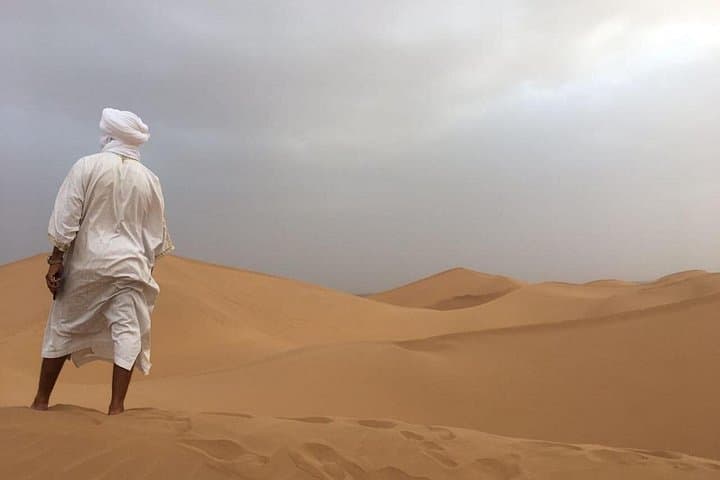
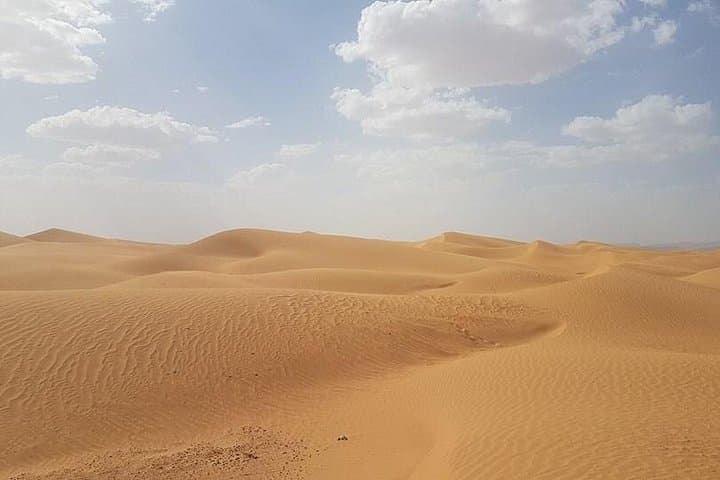
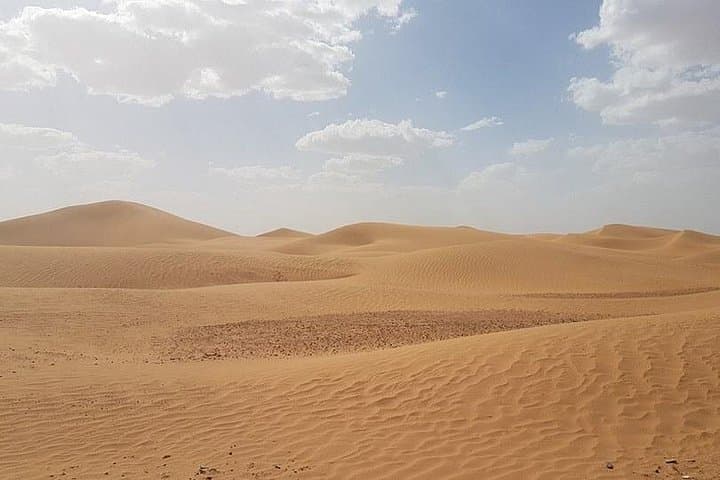
The first dunes appear like a slow tide on the horizon as the road drops out of the Atlas foothills — wind already sketching ribs into the sand that will greet you at dusk.
The first dunes appear like a slow tide on the horizon as the road drops out of the Atlas foothills — wind already sketching ribs into the sand that will greet you at dusk.
Across two days, this itinerary carries travelers from Agadir’s Atlantic plain through Taliouine’s saffron fields and Taznakht’s carpet villages into the open sahara around Zagora, finishing with an overnight in a traditional desert camp. The route is a cross-section of southern Morocco: folded red mountains, irrigated palm groves, and clay kasbahs that mark old caravan lines.
Geologically this landscape is recent uplift and erosion — soft sandstone and compacted sands underpinned by pre-Cambrian basement in the High Atlas — which creates the wide, wind-sculpted dunes and broad valleys travelers will walk beside. Culturally, the area remains strongly Berber; you’ll pass small villages where rug-weaving and saffron processing are daily trades and hear local music in the camp after dinner.
Practical guidance: expect long stretches in an air-conditioned minivan between photo stops, followed by short, active segments — mounting camels, climbing small dunes, and optional sandboarding. Nights in the desert are cool; daytime sun is intense. Bring at least 2–3 liters of water per day, a wide-brim hat, and sturdy shoes for mixed terrain. Plan for early starts if you want sunrise over the dunes and keep travel documents and cash accessible for market stops.
This two-day trip balances immersion and comfort: simple desert hospitality paired with accessible adventure for travelers who want the Sahara’s scale without extended trekking.