THE ADVENTURE COLLECTIVE® · Independent discovery and booking for outdoor travel

A compact two-day journey from Marrakech to Zagora that pairs Atlas passes, kasbahs and a desert camp overnight. Expect long drives, a short camel trek, dune sunrises and authentic Berber camp life.
A compact two-day journey from Marrakech to Zagora that pairs Atlas passes, kasbahs and a desert camp overnight. Expect long drives, a short camel trek, dune sunrises and authentic Berber camp life.
You leave Marrakech before dawn, the city’s ochre walls shrinking as the road climbs into the High Atlas. The pass exhales wind and rock; the mountains push you forward until Ait Ben Haddou appears—a cluster of earthen kasbahs catching the light like an old story. Then the landscape loosens into the broad, palm-lined ribbon of the Draa Valley and finally the Sahara’s dunes, which rise and fall like a deliberate ocean.
Verified experiences and guided adventures in the surrounding area.
Operated by Sahara Differently · Zagora, Drâa-Tafilalet
You leave Marrakech before dawn, the city’s ochre walls shrinking as the road climbs into the High Atlas. The pass exhales wind and rock; the mountains push you forward until Ait Ben Haddou appears—a cluster of earthen kasbahs catching the light like an old story. Then the landscape loosens into the broad, palm-lined ribbon of the Draa Valley and finally the Sahara’s dunes, which rise and fall like a deliberate ocean.
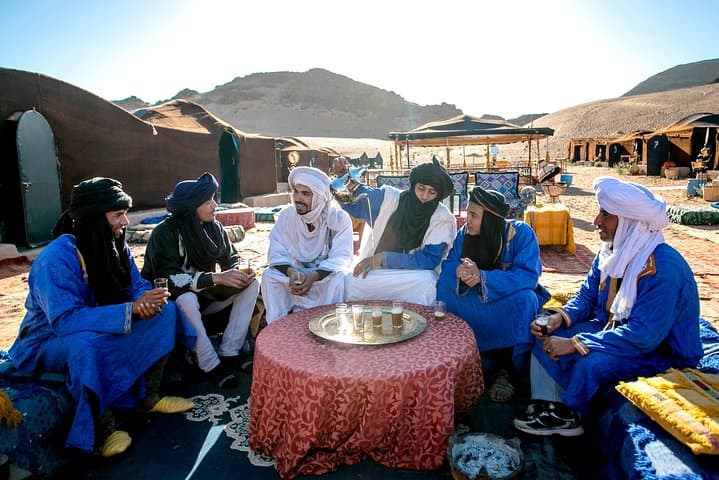
This compressed two-day itinerary threads history and geology: trans-Saharan caravan routes once funneled through these valleys, kasbahs recorded clan rivalries, and the dunes are recent deposits shaped by Atlas-sourced winds. Local culture centers on Amazigh (Berber) hospitality—tea, drums, and simple meals around a campfire. Ouarzazate’s Taourirt Kasbah adds a film-era veneer; the region’s red mud bricks tell the same story of mud, sun, and time.
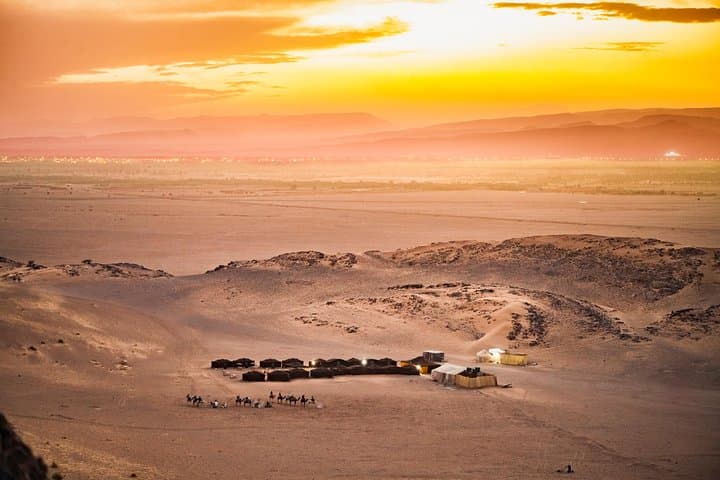
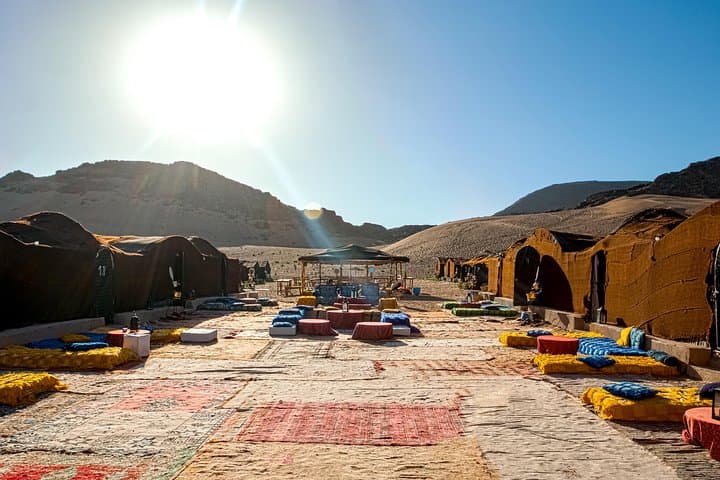
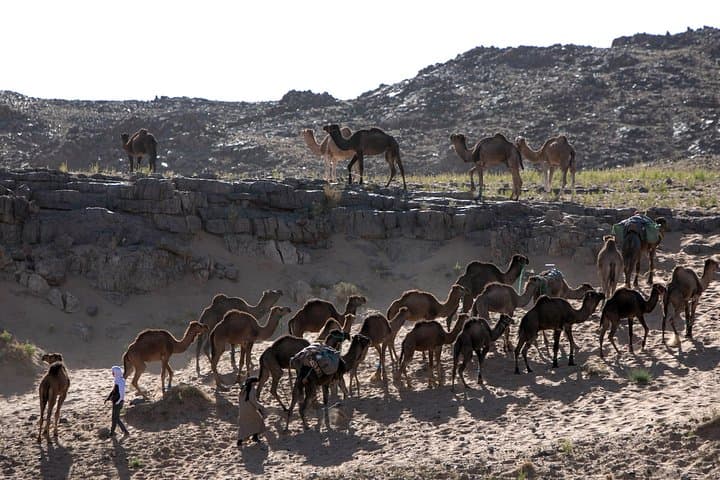
Expect long road sections (Marrakech to Zagora is roughly 7–9 hours of driving each way with stops), a short camel trek over dunes, and an overnight in a shared medium tent camp with communal bathrooms. Sunrise and sunset on the sand are the trip’s high notes and best times for photos.
Practical tips: pack layered clothing for hot days and cool nights, bring a reusable water bottle and sun protection, and use sturdy closed-toe shoes for walking on mixed terrain. Charge devices before departure; Wi‑Fi and outlets are limited at desert camps. Respect local customs, leave no trace in dunes, and budget for small tips to guides and camel handlers.
moderate.
2 days.
Suitable for travelers in average fitness; involves short camel walking and easy dune scrambling but long vehicle transfers
Expect about 7–9 hours of driving each way including stops through the High Atlas and Draa Valley; the itinerary schedules photo and rest breaks.
Yes—the tour includes a camel trek across the Zagora sand dunes, typically timed for sunset and/or sunrise.
Overnight is in a medium shared tent camp with communal bathrooms; bedding is provided but facilities are basic.
The tour is advertised for all fitness levels, but camel rides and long vehicle transfers may be uncomfortable for people with spinal issues; check with the operator before booking.
The Draa Valley and surrounding kasbahs were once part of trans-Saharan trade routes; many kasbahs served as caravan stations and family strongholds built from local mud-brick techniques.
Sand dunes and palm oases are fragile—avoid driving off designated tracks, minimize water use at camps, and remove all trash; support local guides who practice low-impact tourism.
Sahara Differently operates guided outdoor trips and adventures with an emphasis on safety, stewardship, and memorable experiences.
You leave Marrakech before dawn, the city’s ochre walls shrinking as the road climbs into the High Atlas. The pass exhales wind and rock; the mountains push you forward until Ait Ben Haddou appears—a cluster of earthen kasbahs catching the light like an old story. Then the landscape loosens into the broad, palm-lined ribbon of the Draa Valley and finally the Sahara’s dunes, which rise and fall like a deliberate ocean.
You leave Marrakech before dawn, the city’s ochre walls shrinking as the road climbs into the High Atlas. The pass exhales wind and rock; the mountains push you forward until Ait Ben Haddou appears—a cluster of earthen kasbahs catching the light like an old story. Then the landscape loosens into the broad, palm-lined ribbon of the Draa Valley and finally the Sahara’s dunes, which rise and fall like a deliberate ocean.
This compressed two-day itinerary threads history and geology: trans-Saharan caravan routes once funneled through these valleys, kasbahs recorded clan rivalries, and the dunes are recent deposits shaped by Atlas-sourced winds. Local culture centers on Amazigh (Berber) hospitality—tea, drums, and simple meals around a campfire. Ouarzazate’s Taourirt Kasbah adds a film-era veneer; the region’s red mud bricks tell the same story of mud, sun, and time.
Expect long road sections (Marrakech to Zagora is roughly 7–9 hours of driving each way with stops), a short camel trek over dunes, and an overnight in a shared medium tent camp with communal bathrooms. Sunrise and sunset on the sand are the trip’s high notes and best times for photos.
Practical tips: pack layered clothing for hot days and cool nights, bring a reusable water bottle and sun protection, and use sturdy closed-toe shoes for walking on mixed terrain. Charge devices before departure; Wi‑Fi and outlets are limited at desert camps. Respect local customs, leave no trace in dunes, and budget for small tips to guides and camel handlers.