THE ADVENTURE COLLECTIVE® · Independent discovery and booking for outdoor travel

Short on time in Morocco? This two-day Zagora tour from Marrakech packs a sunset camel trek, night in a desert camp, and a drive through the Draa Valley into one compact Sahara experience. Expect long scenic drives, soft dunes, and a star-filled camp night.
Short on time in Morocco? This two-day Zagora tour from Marrakech packs a sunset camel trek, night in a desert camp, and a drive through the Draa Valley into one compact Sahara experience. Expect long scenic drives, soft dunes, and a star-filled camp night.
Dust rises on the highway as the Atlas Mountains recede behind you and the desert horizon pulls into focus—this two-day Zagora tour condenses the Sahara’s essential scenes into a short, manageable loop. You’ll slice through changing light from ochre gorges to the green ribbon of the Draa Valley, dismounting later for a camel trek across wind-sculpted dunes and a night beneath the sky.
Verified experiences and guided adventures in the surrounding area.
Operated by Marrakechandcasablancatours · Zagora, Drâa-Tafilalet
Dust rises on the highway as the Atlas Mountains recede behind you and the desert horizon pulls into focus—this two-day Zagora tour condenses the Sahara’s essential scenes into a short, manageable loop. You’ll slice through changing light from ochre gorges to the green ribbon of the Draa Valley, dismounting later for a camel trek across wind-sculpted dunes and a night beneath the sky.
Geology and human history meet on this route: the Sahara’s sands are products of long-term erosion from the High Atlas, while the Draa Valley’s palm groves mark ancient caravan corridors. The drive commonly pauses at Aït Ben Haddou, a ksar that speaks to Morocco’s storied trade and film history; nearby villages reflect Amazigh (Berber) culture and traditional mudbrick architecture.
Expect about 6–8 hours of driving one-way (roughly 350–380 km), with a pass over high country and long stretches of paved and semi-paved road. Terrain for the camel ride is soft sand and low dunes—walking short stretches is optional. The overnight camp offers simple tents, dinner, and breakfast; stargazing here is unobstructed and authoritative.
Practical notes: start early to avoid midday heat, carry at least 2–3 liters of water per person, and wear sun protection and sturdy closed shoes for dune scrambling. If you have limited time but want an authentic Sahara experience—sunset camel ride, campfire, and sunrise over the dunes—this itinerary delivers it with minimal fuss. Be prepared for basic facilities in camp and a lot of sky.
easy.
2 days.
Suitable for most fitness levels; you should be able to sit on a camel and manage short dune walks.
The drive is roughly 350–380 km and typically takes 6–8 hours depending on stops and road conditions.
Camps are basic-to-comfortable with simple tents, shared or basic toilets, dinner and breakfast provided—expect authentic rather than luxury amenities.
Camel rides are generally gentle and suitable for most travelers; staff provide guidance, but those with severe mobility or cardiovascular issues should consult providers first.
Most operators can accommodate common dietary needs if notified in advance—use the booking ‘special requirements’ to request meals or assistance.
Zagora sits at the southern edge of historical caravan routes that connected Sub-Saharan trade networks to Morocco; nearby ksour (fortified villages) reflect centuries of trans-Saharan commerce.
The region is sensitive to water scarcity and overuse; travelers should minimize bottled-plastic waste, stick to marked paths, and use local guides who support sustainable camp practices.
Marrakechandcasablancatours operates guided outdoor trips and adventures with an emphasis on safety, stewardship, and memorable experiences.
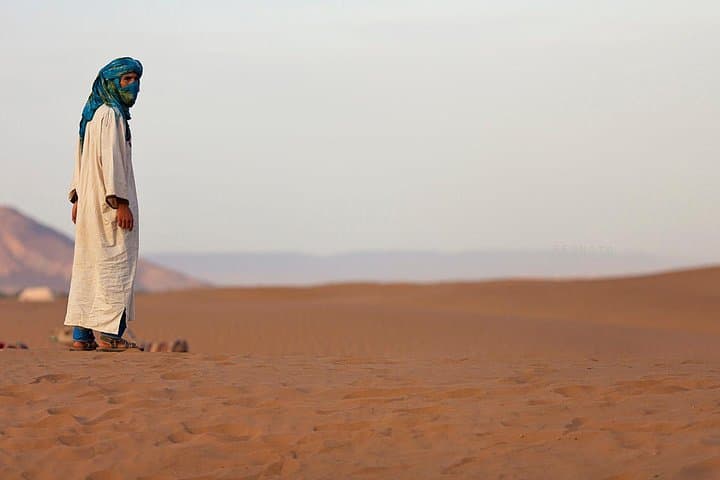
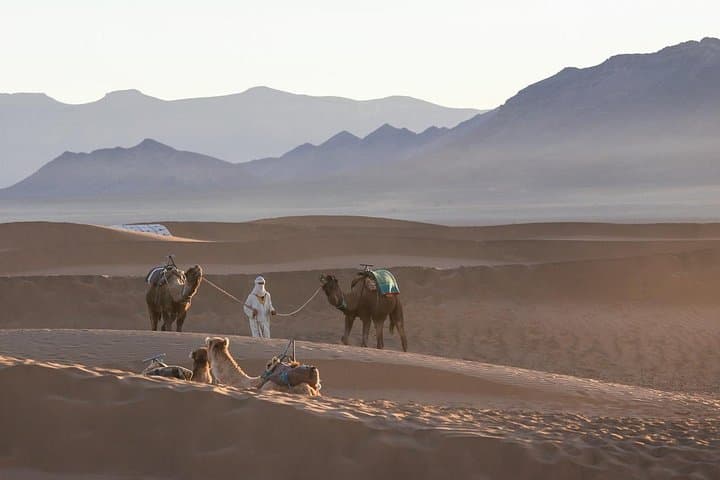
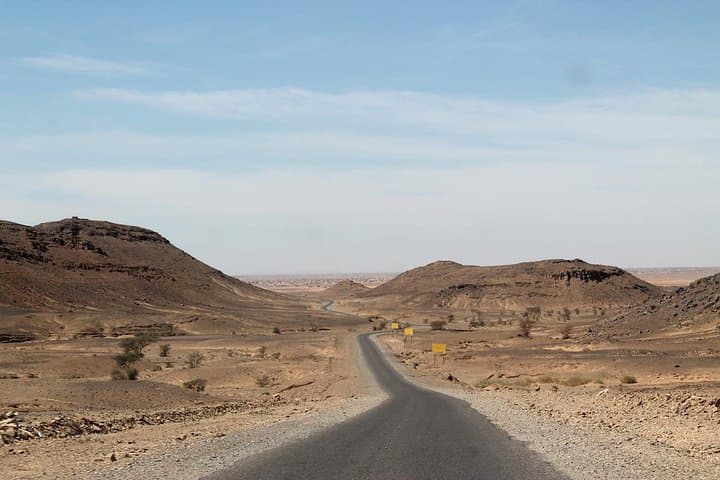
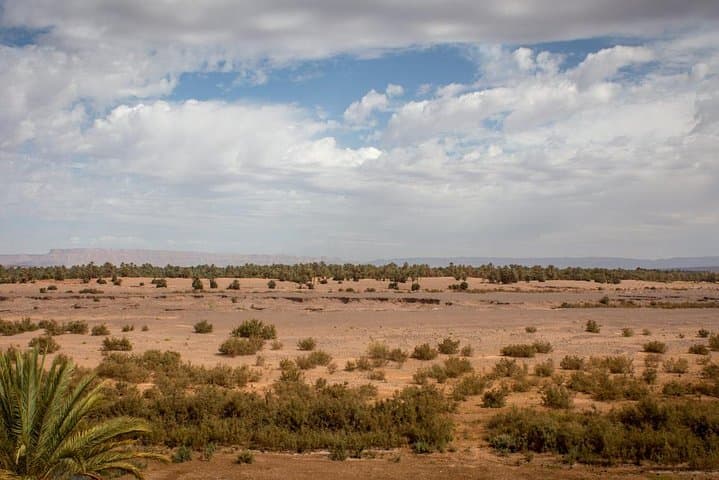
Dust rises on the highway as the Atlas Mountains recede behind you and the desert horizon pulls into focus—this two-day Zagora tour condenses the Sahara’s essential scenes into a short, manageable loop. You’ll slice through changing light from ochre gorges to the green ribbon of the Draa Valley, dismounting later for a camel trek across wind-sculpted dunes and a night beneath the sky.
Dust rises on the highway as the Atlas Mountains recede behind you and the desert horizon pulls into focus—this two-day Zagora tour condenses the Sahara’s essential scenes into a short, manageable loop. You’ll slice through changing light from ochre gorges to the green ribbon of the Draa Valley, dismounting later for a camel trek across wind-sculpted dunes and a night beneath the sky.
Geology and human history meet on this route: the Sahara’s sands are products of long-term erosion from the High Atlas, while the Draa Valley’s palm groves mark ancient caravan corridors. The drive commonly pauses at Aït Ben Haddou, a ksar that speaks to Morocco’s storied trade and film history; nearby villages reflect Amazigh (Berber) culture and traditional mudbrick architecture.
Expect about 6–8 hours of driving one-way (roughly 350–380 km), with a pass over high country and long stretches of paved and semi-paved road. Terrain for the camel ride is soft sand and low dunes—walking short stretches is optional. The overnight camp offers simple tents, dinner, and breakfast; stargazing here is unobstructed and authoritative.
Practical notes: start early to avoid midday heat, carry at least 2–3 liters of water per person, and wear sun protection and sturdy closed shoes for dune scrambling. If you have limited time but want an authentic Sahara experience—sunset camel ride, campfire, and sunrise over the dunes—this itinerary delivers it with minimal fuss. Be prepared for basic facilities in camp and a lot of sky.