THE ADVENTURE COLLECTIVE® · Independent discovery and booking for outdoor travel

A fast-paced 2-day circuit from Marrakech to Zagora that crosses the High Atlas, visits Aït Ben Haddou and Ouarzazate, and finishes with a sunset camel ride and an overnight in a Berber desert camp. Ideal for travelers short on time who want a condensed desert experience.
A fast-paced 2-day circuit from Marrakech to Zagora that crosses the High Atlas, visits Aït Ben Haddou and Ouarzazate, and finishes with a sunset camel ride and an overnight in a Berber desert camp. Ideal for travelers short on time who want a condensed desert experience.
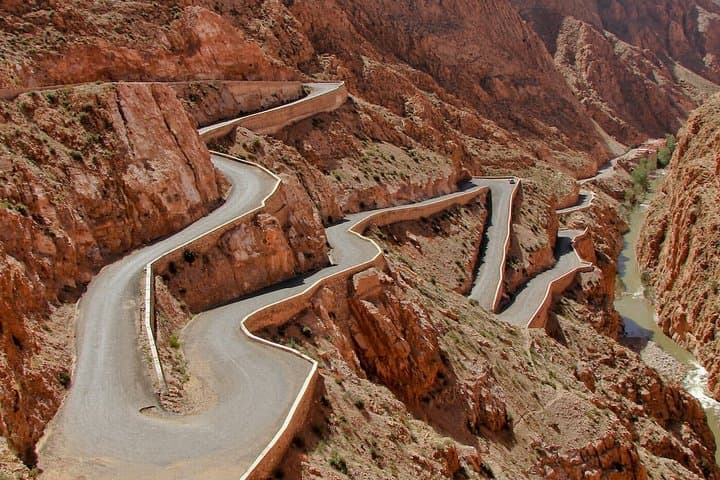
You leave Marrakech before dawn, tires humming as the road unspools toward the High Atlas. The pass climbs; wind shapes the light across red scrub and boulder-strewn slopes. At Tizi n’Tichka (about 2,260 m) the air thins and the valley opens — a prelude to the wide silence of the Draa Valley and the low, ochre dunes that wait at Zagora.
Verified experiences and guided adventures in the surrounding area.
Operated by MarrakechAttraction.com · Zagora, Drâa-Tafilalet
You leave Marrakech before dawn, tires humming as the road unspools toward the High Atlas. The pass climbs; wind shapes the light across red scrub and boulder-strewn slopes. At Tizi n’Tichka (about 2,260 m) the air thins and the valley opens — a prelude to the wide silence of the Draa Valley and the low, ochre dunes that wait at Zagora.
The route threads through history: fortified kasbahs like Aït Ben Haddou (UNESCO) that once watched caravans cross the Sahara, film sets at Ouarzazate where Hollywood staged deserts, and narrow river valleys carved into paler rock. Geologically, the trip moves from folded High Atlas ranges down to the alluvial plains and wind-built ergs of the Sahara’s northern edge.
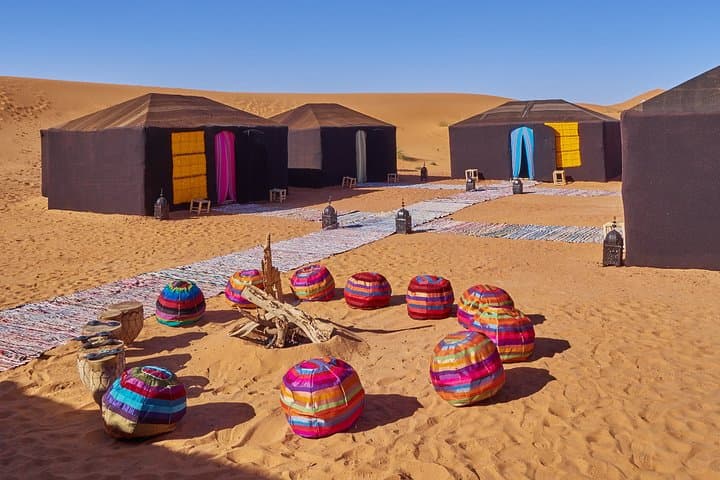
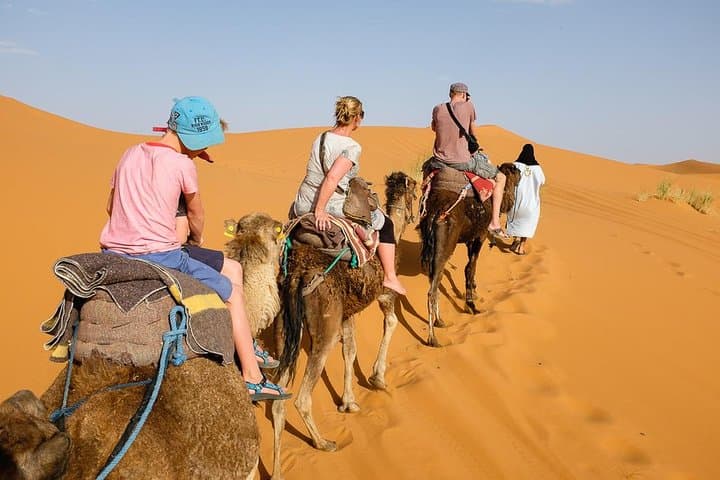
Cultural moments are direct — mint tea with a Berber family, a guided walk through a clay kasbah, and a sunset camel saddle across rippling dunes. Nights are spent in a traditional Berber tent under a sky that feels disproportionately close; temperatures swing sharply after dusk.
Practicalities: expect long driving days (roughly 8–10 hours total transit) with multiple photo stops. The camel ride at sunset is short and gentle; the camp provides basic bedding and dinner. Bring layered clothing for cold nights, 2–3 liters of water per person, sun protection, and a small daypack for camera gear and essentials. If you want to minimize motion discomfort, choose a front-seat spot and pack motion remedies.
The trip is compact but rewarding — a concentrated slice of southern Morocco that pairs landscape photography with tangible cultural encounters.
moderate.
2 days (approx. 48 hours door-to-door).
Suitable for most fitness levels; requires ability to mount a camel and tolerate multiple hours in a vehicle.
Expect roughly 6–8 hours of driving each way including photo and rest stops; the route passes Tizi n’Tichka and Ouarzazate so timings vary by traffic and stops.
Overnight is in a traditional Berber tent with basic bedding; facilities are rustic but prepared for comfort (blankets, mattress pads, shared toilet facilities depending on camp).
The camel ride is short and low-intensity, suitable for beginners; guides assist mounting and dismounting and pace the ride for sunset photos.
The tour notes wheelchair and stroller accessibility for parts of the trip and allows infants; however, camel rides and dune walking may be challenging for those with limited mobility — check with the operator before booking.
The Draa corridor was a historic caravan route linking sub-Saharan Africa to Marrakech; kasbahs along the way served as fortified stops and trading hubs.
The desert ecosystem is fragile—minimize water use, avoid disturbing vegetation and wildlife, and support local guides and camps that follow low-impact practices.
MarrakechAttraction.com operates guided outdoor trips and adventures with an emphasis on safety, stewardship, and memorable experiences.
You leave Marrakech before dawn, tires humming as the road unspools toward the High Atlas. The pass climbs; wind shapes the light across red scrub and boulder-strewn slopes. At Tizi n’Tichka (about 2,260 m) the air thins and the valley opens — a prelude to the wide silence of the Draa Valley and the low, ochre dunes that wait at Zagora.
You leave Marrakech before dawn, tires humming as the road unspools toward the High Atlas. The pass climbs; wind shapes the light across red scrub and boulder-strewn slopes. At Tizi n’Tichka (about 2,260 m) the air thins and the valley opens — a prelude to the wide silence of the Draa Valley and the low, ochre dunes that wait at Zagora.
The route threads through history: fortified kasbahs like Aït Ben Haddou (UNESCO) that once watched caravans cross the Sahara, film sets at Ouarzazate where Hollywood staged deserts, and narrow river valleys carved into paler rock. Geologically, the trip moves from folded High Atlas ranges down to the alluvial plains and wind-built ergs of the Sahara’s northern edge.
Cultural moments are direct — mint tea with a Berber family, a guided walk through a clay kasbah, and a sunset camel saddle across rippling dunes. Nights are spent in a traditional Berber tent under a sky that feels disproportionately close; temperatures swing sharply after dusk.
Practicalities: expect long driving days (roughly 8–10 hours total transit) with multiple photo stops. The camel ride at sunset is short and gentle; the camp provides basic bedding and dinner. Bring layered clothing for cold nights, 2–3 liters of water per person, sun protection, and a small daypack for camera gear and essentials. If you want to minimize motion discomfort, choose a front-seat spot and pack motion remedies.
The trip is compact but rewarding — a concentrated slice of southern Morocco that pairs landscape photography with tangible cultural encounters.