THE ADVENTURE COLLECTIVE® · Independent discovery and booking for outdoor travel

Cross the High Atlas to stare down dunes and sleep beneath the Sahara’s stars on a compact 2-day Zagora overnight from Marrakech. Expect long drives, a sunset camel trek, private tents, and a sunrise return through the palm-filled Draa Valley.
Cross the High Atlas to stare down dunes and sleep beneath the Sahara’s stars on a compact 2-day Zagora overnight from Marrakech. Expect long drives, a sunset camel trek, private tents, and a sunrise return through the palm-filled Draa Valley.
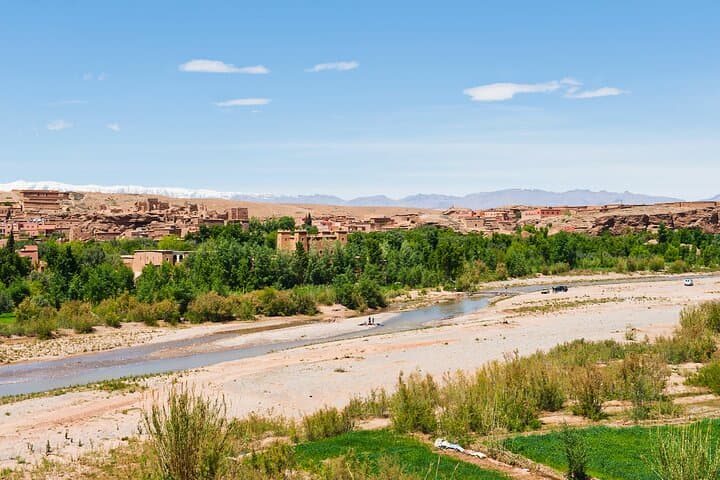
Dawn breaks over the High Atlas as your vehicle climbs Tizi n’Tichka, light catching the ochre slopes and Berber villages that lean into the road. The pass tops out around 2,260 m, then the world tilts toward sun-baked kasbahs and the long green ribbon of the Draa Valley. By late afternoon you reach Zagora and mount a camel for the slow, rhythmic ride across wind-sculpted sand toward the camp.
Verified experiences and guided adventures in the surrounding area.
Operated by Agence Travel Tour · Zagora, Drâa-Tafilalet
Dawn breaks over the High Atlas as your vehicle climbs Tizi n’Tichka, light catching the ochre slopes and Berber villages that lean into the road. The pass tops out around 2,260 m, then the world tilts toward sun-baked kasbahs and the long green ribbon of the Draa Valley. By late afternoon you reach Zagora and mount a camel for the slow, rhythmic ride across wind-sculpted sand toward the camp.
This route threads geography and history—Aït Ben Haddou’s fortified ksar, a UNESCO site, marks the old caravan artery between Marrakech and the Sahara. Geologically the High Atlas is young and folded, shedding rivers that feed palm groves in the Draa’s alluvial plain. Local life here remains tied to irrigation, pottery centers like Tamegroute, and seasonal markets that still follow old trade patterns.
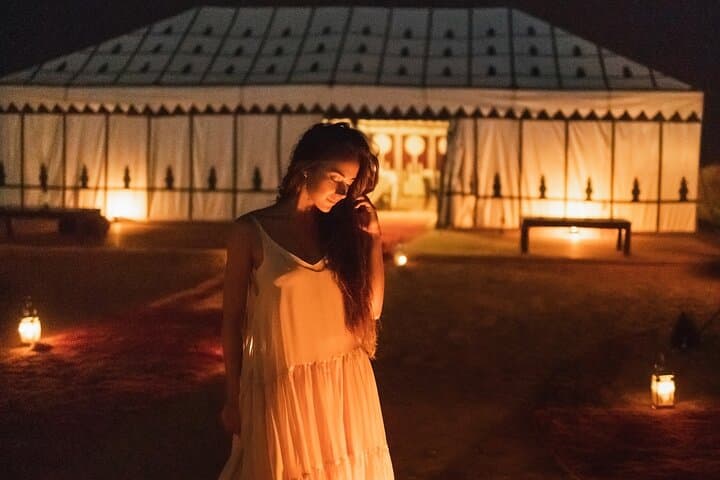
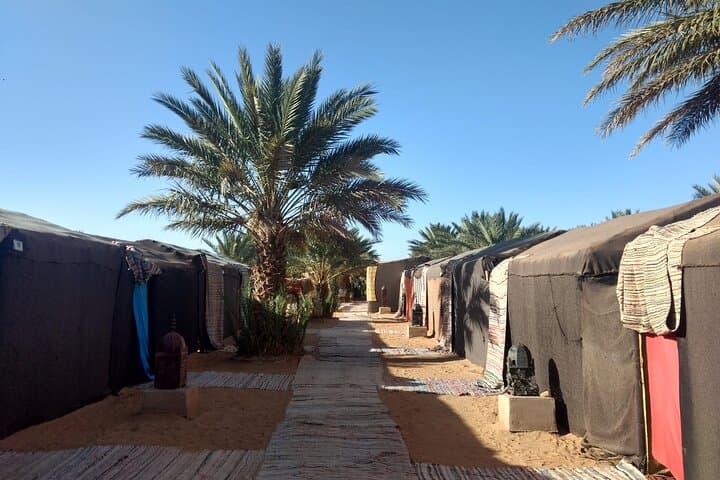
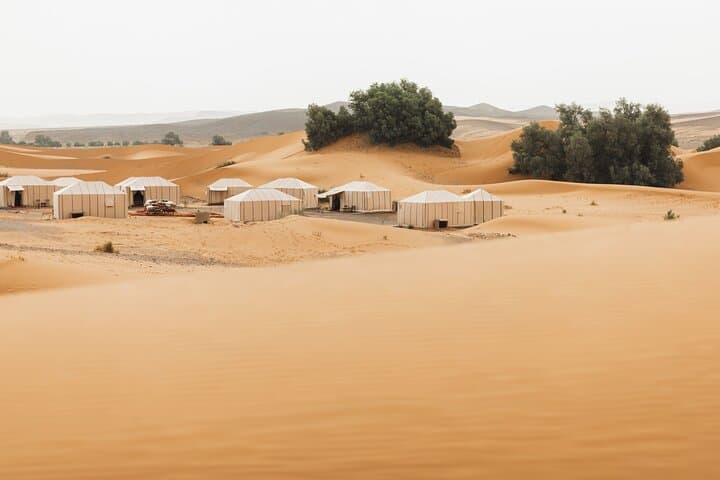
Expect a long day of driving (roughly 350–380 km one-way), short hikes around kasbahs, and a sunset camel trek of about 45–60 minutes to reach the desert camp. Nights get cold; camps offer private tents, dinner, and music under an uncompromising starfield. Sunrise is a quiet return by camel and a gradual drive back to Marrakech.
Practical notes: plan for extended transfers, carry layered clothing for 20–30°C daytime and near-freezing nights in winter, bring sun protection and at least 2 liters of water per person. Phone signal can drop beyond Ouarzazate—use offline maps. Respect local customs, avoid leaving waste, and book with operators who use established campsites to limit ecological impact.
easy.
2 days (approx. 36 hours).
Suitable for travelers in average fitness; comfortable with long vehicle transfers and short camel rides.
The typical sunset camel trek from the meeting point to camp lasts about 45–60 minutes depending on the camp’s dune location and group pace.
Yes—operators offer both shared and private options; private bookings usually include the same route but with flexible pickup and timings.
Camps provide private tents with bedding and blankets; facilities vary by operator but generally include communal dining and toilets, with limited hot-water availability.
Signal is reliable up to Ouarzazate and parts of the Draa Valley but often drops closer to Zagora and in the dunes—download maps and inform someone of your itinerary.
The Marrakech–Zagora corridor traces old trans-Saharan caravan routes; Aït Ben Haddou is a well-preserved ksar that controlled trade and film interest over centuries.
Water is scarce—minimize consumption and use refillable bottles; stick to established tracks and campsites to reduce dune erosion and disturbance.
Agence Travel Tour operates guided outdoor trips and adventures with an emphasis on safety, stewardship, and memorable experiences.
Dawn breaks over the High Atlas as your vehicle climbs Tizi n’Tichka, light catching the ochre slopes and Berber villages that lean into the road. The pass tops out around 2,260 m, then the world tilts toward sun-baked kasbahs and the long green ribbon of the Draa Valley. By late afternoon you reach Zagora and mount a camel for the slow, rhythmic ride across wind-sculpted sand toward the camp.
Dawn breaks over the High Atlas as your vehicle climbs Tizi n’Tichka, light catching the ochre slopes and Berber villages that lean into the road. The pass tops out around 2,260 m, then the world tilts toward sun-baked kasbahs and the long green ribbon of the Draa Valley. By late afternoon you reach Zagora and mount a camel for the slow, rhythmic ride across wind-sculpted sand toward the camp.
This route threads geography and history—Aït Ben Haddou’s fortified ksar, a UNESCO site, marks the old caravan artery between Marrakech and the Sahara. Geologically the High Atlas is young and folded, shedding rivers that feed palm groves in the Draa’s alluvial plain. Local life here remains tied to irrigation, pottery centers like Tamegroute, and seasonal markets that still follow old trade patterns.
Expect a long day of driving (roughly 350–380 km one-way), short hikes around kasbahs, and a sunset camel trek of about 45–60 minutes to reach the desert camp. Nights get cold; camps offer private tents, dinner, and music under an uncompromising starfield. Sunrise is a quiet return by camel and a gradual drive back to Marrakech.
Practical notes: plan for extended transfers, carry layered clothing for 20–30°C daytime and near-freezing nights in winter, bring sun protection and at least 2 liters of water per person. Phone signal can drop beyond Ouarzazate—use offline maps. Respect local customs, avoid leaving waste, and book with operators who use established campsites to limit ecological impact.