THE ADVENTURE COLLECTIVE® · Independent discovery and booking for outdoor travel

Drive through karst ridges to descend by cliffside elevator into the Three Natural Bridges, then turn to 900-year-old Dazu cliff carvings the next day. This private 2-day tour pairs cinematic geology with intimate cultural history, optimized for minimal group crowds.
Drive through karst ridges to descend by cliffside elevator into the Three Natural Bridges, then turn to 900-year-old Dazu cliff carvings the next day. This private 2-day tour pairs cinematic geology with intimate cultural history, optimized for minimal group crowds.
Morning light on the highway glass turns Chongqing’s skyline into a distant promise as the van peels away from the city and the road begins to climb toward karst ridges. By mid-morning the landscape has shifted: limestone cliffs loom, a cliffside elevator yawns 80 meters down, and the Three Natural Bridges open like a carved gateway. The sinkholes pull the air cool and green, daring you into a shaded valley where movie crews once staged scenes.
Verified experiences and guided adventures in the surrounding area.
Operated by Legend Tour · Chongqing, Chongqing
Morning light on the highway glass turns Chongqing’s skyline into a distant promise as the van peels away from the city and the road begins to climb toward karst ridges. By mid-morning the landscape has shifted: limestone cliffs loom, a cliffside elevator yawns 80 meters down, and the Three Natural Bridges open like a carved gateway. The sinkholes pull the air cool and green, daring you into a shaded valley where movie crews once staged scenes.
Wulong is part of the South China Karst World Heritage area, its dramatic sinkholes formed over millions of years as acidic water widened fractures into caverns and collapsed roofs into the natural bridges you’ll walk beneath. Day two turns inward: the Dazu rock carvings date back roughly 900 years and showcase Buddhist, Confucian and Taoist scenes carved directly into cliff facades — intentionally public, deliberately devotional, remarkably intact.
Expect two long driving segments (roughly 200 km / ~3 hours each way from Chongqing), a moderate 2-hour hike inside the karst sinkhole with stairs and uneven trail, and guided visits to Beishan and Baoding carving complexes that require internal shuttle transfers.
Practical tips: pace your days — the itinerary balances driving, short rest stops and walking; carry cash for combined tickets and local lunches; wear grippy shoes for wet stone steps; and allow time to move slowly in sacred carving areas out of respect. The private guide-driver model keeps the schedule tight and flexible, making this a compact, efficient way to sample two UNESCO sites in 48 hours.
moderate.
2 days.
Light to moderate fitness required; able to handle a 2-hour moderate hike, stairs and short walks around temple sites.
Expect about 200 km (~3 hours) each way between Chongqing and Wulong, and shorter transfers to Dazu — plan for several hours of road travel over two days.
Admission to sites is typically not included; combined tickets for Beishan and Baoding are recommended and often purchased on-site (approx 150 CNY for combined access).
The sinkhole hike is moderate: roughly 2 hours with stairs and uneven sections; an elevator takes you down 80 meters to the trailhead to reduce ascent effort.
Moderate English or Mandarin comprehension is required for best guiding service; private driver-guides may provide varying levels of English interpretation.
Dazu’s cliff carvings date back about 900 years and were inscribed on the UNESCO World Heritage List in 1999; Wulong’s karst features are part of the South China Karst listing from 2007.
Internal shuttle and golf cart policies protect fragile carving sites; stay on marked paths and avoid touching sculptures or climbing karst formations.
Legend Tour operates guided outdoor trips and adventures with an emphasis on safety, stewardship, and memorable experiences.
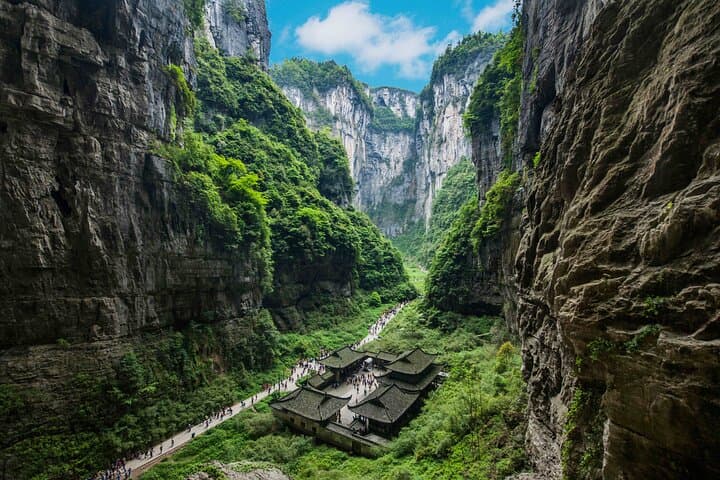
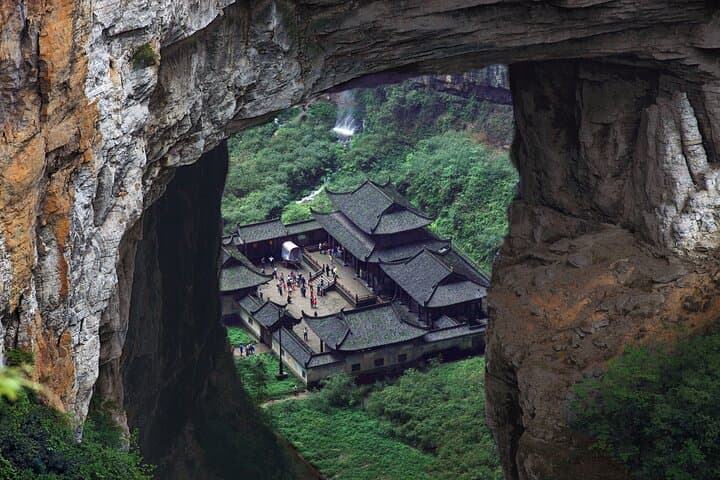
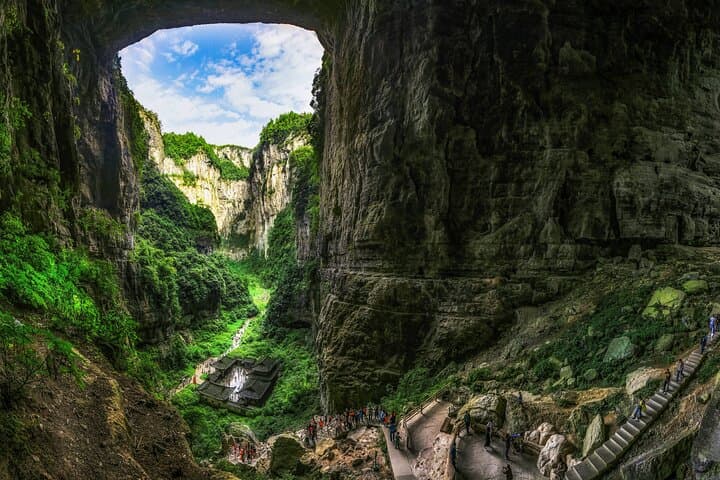
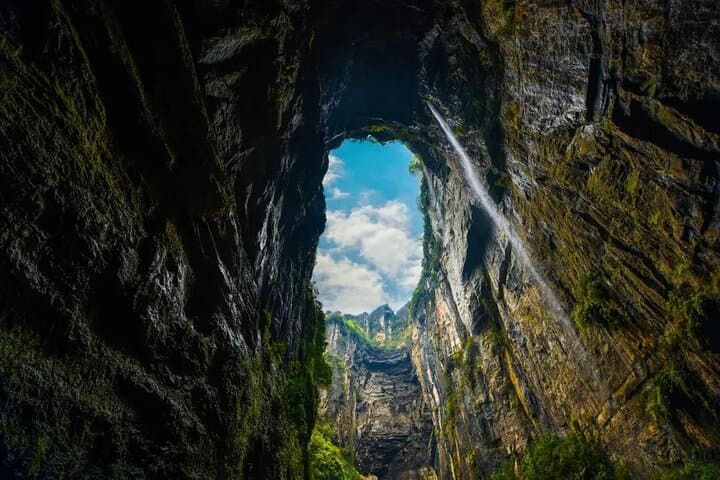
Morning light on the highway glass turns Chongqing’s skyline into a distant promise as the van peels away from the city and the road begins to climb toward karst ridges. By mid-morning the landscape has shifted: limestone cliffs loom, a cliffside elevator yawns 80 meters down, and the Three Natural Bridges open like a carved gateway. The sinkholes pull the air cool and green, daring you into a shaded valley where movie crews once staged scenes.
Morning light on the highway glass turns Chongqing’s skyline into a distant promise as the van peels away from the city and the road begins to climb toward karst ridges. By mid-morning the landscape has shifted: limestone cliffs loom, a cliffside elevator yawns 80 meters down, and the Three Natural Bridges open like a carved gateway. The sinkholes pull the air cool and green, daring you into a shaded valley where movie crews once staged scenes.
Wulong is part of the South China Karst World Heritage area, its dramatic sinkholes formed over millions of years as acidic water widened fractures into caverns and collapsed roofs into the natural bridges you’ll walk beneath. Day two turns inward: the Dazu rock carvings date back roughly 900 years and showcase Buddhist, Confucian and Taoist scenes carved directly into cliff facades — intentionally public, deliberately devotional, remarkably intact.
Expect two long driving segments (roughly 200 km / ~3 hours each way from Chongqing), a moderate 2-hour hike inside the karst sinkhole with stairs and uneven trail, and guided visits to Beishan and Baoding carving complexes that require internal shuttle transfers.
Practical tips: pace your days — the itinerary balances driving, short rest stops and walking; carry cash for combined tickets and local lunches; wear grippy shoes for wet stone steps; and allow time to move slowly in sacred carving areas out of respect. The private guide-driver model keeps the schedule tight and flexible, making this a compact, efficient way to sample two UNESCO sites in 48 hours.