THE ADVENTURE COLLECTIVE® · Independent discovery and booking for outdoor travel

A two-day trek into the Río Santo Domingo canyon brings hikers from Medellín into rainforest, rivers and towering cascades. Expect singletrack, river fords, a rustic riverside posada and vivid biodiversity on well-worn campesino paths.
A two-day trek into the Río Santo Domingo canyon brings hikers from Medellín into rainforest, rivers and towering cascades. Expect singletrack, river fords, a rustic riverside posada and vivid biodiversity on well-worn campesino paths.
Morning light slips between steep limestone walls as hikers step off the track and into the Río Santo Domingo canyon. The river, one of Antioquia’s last free-flowing waterways, pushes clear water around boulders while humid forest breathes against the rocks — orchids, ferns and lianas crowd the path and birds call from layered canopies.
Verified experiences and guided adventures in the surrounding area.
Operated by Aventura Natural Colombia · Cocorná, Antioquia
Morning light slips between steep limestone walls as hikers step off the track and into the Río Santo Domingo canyon. The river, one of Antioquia’s last free-flowing waterways, pushes clear water around boulders while humid forest breathes against the rocks — orchids, ferns and lianas crowd the path and birds call from layered canopies.
The trail follows old rural paths used by campesino communities for generations; you move through a landscape carved by volcanic uplift and river incision, where waterfalls spill from fractured cliffs into emerald pools. At the Mirador de Cocorná the valley opens and two tall falls drop in parallel, framing views across the watershed. Evenings are spent at a riverside posada, where local cooks serve homestyle plates and hosts share stories about land stewardship and coffee-farming in the nearby hills.
Practical details: the itinerary covers roughly 10–15 km of walking over two days with intermittent steep sections and an estimated cumulative elevation gain of 400–600 m. Trails are mostly singletrack through tropical forest with river crossings on rock or shallow fords; expect muddy stretches after rain and slippery rock near cascades.
Travelers should bring supportive waterproof boots, a lightweight rain shell, at least 2 liters of water and a headlamp for the posada; insect repellent and quick-dry layers help in humid conditions. Plan for early starts to avoid midday heat and to catch birdsong at dawn. Respect local farms, pack out waste, and follow guides’ instructions at cliff edges and waterfall pools for a safe, immersive two-day experience.
moderate.
2 days.
Moderate fitness: comfortable walking 5 hours a day, able to manage short steep sections and uneven terrain.
The canyon lies a few hours east of Medellín by road; most operators depart from the city early in the morning to maximize hiking time.
Yes, swimming in pools is common, but local guides will advise on safe spots and current conditions—avoid swimming after heavy rain.
Overnight is in a rural posada or cabin beside the river with basic comforts, local meals, and communal spaces around a fire.
Guides are typically provided and recommended for navigation, cultural context and safety; no special permits are required for the area.
The canyon’s trails trace routes used by campesino communities and smallholder farms; many families still manage coffee and plantain plots in the surrounding hills.
Sustainable ecotourism helps local families remain on the land while protecting one of Antioquia’s last free-flowing rivers; visitors should minimize impact and follow leave-no-trace principles.
Aventura Natural Colombia operates guided outdoor trips and adventures with an emphasis on safety, stewardship, and memorable experiences.


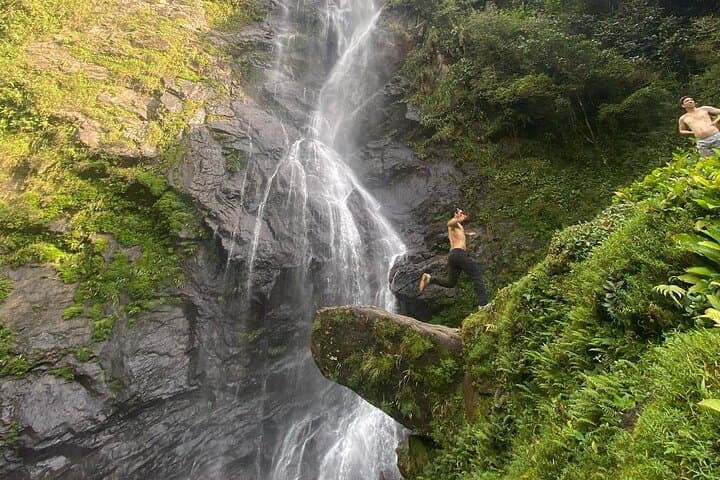
Morning light slips between steep limestone walls as hikers step off the track and into the Río Santo Domingo canyon. The river, one of Antioquia’s last free-flowing waterways, pushes clear water around boulders while humid forest breathes against the rocks — orchids, ferns and lianas crowd the path and birds call from layered canopies.
Morning light slips between steep limestone walls as hikers step off the track and into the Río Santo Domingo canyon. The river, one of Antioquia’s last free-flowing waterways, pushes clear water around boulders while humid forest breathes against the rocks — orchids, ferns and lianas crowd the path and birds call from layered canopies.
The trail follows old rural paths used by campesino communities for generations; you move through a landscape carved by volcanic uplift and river incision, where waterfalls spill from fractured cliffs into emerald pools. At the Mirador de Cocorná the valley opens and two tall falls drop in parallel, framing views across the watershed. Evenings are spent at a riverside posada, where local cooks serve homestyle plates and hosts share stories about land stewardship and coffee-farming in the nearby hills.
Practical details: the itinerary covers roughly 10–15 km of walking over two days with intermittent steep sections and an estimated cumulative elevation gain of 400–600 m. Trails are mostly singletrack through tropical forest with river crossings on rock or shallow fords; expect muddy stretches after rain and slippery rock near cascades.
Travelers should bring supportive waterproof boots, a lightweight rain shell, at least 2 liters of water and a headlamp for the posada; insect repellent and quick-dry layers help in humid conditions. Plan for early starts to avoid midday heat and to catch birdsong at dawn. Respect local farms, pack out waste, and follow guides’ instructions at cliff edges and waterfall pools for a safe, immersive two-day experience.