THE ADVENTURE COLLECTIVE® · Independent discovery and booking for outdoor travel

Two days of high-valley hiking from Imlil into the Azzaden valley, crossing Tizi Mzik and visiting Tamsoulte waterfall. Expect steep mule tracks, juniper forests, Berber villages and an overnight guesthouse before returning to Marrakech.
Two days of high-valley hiking from Imlil into the Azzaden valley, crossing Tizi Mzik and visiting Tamsoulte waterfall. Expect steep mule tracks, juniper forests, Berber villages and an overnight guesthouse before returning to Marrakech.
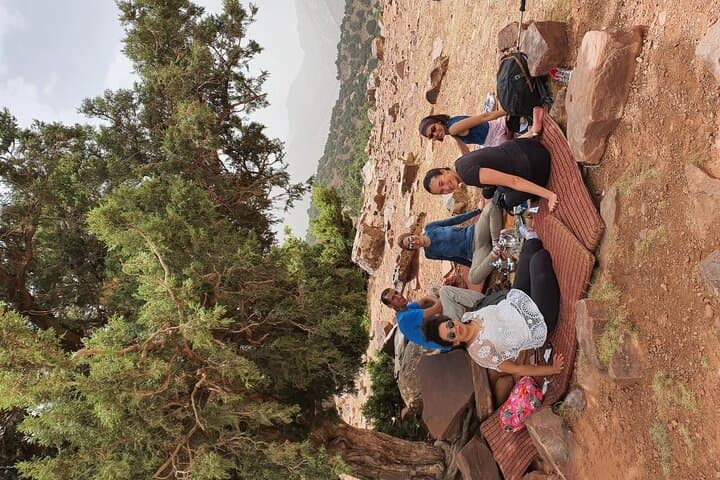
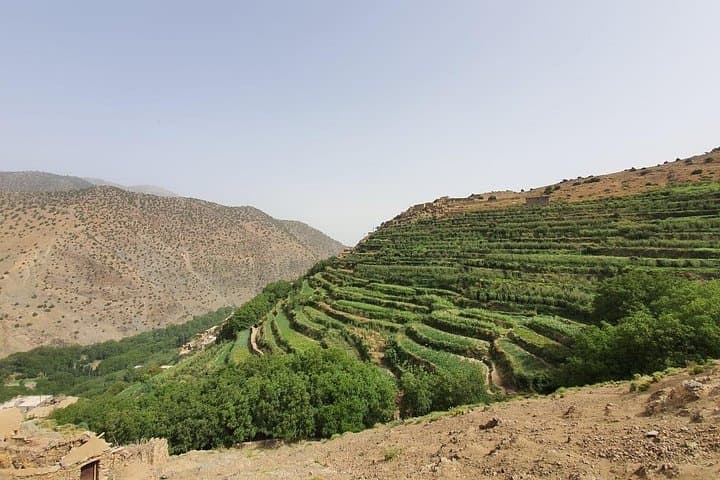
Morning light hits the basalt stairways above Imlil and the valley exhales: a river threads the gorge while mule bells punctuate the slope. On this two-day valley trek, hikers move from cultivated terraces into juniper woods, cross high passes and stand before Tamsoulte—the Atlas’ tallest waterfall—its 100-meter drop daring you to close the distance.
Verified experiences and guided adventures in the surrounding area.
Operated by Adventure Tours Morocco · Marrakech, Marrakech-Safi
Morning light hits the basalt stairways above Imlil and the valley exhales: a river threads the gorge while mule bells punctuate the slope. On this two-day valley trek, hikers move from cultivated terraces into juniper woods, cross high passes and stand before Tamsoulte—the Atlas’ tallest waterfall—its 100-meter drop daring you to close the distance.
The route follows old shepherd tracks and mule trails used for generations by Berber communities. Geologically the High Atlas is young and folded, with steep gorges carved by seasonal streams and high passes that push walkers above 2,600 m. Culturally, the villages you pass—Tizi Mzik, Tizi Oussem and Id Issa—offer intact Berber hospitality: guesthouses, walnut groves and terraces that still rely on gravity-fed irrigation.
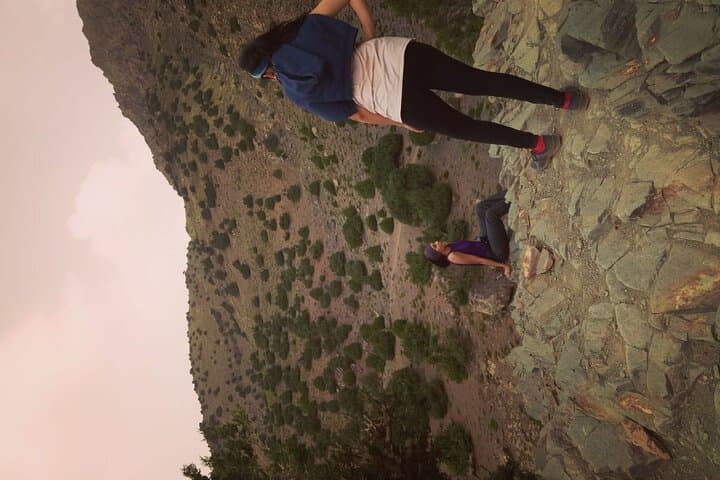
Expect varied terrain: rocky mule tracks, loose scree on ascent to Tizi Mzik (2,684 m), forested descents through juniper, and river-side lunch spots. Day one is roughly 6 hours of walking with sustained climbs and a descent to an overnight guesthouse at ~1,850 m; day two includes a shorter pass (Tizi Oudid ~2,000 m) and an afternoon transfer back to Marrakech.
Practical guidance: wear sturdy, ankle-supporting boots and layer for alpine sun and wind; carry 2–3 liters of water, a light first-aid kit, and snacks. Allow time for steady pacing at altitude, use trekking poles on steep sections, and book transfers and a local guide or muleteer in advance. Early starts avoid afternoon heat and maximize waterfall light for photos.
moderate.
2 days (approx. 6–7 hours walking on day 1; 4–6 hours on day 2).
Good aerobic fitness with regular hill walking; ability to carry a daypack and handle sustained climbs to ~2,700 m.
The trek is moderate: gradients are sustained but not technical. Climbs reach ~2,684 m—allow a steady pace and monitor for mild altitude effects.
Overnight in a village guesthouse is included on day one; expect simple rooms with shared facilities and home-cooked meals.
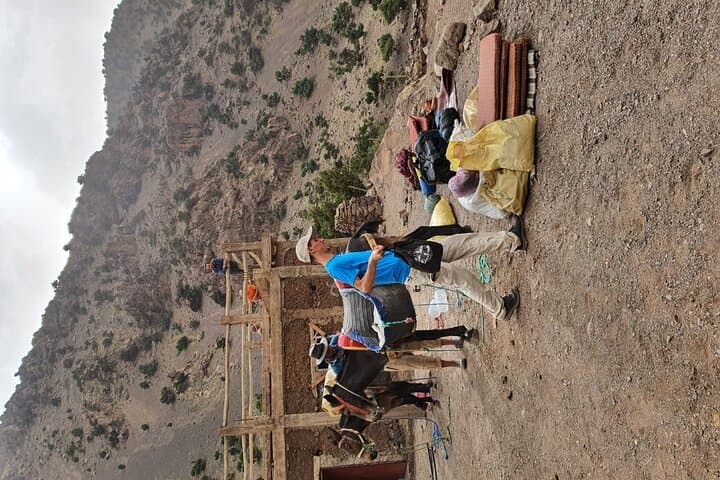
A muleteer accompanies the group for luggage support and to carry communal gear, but hikers should carry a comfortable daypack.
An afternoon transfer is provided on day two; confirm exact pickup times with the operator when booking.
The High Atlas has long been traversed by Berber communities who developed terraced farming and mule routes; many paths follow centuries-old trade and pastoral lines.
Stick to established trails and avoid disturbing irrigation channels; use local guesthouses and guides to support village economies and minimize ecological impact.
Adventure Tours Morocco operates guided outdoor trips and adventures with an emphasis on safety, stewardship, and memorable experiences.
Morning light hits the basalt stairways above Imlil and the valley exhales: a river threads the gorge while mule bells punctuate the slope. On this two-day valley trek, hikers move from cultivated terraces into juniper woods, cross high passes and stand before Tamsoulte—the Atlas’ tallest waterfall—its 100-meter drop daring you to close the distance.
Morning light hits the basalt stairways above Imlil and the valley exhales: a river threads the gorge while mule bells punctuate the slope. On this two-day valley trek, hikers move from cultivated terraces into juniper woods, cross high passes and stand before Tamsoulte—the Atlas’ tallest waterfall—its 100-meter drop daring you to close the distance.
The route follows old shepherd tracks and mule trails used for generations by Berber communities. Geologically the High Atlas is young and folded, with steep gorges carved by seasonal streams and high passes that push walkers above 2,600 m. Culturally, the villages you pass—Tizi Mzik, Tizi Oussem and Id Issa—offer intact Berber hospitality: guesthouses, walnut groves and terraces that still rely on gravity-fed irrigation.
Expect varied terrain: rocky mule tracks, loose scree on ascent to Tizi Mzik (2,684 m), forested descents through juniper, and river-side lunch spots. Day one is roughly 6 hours of walking with sustained climbs and a descent to an overnight guesthouse at ~1,850 m; day two includes a shorter pass (Tizi Oudid ~2,000 m) and an afternoon transfer back to Marrakech.
Practical guidance: wear sturdy, ankle-supporting boots and layer for alpine sun and wind; carry 2–3 liters of water, a light first-aid kit, and snacks. Allow time for steady pacing at altitude, use trekking poles on steep sections, and book transfers and a local guide or muleteer in advance. Early starts avoid afternoon heat and maximize waterfall light for photos.