THE ADVENTURE COLLECTIVE® · Independent discovery and booking for outdoor travel

Two full days from Salta take you from colonial Cachi through Los Cardones National Park to the otherworldly Salinas Grandes. Expect high passes, cobbled streets, local crafts and a separate local entrance fee at the salt flats.
Two full days from Salta take you from colonial Cachi through Los Cardones National Park to the otherworldly Salinas Grandes. Expect high passes, cobbled streets, local crafts and a separate local entrance fee at the salt flats.
The bus climbs out of Salta before dawn, headlights cutting across Lerma Valley as the mountains push closer. By midmorning you’re threading the Quebrada de Escoipe; rock ribs and switchbacks of the Cuesta del Obispo press the horizon and the air begins to thin. On day one the road opens into Los Cardones National Park—cardón cacti stand like slow-moving sentries—before spilling you into the small colonial squares and cobbled lanes of Cachi.
Verified experiences and guided adventures in the surrounding area.
Operated by La Quebrada Turismo · Salta, Salta Province
The bus climbs out of Salta before dawn, headlights cutting across Lerma Valley as the mountains push closer. By midmorning you’re threading the Quebrada de Escoipe; rock ribs and switchbacks of the Cuesta del Obispo press the horizon and the air begins to thin. On day one the road opens into Los Cardones National Park—cardón cacti stand like slow-moving sentries—before spilling you into the small colonial squares and cobbled lanes of Cachi.
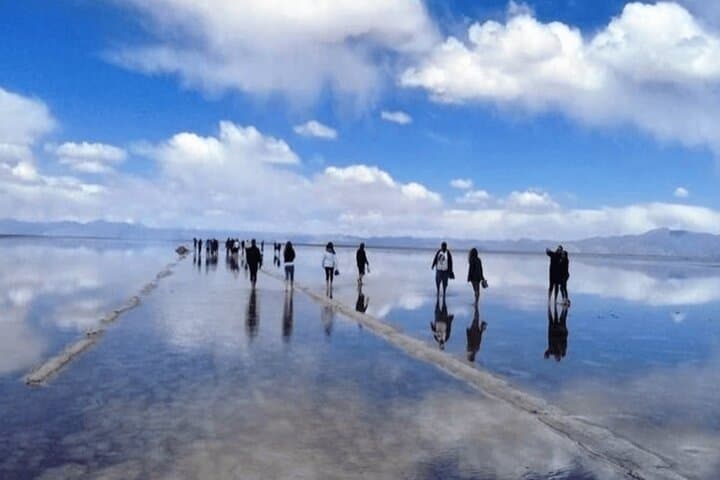
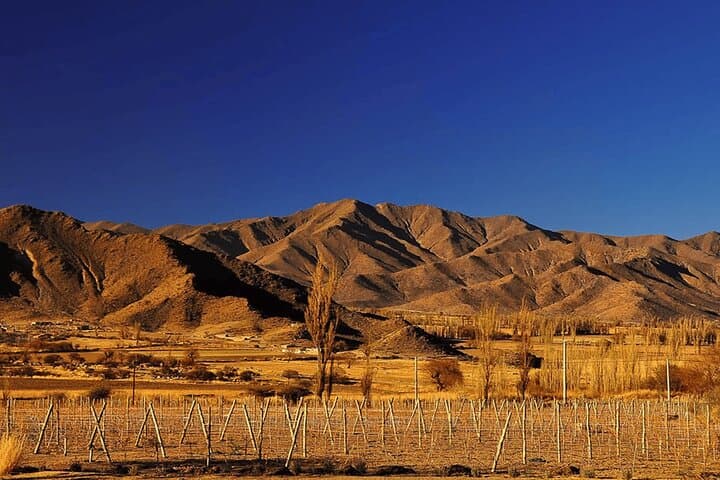
This region carries both Inca-era transit routes and Spanish-colonial architecture: whitewashed churches, adobe façades, and markets where local weavers sell llama-wool ponchos. The geology shifts fast—eroded volcanic tuffs near Cachi, then the puna’s salty crusts as you cross provincial lines toward Jujuy. Day two follows the Quebrada de Humahuaca rim, pauses below Purmamarca’s Cerro de los Siete Colores, and climbs the Cuesta de Lipán to 4,170 m where the Salinas Grandes flatten the sky into a blinding white.
Practical guidance: bring cash for the local entrance fee at Salinas Grandes (paid separately, ask driver for current rate), and expect altitude—drink water, move slowly on steep ramps, and plan to rest after high passes. Layers are essential: sun at noon, freezing wind at elevation. Comfortable walking shoes handle cobbles and salt crusts better than dress sneakers. Photographers will want a polarizer for salt reflections and early light at Purmamarca for color on the Cerro.
These two days pair cultural stops, high-altitude flora and fauna, and dramatic road engineering—an accessible, scenery-driven loop that rewards paced breathing and curiosity.
moderate.
2 days (approx. 8–10 hours per day).
Suitable for travelers in reasonable health; long bus days with short walks, but altitude demands stamina and gradual pacing.
No — the salt flat entrance is paid locally to community attendants; bring cash and ask your guide for the current rate.
Yes — the itinerary includes free windows: ~2 hours in Cachi and ~2 hours in Purmamarca for meals and exploring on your own.
Yes — you reach over 4,000 m on the Cuesta de Lipán; hydrate, avoid alcohol, and notify guides if you feel unwell.
Meals aren’t specified for all stops—expect to pay for lunch in Cachi and Purmamarca; snacks and water are advisable for the drive.
The route traces pre‑Hispanic corridors and colonial roads; towns like Cachi retain colonial churches and traditional weaving techniques.
Los Cardones National Park conserves cactus forests and puna ecosystems—stay on roads and avoid collecting salt or plants to protect fragile high‑altitude habitats.
La Quebrada Turismo operates guided outdoor trips and adventures with an emphasis on safety, stewardship, and memorable experiences.
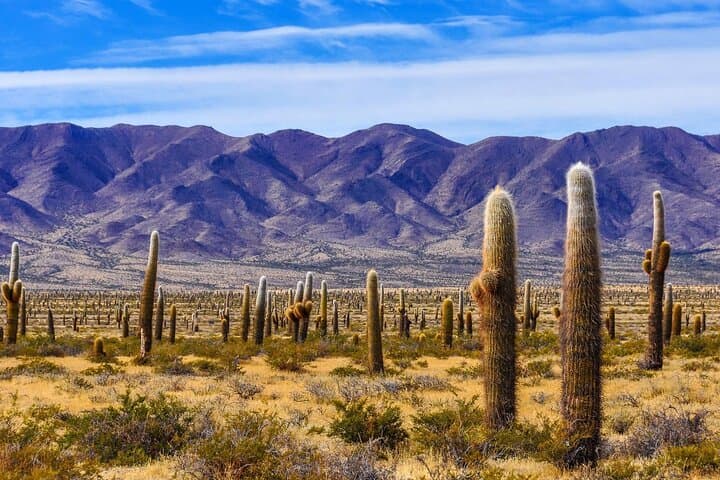
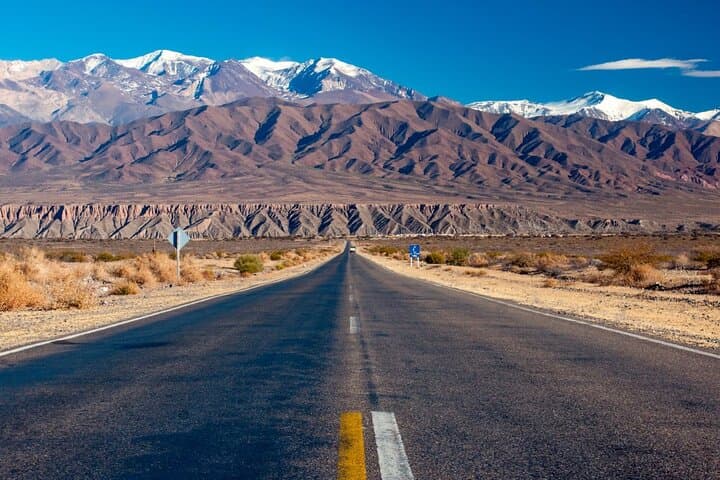
The bus climbs out of Salta before dawn, headlights cutting across Lerma Valley as the mountains push closer. By midmorning you’re threading the Quebrada de Escoipe; rock ribs and switchbacks of the Cuesta del Obispo press the horizon and the air begins to thin. On day one the road opens into Los Cardones National Park—cardón cacti stand like slow-moving sentries—before spilling you into the small colonial squares and cobbled lanes of Cachi.
The bus climbs out of Salta before dawn, headlights cutting across Lerma Valley as the mountains push closer. By midmorning you’re threading the Quebrada de Escoipe; rock ribs and switchbacks of the Cuesta del Obispo press the horizon and the air begins to thin. On day one the road opens into Los Cardones National Park—cardón cacti stand like slow-moving sentries—before spilling you into the small colonial squares and cobbled lanes of Cachi.
This region carries both Inca-era transit routes and Spanish-colonial architecture: whitewashed churches, adobe façades, and markets where local weavers sell llama-wool ponchos. The geology shifts fast—eroded volcanic tuffs near Cachi, then the puna’s salty crusts as you cross provincial lines toward Jujuy. Day two follows the Quebrada de Humahuaca rim, pauses below Purmamarca’s Cerro de los Siete Colores, and climbs the Cuesta de Lipán to 4,170 m where the Salinas Grandes flatten the sky into a blinding white.
Practical guidance: bring cash for the local entrance fee at Salinas Grandes (paid separately, ask driver for current rate), and expect altitude—drink water, move slowly on steep ramps, and plan to rest after high passes. Layers are essential: sun at noon, freezing wind at elevation. Comfortable walking shoes handle cobbles and salt crusts better than dress sneakers. Photographers will want a polarizer for salt reflections and early light at Purmamarca for color on the Cerro.
These two days pair cultural stops, high-altitude flora and fauna, and dramatic road engineering—an accessible, scenery-driven loop that rewards paced breathing and curiosity.