THE ADVENTURE COLLECTIVE® · Independent discovery and booking for outdoor travel

A compact but demanding two-day ascent of Jbel Toubkal from Marrakesh: overnight at the Toubkal Refuge, an early summit push to 4,167 m, and sweeping Atlas views. Ideal for fit trekkers who want a quick, authentic high-mountain experience.
A compact but demanding two-day ascent of Jbel Toubkal from Marrakesh: overnight at the Toubkal Refuge, an early summit push to 4,167 m, and sweeping Atlas views. Ideal for fit trekkers who want a quick, authentic high-mountain experience.
Dawn on the High Atlas reads like a slow drumroll: mule bells chime in Imlil, breath fogs in the cool air, and a braided trail climbs out of terraced fields toward the refuge. On a two-day ascent to Jbel Toubkal (4,167 m) hikers trade riad courtyards for rocky gullies and wide, wind-swept plateaus. The climb demands steady legs and a clear head rather than ropes—terrain shifts from packed valley paths to loose scree and exposed rock as the ridge narrows.
Verified experiences and guided adventures in the surrounding area.
Operated by Imlil Trips · Imlil, Marrakesh-Safi
Dawn on the High Atlas reads like a slow drumroll: mule bells chime in Imlil, breath fogs in the cool air, and a braided trail climbs out of terraced fields toward the refuge. On a two-day ascent to Jbel Toubkal (4,167 m) hikers trade riad courtyards for rocky gullies and wide, wind-swept plateaus. The climb demands steady legs and a clear head rather than ropes—terrain shifts from packed valley paths to loose scree and exposed rock as the ridge narrows.
The route threads Berber villages such as Aremd, passes the shrine at Sidi Chamarouch and follows centuries-old mule tracks used for trade and pilgrimage. Geologically the High Atlas is a young, uplifted range forged by tectonic collision; the mountain shows its history in tilted beds, fractured rock, and fast-draining slopes that give way to expansive views. Culturally, local guides share songs and mint tea at the refuge, keeping an oral tradition alive in landscape and hospitality.
Practicalities matter: the first day is typically 4–5 hours to the Toubkal Refuge (3,207 m), the summit push is an early 9–10 hour round trip from refuge to peak and back, plus a drive to Marrakesh. Expect thin air above 3,000 m—pacing, hydration, and layered clothing are non-negotiable. Guides organize mules for kit, accommodation in the refuge, and meals; in winter an ice axe may be used. Leave no trace, respect local customs in villages, and plan for rapid weather shifts—this is a mountain that will test your fitness but reward you with a true North African summit view.
challenging.
2 days (approx. 48 hours).
Recommended for very fit hikers comfortable with long days, steep ascents, and high altitude; cardiovascular fitness and strong legs required.
No technical mountaineering skills are required for the standard route; the climb is a strenuous hike, though winter conditions may require crampons and ice axes provided by guides.
Expect 4–5 hours the first day to reach the refuge, then a 9–10 hour summit day including ascent and descent; good fitness and prior hiking experience are recommended.
Overnight is in the Toubkal Refuge with basic dormitory rooms; guides provide meals (local tagines, salads, tea, and fruit) and mule support for luggage.
Yes—above 3,000 m the risk increases; stay hydrated, move at a steady pace, and inform guides of symptoms; descent is the primary treatment.
The High Atlas has long been home to Amazigh (Berber) communities who built mule trails and seasonal hamlets; Toubkal has been a local landmark and pilgrimage point for generations.
Stay on established trails to limit erosion; local guides and refuges manage waste carefully—pack out plastics and minimize firewood use.
Imlil Trips operates guided outdoor trips and adventures with an emphasis on safety, stewardship, and memorable experiences.
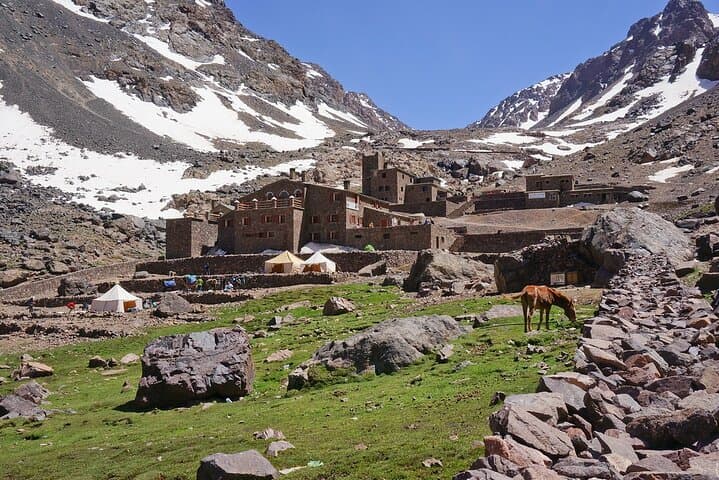
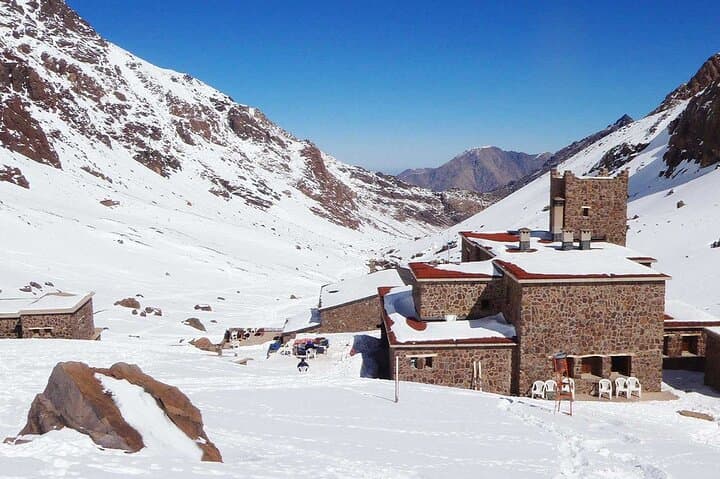
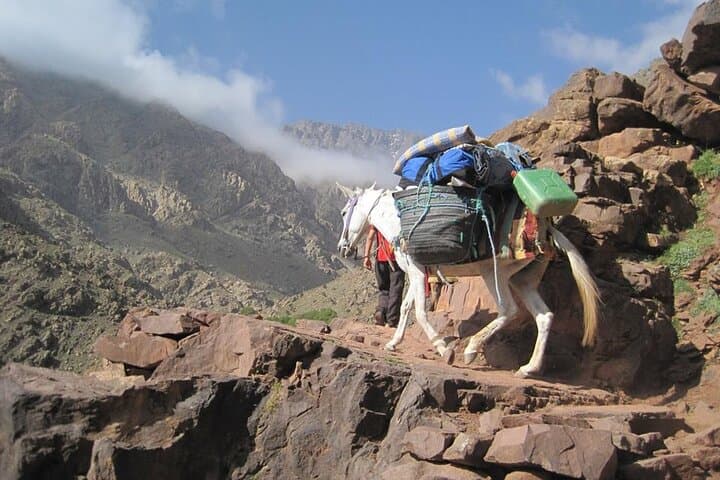
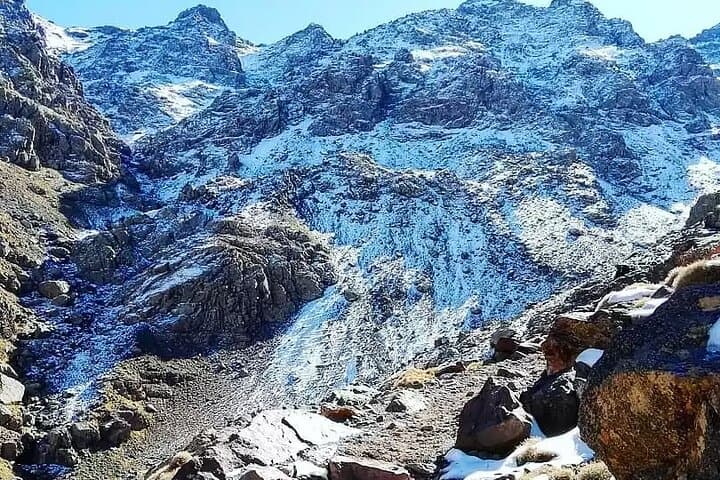
Dawn on the High Atlas reads like a slow drumroll: mule bells chime in Imlil, breath fogs in the cool air, and a braided trail climbs out of terraced fields toward the refuge. On a two-day ascent to Jbel Toubkal (4,167 m) hikers trade riad courtyards for rocky gullies and wide, wind-swept plateaus. The climb demands steady legs and a clear head rather than ropes—terrain shifts from packed valley paths to loose scree and exposed rock as the ridge narrows.
Dawn on the High Atlas reads like a slow drumroll: mule bells chime in Imlil, breath fogs in the cool air, and a braided trail climbs out of terraced fields toward the refuge. On a two-day ascent to Jbel Toubkal (4,167 m) hikers trade riad courtyards for rocky gullies and wide, wind-swept plateaus. The climb demands steady legs and a clear head rather than ropes—terrain shifts from packed valley paths to loose scree and exposed rock as the ridge narrows.
The route threads Berber villages such as Aremd, passes the shrine at Sidi Chamarouch and follows centuries-old mule tracks used for trade and pilgrimage. Geologically the High Atlas is a young, uplifted range forged by tectonic collision; the mountain shows its history in tilted beds, fractured rock, and fast-draining slopes that give way to expansive views. Culturally, local guides share songs and mint tea at the refuge, keeping an oral tradition alive in landscape and hospitality.
Practicalities matter: the first day is typically 4–5 hours to the Toubkal Refuge (3,207 m), the summit push is an early 9–10 hour round trip from refuge to peak and back, plus a drive to Marrakesh. Expect thin air above 3,000 m—pacing, hydration, and layered clothing are non-negotiable. Guides organize mules for kit, accommodation in the refuge, and meals; in winter an ice axe may be used. Leave no trace, respect local customs in villages, and plan for rapid weather shifts—this is a mountain that will test your fitness but reward you with a true North African summit view.