THE ADVENTURE COLLECTIVE® · Independent discovery and booking for outdoor travel

A compact, two-day climb from Imlil to Mount Toubkal’s 4,167 m summit that mixes steep switchbacks, high-mountain scree, and genuine Berber hospitality. Ideal for trekkers with moderate fitness looking for a fast-paced summit experience.
A compact, two-day climb from Imlil to Mount Toubkal’s 4,167 m summit that mixes steep switchbacks, high-mountain scree, and genuine Berber hospitality. Ideal for trekkers with moderate fitness looking for a fast-paced summit experience.
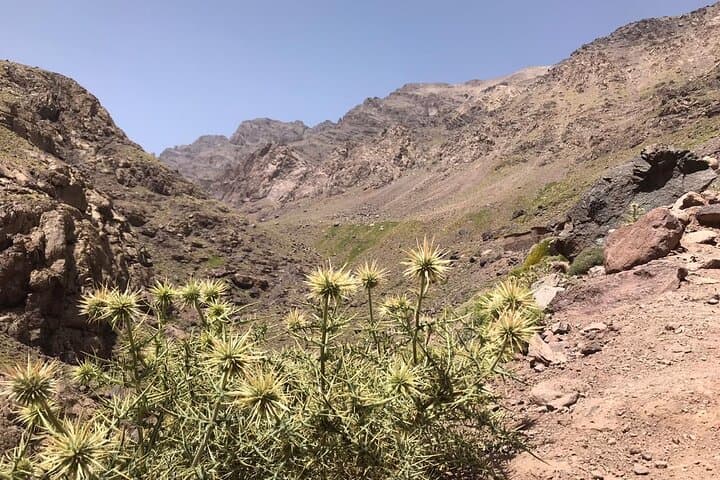
The morning air in Marrakech still smells of mint and frying spices as the van slips away from Jemaa el-Fnaa and climbs toward the High Atlas. Ninety minutes later you step into Imlil’s stone alleys, lacing boots against a sky that already feels thinner. The trail begins gentle, then tightens into steep switchbacks that pull you up through terraced fields, walnut groves and isolated Berber hamlets.
Verified experiences and guided adventures in the surrounding area.
Operated by Adventure Tours Morocco · Marrakech, Marrakesh-Safi
The morning air in Marrakech still smells of mint and frying spices as the van slips away from Jemaa el-Fnaa and climbs toward the High Atlas. Ninety minutes later you step into Imlil’s stone alleys, lacing boots against a sky that already feels thinner. The trail begins gentle, then tightens into steep switchbacks that pull you up through terraced fields, walnut groves and isolated Berber hamlets.
Toubkal (4,167 m) is the highest point in North Africa, a massif hewn by tectonic uplift and glacier action; granite and schist outcrops give way to scree and wind-polished ridgelines near the summit. Day one covers roughly 10–12 km with about 1,200–1,500 m of elevation gain to the Neltner/Toubkal refuge, taking 5–6 hours at a steady pace. Villagers still keep small herds and offer simple hospitality at the refuge—tea, shared stories, and warm bread.
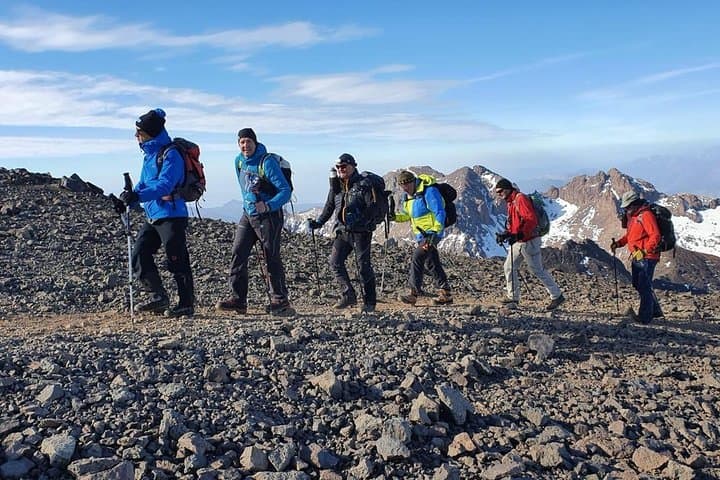
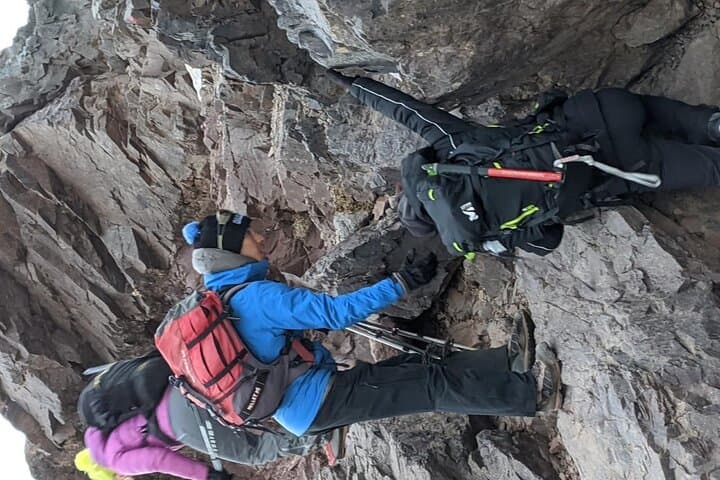
The summit day is an early start: 3–4 hours up across mixed rocky trail and loose scree, the final ridge broad but exposed, then a descent back to Imlil for the return drive to Marrakech—expect about 8 hours on the second day. Weather can flip fast; snow hangs late into spring and arrives early in autumn at higher elevations.
Practical notes: acclimatize in Marrakech or Imlil, bring layered clothing, and use trekking poles for unstable sections. Footwear with stiff soles helps on long descents. Water and high-energy snacks keep pace steady. With moderate fitness and respect for altitude, this two-day ascent is a direct, achievable route to North Africa’s rooftop.
challenging.
10–14 hours (over 2 days).
Suitable for trekkers with good cardiovascular fitness and experience on sustained uphill hikes; prior high‑altitude exposure helpful.
The transfer is about 60–90 minutes depending on traffic and road conditions, following the main road into the High Atlas.
No technical gear is needed for the standard summer route; crampons and an ice axe may be necessary in snowy winter or early spring conditions.
Fit beginners with prior day-hiking experience can manage it, but acclimatization and a realistic pace are essential; guides usually assess fitness before departure.
The Neltner/Toubkal refuge provides basic sleeping spaces, hot drinks and simple meals—expect shared rooms and modest amenities.
The High Atlas has long been home to Amazigh (Berber) communities; mule tracks and stone terraces reflect centuries of highland agriculture and trade routes.
Toubkal sits within a popular trekking zone—practice leave-no-trace, stick to established paths to limit erosion, and use local guides to support community-based tourism.
Adventure Tours Morocco operates guided outdoor trips and adventures with an emphasis on safety, stewardship, and memorable experiences.
The morning air in Marrakech still smells of mint and frying spices as the van slips away from Jemaa el-Fnaa and climbs toward the High Atlas. Ninety minutes later you step into Imlil’s stone alleys, lacing boots against a sky that already feels thinner. The trail begins gentle, then tightens into steep switchbacks that pull you up through terraced fields, walnut groves and isolated Berber hamlets.
The morning air in Marrakech still smells of mint and frying spices as the van slips away from Jemaa el-Fnaa and climbs toward the High Atlas. Ninety minutes later you step into Imlil’s stone alleys, lacing boots against a sky that already feels thinner. The trail begins gentle, then tightens into steep switchbacks that pull you up through terraced fields, walnut groves and isolated Berber hamlets.
Toubkal (4,167 m) is the highest point in North Africa, a massif hewn by tectonic uplift and glacier action; granite and schist outcrops give way to scree and wind-polished ridgelines near the summit. Day one covers roughly 10–12 km with about 1,200–1,500 m of elevation gain to the Neltner/Toubkal refuge, taking 5–6 hours at a steady pace. Villagers still keep small herds and offer simple hospitality at the refuge—tea, shared stories, and warm bread.
The summit day is an early start: 3–4 hours up across mixed rocky trail and loose scree, the final ridge broad but exposed, then a descent back to Imlil for the return drive to Marrakech—expect about 8 hours on the second day. Weather can flip fast; snow hangs late into spring and arrives early in autumn at higher elevations.
Practical notes: acclimatize in Marrakech or Imlil, bring layered clothing, and use trekking poles for unstable sections. Footwear with stiff soles helps on long descents. Water and high-energy snacks keep pace steady. With moderate fitness and respect for altitude, this two-day ascent is a direct, achievable route to North Africa’s rooftop.