THE ADVENTURE COLLECTIVE® · Independent discovery and booking for outdoor travel

In two days from El Calafate you can pair an overland 4x4 tour of Torres del Paine with boardwalks and a boat ride at Perito Moreno Glacier. Expect wind‑buffeted panoramas, short hikes to vantage points and a frontal glacier experience that often includes dramatic calving.
In two days from El Calafate you can pair an overland 4x4 tour of Torres del Paine with boardwalks and a boat ride at Perito Moreno Glacier. Expect wind‑buffeted panoramas, short hikes to vantage points and a frontal glacier experience that often includes dramatic calving.
You step out of the van before dawn and the air slaps you—cold, sharp with wind off the Patagonian steppe. Headlights slice across a low, copper horizon as a 4x4 climbs toward the Chilean border; behind you, El Calafate shrinks to a smudge of sodium light. By midmorning the granite crowns of Torres del Paine rise like a row of well‑worn teeth, clouds tugging at their flanks while lakes below dare you to keep your camera holstered.
Verified experiences and guided adventures in the surrounding area.
Operated by Say Hueque Travel · El Calafate, Santa Cruz
You step out of the van before dawn and the air slaps you—cold, sharp with wind off the Patagonian steppe. Headlights slice across a low, copper horizon as a 4x4 climbs toward the Chilean border; behind you, El Calafate shrinks to a smudge of sodium light. By midmorning the granite crowns of Torres del Paine rise like a row of well‑worn teeth, clouds tugging at their flanks while lakes below dare you to keep your camera holstered.
This two‑day loop stitches two of southern Patagonia’s headline acts into a compact, accessible itinerary: an overland exploration of Torres del Paine by rugged 4x4, then a day of boardwalks and boat rides around the Perito Moreno Glacier. Torres del Paine was carved by ice and time—hard gray rock tipped by snow, folded by tectonics and sculpted by wind—while Perito Moreno is a living face of the Southern Patagonian Ice Field, one of the planet’s largest nonpolar ice masses.
Culturally, you’ll pass through gaucho country; wind‑bent grasses and corrals mark estancia land where sheep farmers and traditional riders still work the steppe. Indigenous Tehuelche people once moved seasonally through these valleys, and modern guides often point out archaeological traces and stories of early explorers who first mapped these glaciers and peaks.
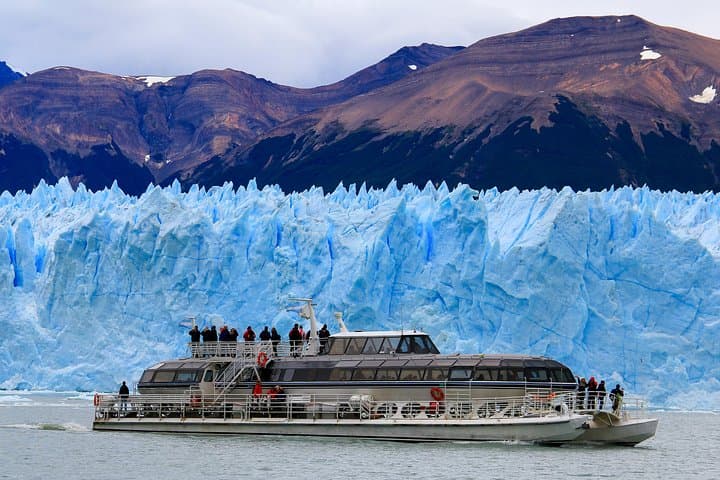
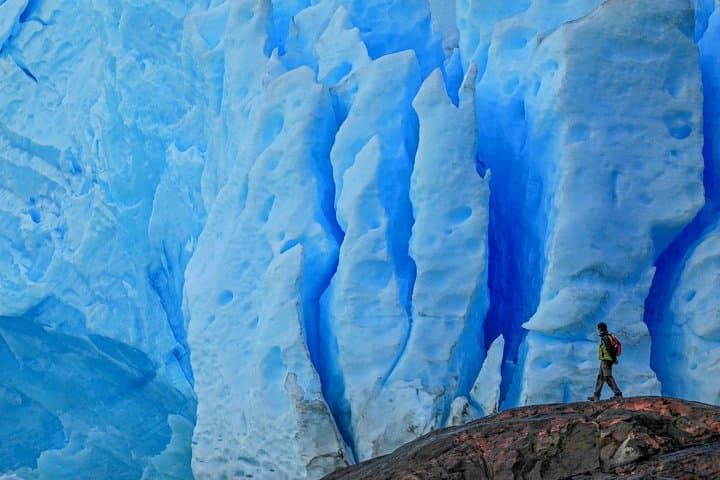
On day one the 4x4 route is efficient—rough roads and brief, deliberate hikes to lookouts, waterfalls and lagoons that frame the Paine massif. Expect short walks (10–40 minutes) from vehicle to viewpoint; the Overland Truck is chosen to reach viewpoints that normal buses can’t. On day two you’ll drive roughly 50 miles to Los Glaciares National Park, follow a well‑signed 2‑mile network of boardwalks and staircases to multiple viewing platforms in front of Perito Moreno’s 80‑meter (260‑foot) face. Boat excursions optionally navigate the glacier’s length for frontal views and a chance to feel the spray when a berg calves.
Practical notes: layers are everything—Patagonian weather changes fast and wind is constant. Moderate fitness suffices, but those with heart, respiratory, or serious mobility issues should avoid this itinerary. Bring waterproof footwear, windproof outerwear, sun protection and enough battery power for long days of photography. Confirm pickup location and passport requirements; you cross an international border on the first day. Finally, remember the ethics—stay on boardwalks, pack out trash and give wildlife their distance; guanacos and condors are common and sensitive to disturbance.
In short, this two‑day pairing is a concentrated, well‑guided introduction to Patagonia: big landscapes, up‑close ice encounters and efficient logistics for travelers who want maximum impact in minimal time.
moderate.
2 days (approx. 23 hours total).
Moderate fitness—able to handle several short walks (10–40 minutes) and full days of travel.
Yes—this itinerary crosses the Argentina–Chile border; carry your passport and any required visas. Verify entry requirements before travel.
Calving is natural and unpredictable, but Perito Moreno is active—visitors often witness chunks breaking off and crashing into the lake from the boardwalks or boat.
Boat excursions are optional on many departures; check your booking details—some itineraries include it while others offer it as an add‑on.
Boardwalks around Perito Moreno total roughly 2 miles; Torres del Paine stops include short walks (10–40 minutes) from the vehicle to viewpoints.
This tour is not recommended for people with significant mobility limitations; some viewpoints require stairs and uneven terrain.
Full refund if canceled at least 24 hours before departure; cancellations within 24 hours are not refundable—confirm times when booking.
The area was historically used by Tehuelche hunter‑gatherers; national parks were later established to protect unique Patagonian landscapes and wildlife.
Glaciers and steppe ecosystems are sensitive to human pressure and climate change—stay on marked trails, avoid leaving waste and follow guide instructions to minimize impact.
Say Hueque Travel operates guided outdoor trips and adventures with an emphasis on safety, stewardship, and memorable experiences.
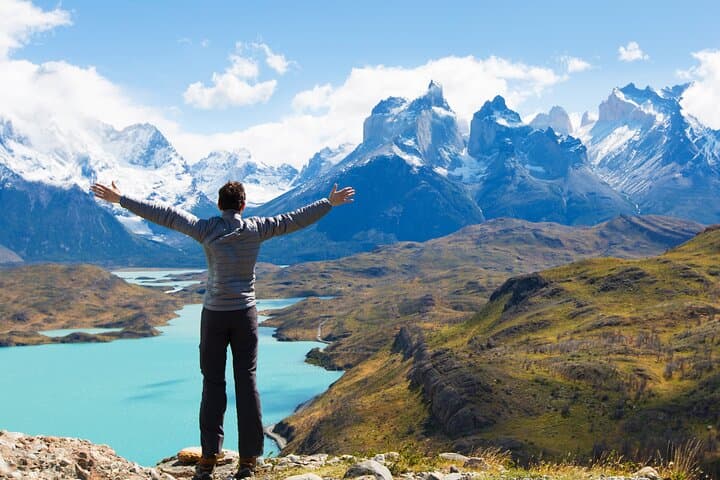
You step out of the van before dawn and the air slaps you—cold, sharp with wind off the Patagonian steppe. Headlights slice across a low, copper horizon as a 4x4 climbs toward the Chilean border; behind you, El Calafate shrinks to a smudge of sodium light. By midmorning the granite crowns of Torres del Paine rise like a row of well‑worn teeth, clouds tugging at their flanks while lakes below dare you to keep your camera holstered.
You step out of the van before dawn and the air slaps you—cold, sharp with wind off the Patagonian steppe. Headlights slice across a low, copper horizon as a 4x4 climbs toward the Chilean border; behind you, El Calafate shrinks to a smudge of sodium light. By midmorning the granite crowns of Torres del Paine rise like a row of well‑worn teeth, clouds tugging at their flanks while lakes below dare you to keep your camera holstered.
This two‑day loop stitches two of southern Patagonia’s headline acts into a compact, accessible itinerary: an overland exploration of Torres del Paine by rugged 4x4, then a day of boardwalks and boat rides around the Perito Moreno Glacier. Torres del Paine was carved by ice and time—hard gray rock tipped by snow, folded by tectonics and sculpted by wind—while Perito Moreno is a living face of the Southern Patagonian Ice Field, one of the planet’s largest nonpolar ice masses.
Culturally, you’ll pass through gaucho country; wind‑bent grasses and corrals mark estancia land where sheep farmers and traditional riders still work the steppe. Indigenous Tehuelche people once moved seasonally through these valleys, and modern guides often point out archaeological traces and stories of early explorers who first mapped these glaciers and peaks.
On day one the 4x4 route is efficient—rough roads and brief, deliberate hikes to lookouts, waterfalls and lagoons that frame the Paine massif. Expect short walks (10–40 minutes) from vehicle to viewpoint; the Overland Truck is chosen to reach viewpoints that normal buses can’t. On day two you’ll drive roughly 50 miles to Los Glaciares National Park, follow a well‑signed 2‑mile network of boardwalks and staircases to multiple viewing platforms in front of Perito Moreno’s 80‑meter (260‑foot) face. Boat excursions optionally navigate the glacier’s length for frontal views and a chance to feel the spray when a berg calves.
Practical notes: layers are everything—Patagonian weather changes fast and wind is constant. Moderate fitness suffices, but those with heart, respiratory, or serious mobility issues should avoid this itinerary. Bring waterproof footwear, windproof outerwear, sun protection and enough battery power for long days of photography. Confirm pickup location and passport requirements; you cross an international border on the first day. Finally, remember the ethics—stay on boardwalks, pack out trash and give wildlife their distance; guanacos and condors are common and sensitive to disturbance.
In short, this two‑day pairing is a concentrated, well‑guided introduction to Patagonia: big landscapes, up‑close ice encounters and efficient logistics for travelers who want maximum impact in minimal time.