THE ADVENTURE COLLECTIVE® · Independent discovery and booking for outdoor travel

A compact, two-day journey into Theth puts you on high passes, beside a luminous spring and under stone towers that speak of Albania’s mountain past. Expect cold streams, short hikes to waterfalls, and simple guesthouse nights.
A compact, two-day journey into Theth puts you on high passes, beside a luminous spring and under stone towers that speak of Albania’s mountain past. Expect cold streams, short hikes to waterfalls, and simple guesthouse nights.
Morning light rakes across the jagged ridgelines as a minivan winds up the Thore Pass; the road climbs to 1,685 meters and the air tightens, daring you to breathe deeper. By midafternoon Theth appears — a handful of stone houses, a square where villagers trade news, and the river pushing sheets of cold mountain water through the valley. The place feels remote because it is: centuries of mountain life remain legible in the dry-stone towers and the churchyard.
Verified experiences and guided adventures in the surrounding area.
Operated by Lost In Albania · Theth, Shkodër County
Morning light rakes across the jagged ridgelines as a minivan winds up the Thore Pass; the road climbs to 1,685 meters and the air tightens, daring you to breathe deeper. By midafternoon Theth appears — a handful of stone houses, a square where villagers trade news, and the river pushing sheets of cold mountain water through the valley. The place feels remote because it is: centuries of mountain life remain legible in the dry-stone towers and the churchyard.
Theth sits in the Albanian Alps, a block of limestone and shale carved by glaciers and fast-flowing streams. History presses close — Lezha and the League of Lezha recall Skanderbeg’s resistance, while early 20th-century travelers like Edith Durham noted the region’s “majestic isolation.” Cultural life here is straightforward: guesthouses serve slow-cooked stews and raki, and the old tower houses speak to clan-era security.
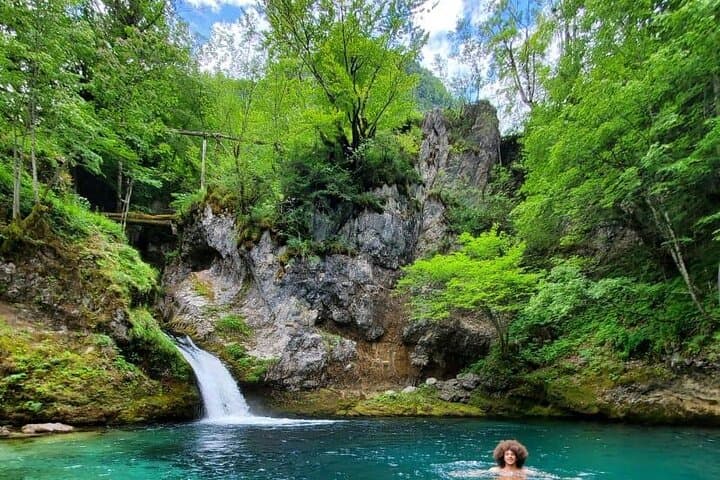
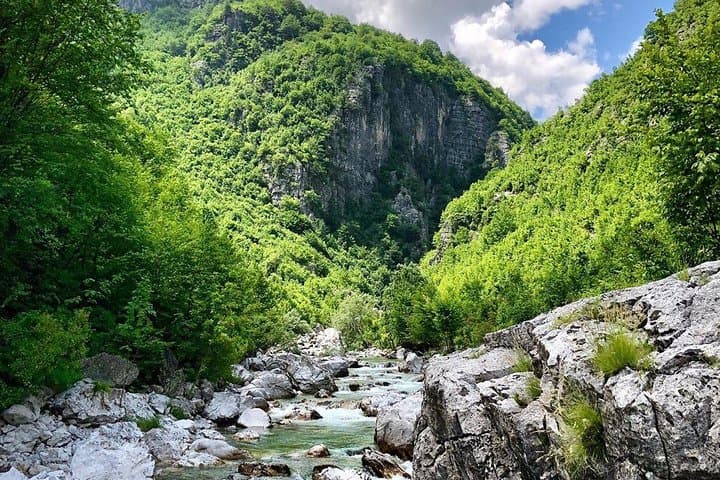
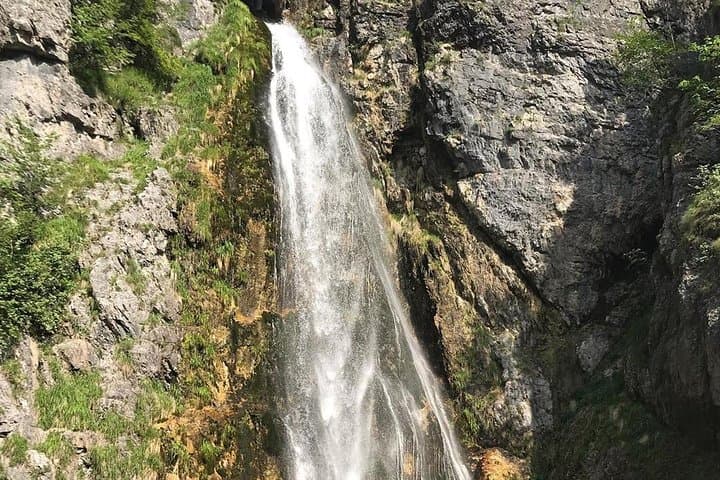
On day two the itinerary opens into terrain: a one-hour walk to Grunas waterfall, then a longer 2-hour approach down into Grunasi Canyon toward the Blue Eye, a spring that holds an almost luminous pool. Expect sharp limestone steps, peaty trail sections, and cold water that will make even the bravest hesitate before a swim.
Practically, plan for mountain weather any time of year: layered insulation, waterproofs, and good boots. Water is drinkable at springs but carry filtration for safety. Travel times are long; the tour uses hotel pickup in Tirana and includes simple guesthouse lodging, breakfasts and dinners — ideal for travelers wanting compact access to remote alpine scenery without heavy pack logistics.
moderate.
2 days (approx. 48 hours).
Suitable for people who can walk 1–3 hours over uneven mountain trails and manage short climbs; comfortable aerobic fitness recommended.
Each walk is short to moderate: about 1 hour to Grunas and up to 2 hours to the Blue Eye over uneven terrain; trails include rocky steps and creek crossings.
You stay in a traditional guesthouse with simple rooms and regional meals — comfortable but not luxury, with an emphasis on local hospitality.
Yes, but the water is fed by alpine springs and is very cold year-round; only strong swimmers should enter and for short durations.
Signal is intermittent in Theth; plan without reliable coverage and download maps or carry a paper map for navigation.
The region was part of northern Albanian clan territories and sits near sites tied to the League of Lezha (Skanderbeg); foreign travelers like Edith Durham documented its isolation in the early 1900s.
Trails run through sensitive alpine karst and riparian areas — stick to paths, pack out waste, and avoid disturbing nesting raptors or grazing areas.
Lost In Albania operates guided outdoor trips and adventures with an emphasis on safety, stewardship, and memorable experiences.
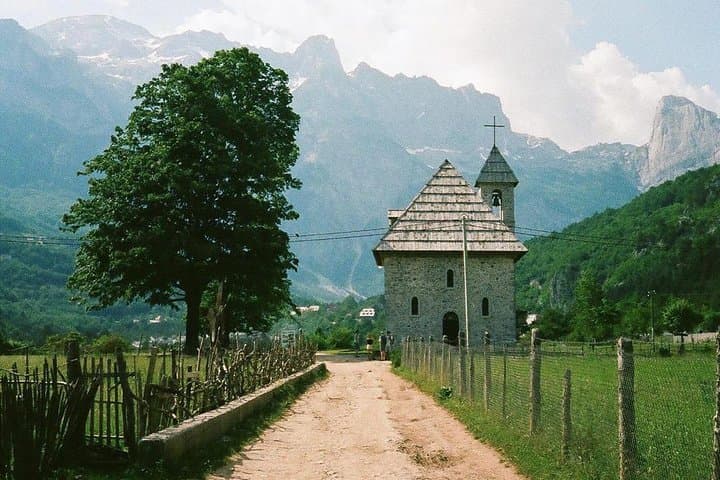
Morning light rakes across the jagged ridgelines as a minivan winds up the Thore Pass; the road climbs to 1,685 meters and the air tightens, daring you to breathe deeper. By midafternoon Theth appears — a handful of stone houses, a square where villagers trade news, and the river pushing sheets of cold mountain water through the valley. The place feels remote because it is: centuries of mountain life remain legible in the dry-stone towers and the churchyard.
Morning light rakes across the jagged ridgelines as a minivan winds up the Thore Pass; the road climbs to 1,685 meters and the air tightens, daring you to breathe deeper. By midafternoon Theth appears — a handful of stone houses, a square where villagers trade news, and the river pushing sheets of cold mountain water through the valley. The place feels remote because it is: centuries of mountain life remain legible in the dry-stone towers and the churchyard.
Theth sits in the Albanian Alps, a block of limestone and shale carved by glaciers and fast-flowing streams. History presses close — Lezha and the League of Lezha recall Skanderbeg’s resistance, while early 20th-century travelers like Edith Durham noted the region’s “majestic isolation.” Cultural life here is straightforward: guesthouses serve slow-cooked stews and raki, and the old tower houses speak to clan-era security.
On day two the itinerary opens into terrain: a one-hour walk to Grunas waterfall, then a longer 2-hour approach down into Grunasi Canyon toward the Blue Eye, a spring that holds an almost luminous pool. Expect sharp limestone steps, peaty trail sections, and cold water that will make even the bravest hesitate before a swim.
Practically, plan for mountain weather any time of year: layered insulation, waterproofs, and good boots. Water is drinkable at springs but carry filtration for safety. Travel times are long; the tour uses hotel pickup in Tirana and includes simple guesthouse lodging, breakfasts and dinners — ideal for travelers wanting compact access to remote alpine scenery without heavy pack logistics.