THE ADVENTURE COLLECTIVE® · Independent discovery and booking for outdoor travel

Spend two days tracing Greece’s spiritual heart: Delphi’s oracle and Meteora’s cliffside monasteries. This guided Spanish-language tour pairs easy coach travel with moderate on-foot exploration, local meals, and an overnight in Kalambaka.
Spend two days tracing Greece’s spiritual heart: Delphi’s oracle and Meteora’s cliffside monasteries. This guided Spanish-language tour pairs easy coach travel with moderate on-foot exploration, local meals, and an overnight in Kalambaka.
You board an air-conditioned coach at Athens and watch the Aegean light spill across olive groves as the road climbs toward Delphi.
Verified experiences and guided adventures in the surrounding area.
Operated by ArtyTours · Kalambaka, Thessaly
You board an air-conditioned coach at Athens and watch the Aegean light spill across olive groves as the road climbs toward Delphi.
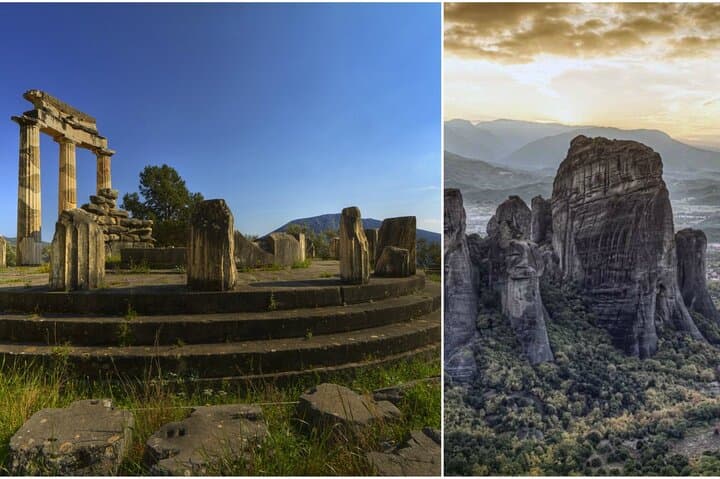
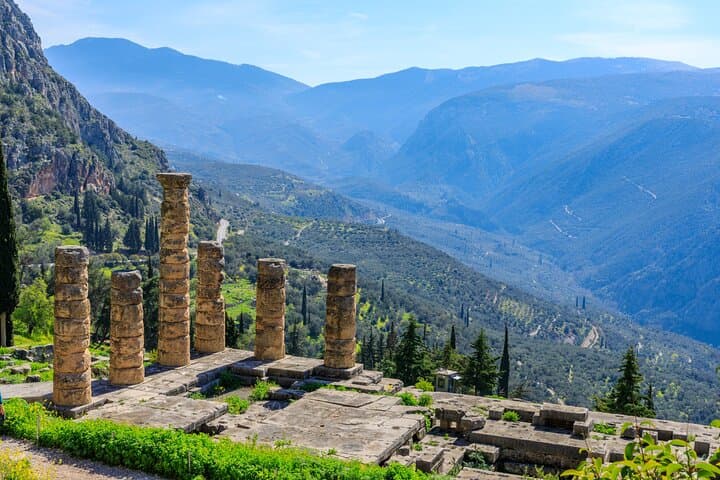
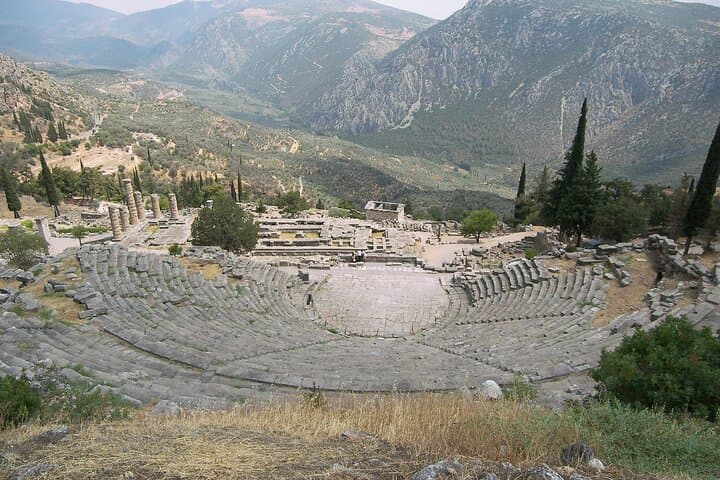
At the archaeological site, wind carves the marble ruins and the echoes of the oracle still feel present among the Temple of Apollo, the theater and the treacherous Sacred Way. Geology here is palpable: Delphi’s limestone terraces perch on a fault-line ridge that once lent the site an otherworldly hush.
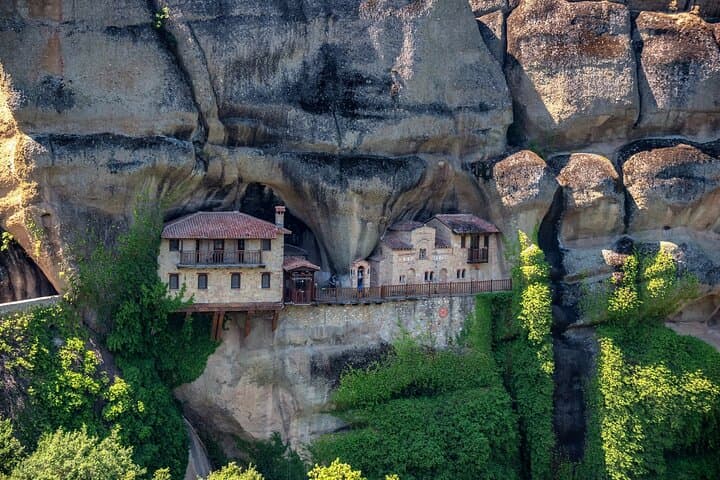
By afternoon the bus winds into a different world — the plains beneath Meteora’s sandstone towers. Those rounded columns are geological chapters written by ancient river deposits uplifted and eroded into vertical cliffs; Byzantine monks responded by building monasteries on precarious ledges in the 14th century, cutting stairs and bridges into stone to maintain solitude.
Culture is tactile: small village tavernas in Arachova or Kalambaka serve slow-cooked lamb and cheeses, while monastic rules still guide visitor behavior inside rosemary-scented chapels.
Practical guidance: both days involve moderate walking on uneven stone and multiple stair sections in Meteora’s monasteries — bring sturdy shoes, sun protection and a light layer for breezy viewpoints. The tour includes entrance fees, hotel accommodation in Kalambaka, one dinner and breakfast, and onboard headsets for the Spanish commentary.
Timing matters — early visits avoid the biggest crowds and offer cooler temperatures for climbing viewpoints. Keep photos respectful inside chapels, follow posted routes, and leave time to step off the main path into nearby villages; they reveal the region’s quieter rhythms.
moderate.
2 days (≈48 hours).
Suitable for travelers comfortable with several 30–90 minute walks and climbing multiple flights of stone stairs
The tour departs from the Acropolis metro station in Athens (meet by the Melina Mercouri monument) and returns there on day two.
Yes—entrance fees to the archaeological site and museum in Delphi are included, and the tour notes also cover some monastery access where applicable.
This tour is labeled easy in logistics but involves uneven terrain and many stairs; it’s not well-suited for those who cannot navigate steps.
The guided commentary is provided in Spanish, with headsets included for clarity on the coach and at sites.
Delphi was the pan-Hellenic sanctuary of Apollo and home to the Pythia, the oracle whose pronouncements shaped ancient Greek decisions; Meteora’s monasteries arose in the Byzantine era as ascetic refuges atop natural sandstone pillars.
Both areas are UNESCO-protected; stick to marked paths, avoid touching archaeological surfaces, and support local businesses to help sustain conservation efforts.
ArtyTours operates guided outdoor trips and adventures with an emphasis on safety, stewardship, and memorable experiences.
You board an air-conditioned coach at Athens and watch the Aegean light spill across olive groves as the road climbs toward Delphi.
You board an air-conditioned coach at Athens and watch the Aegean light spill across olive groves as the road climbs toward Delphi.
At the archaeological site, wind carves the marble ruins and the echoes of the oracle still feel present among the Temple of Apollo, the theater and the treacherous Sacred Way. Geology here is palpable: Delphi’s limestone terraces perch on a fault-line ridge that once lent the site an otherworldly hush.
By afternoon the bus winds into a different world — the plains beneath Meteora’s sandstone towers. Those rounded columns are geological chapters written by ancient river deposits uplifted and eroded into vertical cliffs; Byzantine monks responded by building monasteries on precarious ledges in the 14th century, cutting stairs and bridges into stone to maintain solitude.
Culture is tactile: small village tavernas in Arachova or Kalambaka serve slow-cooked lamb and cheeses, while monastic rules still guide visitor behavior inside rosemary-scented chapels.
Practical guidance: both days involve moderate walking on uneven stone and multiple stair sections in Meteora’s monasteries — bring sturdy shoes, sun protection and a light layer for breezy viewpoints. The tour includes entrance fees, hotel accommodation in Kalambaka, one dinner and breakfast, and onboard headsets for the Spanish commentary.
Timing matters — early visits avoid the biggest crowds and offer cooler temperatures for climbing viewpoints. Keep photos respectful inside chapels, follow posted routes, and leave time to step off the main path into nearby villages; they reveal the region’s quieter rhythms.