THE ADVENTURE COLLECTIVE® · Independent discovery and booking for outdoor travel

Experience southern Peru in two action-packed days: a marine wildlife boat trip to the Ballestas Islands, a tour of Paracas National Reserve, dune buggies at Huacachina, and a Nazca Lines overflight. Early starts, diverse terrain, and transport between sites make this a compact, adventure-forward itinerary.
Experience southern Peru in two action-packed days: a marine wildlife boat trip to the Ballestas Islands, a tour of Paracas National Reserve, dune buggies at Huacachina, and a Nazca Lines overflight. Early starts, diverse terrain, and transport between sites make this a compact, adventure-forward itinerary.
A pale dawn over the Pacific loosens the night and the van slides out of Lima toward the wind-swept Paracas Peninsula. Salt spray and desert dust mix on the windshield; sea birds wheel like punctuation marks above the harbor. By midmorning the boat hums away from El Chaco and the Ballestas Islands rise like a cluster of low, living cliffs—sea lions bellowing, Humboldt penguins threading rock pools, and the Candelabra geoglyph carved into the headland, visible only from water or sky.
Verified experiences and guided adventures in the surrounding area.
Operated by Inca Trilogy Tours · Paracas, Ica
A pale dawn over the Pacific loosens the night and the van slides out of Lima toward the wind-swept Paracas Peninsula. Salt spray and desert dust mix on the windshield; sea birds wheel like punctuation marks above the harbor. By midmorning the boat hums away from El Chaco and the Ballestas Islands rise like a cluster of low, living cliffs—sea lions bellowing, Humboldt penguins threading rock pools, and the Candelabra geoglyph carved into the headland, visible only from water or sky.
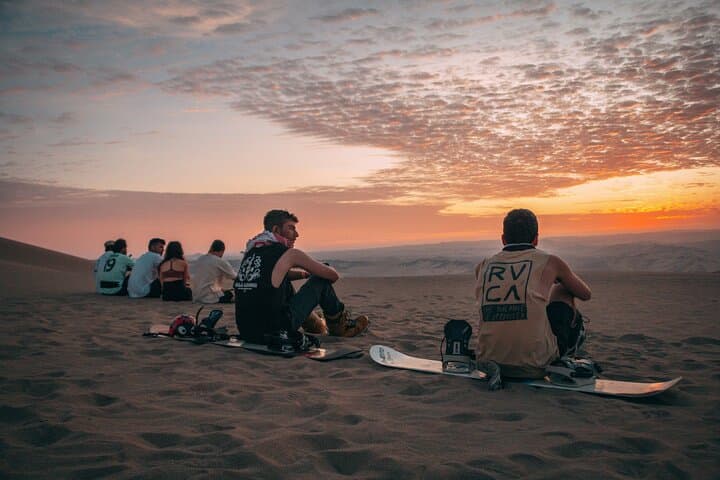
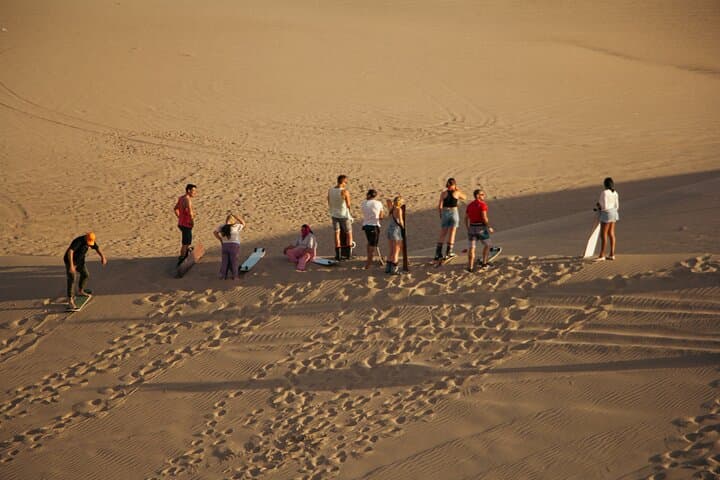
The second day flips the script: a short drive across flat, pitted desert to the Nazca airstrip, where small aircraft bank over the famous lines—sprawling geoglyphs that predate the Inca and still provoke debate about their makers and purpose. Geology here is simple and stark: coastal shelf, wind-sculpted dunes, and sedimentary cliffs weathered into dramatic forms. Huacachina’s oasis, by contrast, is a human mirage—palm-fringed water and towering sand faces that invite buggies and sandboards.
Practical guidance: plan early pickups, carry original passport for the Nazca flight, and expect long drives between sites. Sun protection and a windproof layer are essential on the boat; closed-toe shoes make dune runs and boarding easier. If prone to motion sickness, bring remedies for both boat and small aircraft. The itinerary balances wildlife viewing, a coastal reserve visit, dune adrenaline, and an aerial archaeology highlight—compact but full; travelers should be ready for early starts and varied terrain.
moderate.
2 days.
Suitable for travelers in average fitness: involves short hikes, dune climbs, boat rides, and sitting through long transfers.
Flights typically last 30–40 minutes with a 10–20 minute window over the lines; expect close-up views of several geoglyphs and geometric shapes, weather permitting.
Wildlife is abundant but never guaranteed; you'll commonly see sea lions, guano birds, and Humboldt penguins, with dolphins possible on calm days.
Buggies and a sandboard opportunity are included; operators provide safety briefings and most experiences are suitable for beginners, though rough rides can be bumpy.
Yes—Paracas and Huacachina have limited mid-range hotels during high season; book ahead if traveling in southern hemisphere summer (Dec–Mar) or major holidays.
The Paracas culture (c. 800–100 BCE) developed along this coast; the Nazca Lines, created later by the Nazca culture, remain one of Peru’s most debated archaeological mysteries.
Paracas National Reserve protects fragile coastal ecosystems and bird nesting sites—visitors should stay on designated paths and avoid disturbing wildlife; boat operators follow regulations to minimize disturbance to colonies.
Inca Trilogy Tours operates guided outdoor trips and adventures with an emphasis on safety, stewardship, and memorable experiences.


A pale dawn over the Pacific loosens the night and the van slides out of Lima toward the wind-swept Paracas Peninsula. Salt spray and desert dust mix on the windshield; sea birds wheel like punctuation marks above the harbor. By midmorning the boat hums away from El Chaco and the Ballestas Islands rise like a cluster of low, living cliffs—sea lions bellowing, Humboldt penguins threading rock pools, and the Candelabra geoglyph carved into the headland, visible only from water or sky.
A pale dawn over the Pacific loosens the night and the van slides out of Lima toward the wind-swept Paracas Peninsula. Salt spray and desert dust mix on the windshield; sea birds wheel like punctuation marks above the harbor. By midmorning the boat hums away from El Chaco and the Ballestas Islands rise like a cluster of low, living cliffs—sea lions bellowing, Humboldt penguins threading rock pools, and the Candelabra geoglyph carved into the headland, visible only from water or sky.
The second day flips the script: a short drive across flat, pitted desert to the Nazca airstrip, where small aircraft bank over the famous lines—sprawling geoglyphs that predate the Inca and still provoke debate about their makers and purpose. Geology here is simple and stark: coastal shelf, wind-sculpted dunes, and sedimentary cliffs weathered into dramatic forms. Huacachina’s oasis, by contrast, is a human mirage—palm-fringed water and towering sand faces that invite buggies and sandboards.
Practical guidance: plan early pickups, carry original passport for the Nazca flight, and expect long drives between sites. Sun protection and a windproof layer are essential on the boat; closed-toe shoes make dune runs and boarding easier. If prone to motion sickness, bring remedies for both boat and small aircraft. The itinerary balances wildlife viewing, a coastal reserve visit, dune adrenaline, and an aerial archaeology highlight—compact but full; travelers should be ready for early starts and varied terrain.