THE ADVENTURE COLLECTIVE® · Independent discovery and booking for outdoor travel

Spend two active days between Angkor’s monumental temples, Kulen Mountain’s river-carved relics and the stilt villages of Tonle Sap. This private guided tour balances cultural context with on-the-ground logistics for a full, manageable Siem Reap experience.
Spend two active days between Angkor’s monumental temples, Kulen Mountain’s river-carved relics and the stilt villages of Tonle Sap. This private guided tour balances cultural context with on-the-ground logistics for a full, manageable Siem Reap experience.
Morning light slices across the moat as you step from private transport onto the causeway of Angkor Wat, the stone facades warming under the tropical sun. For two days you move between colossal bas-reliefs and tight jungle corridors, guided by someone who reads the stones and the rhythms of local life.
Verified experiences and guided adventures in the surrounding area.
Operated by Around Cambodia Travel · Siem Reap, Siem Reap Province
Morning light slices across the moat as you step from private transport onto the causeway of Angkor Wat, the stone facades warming under the tropical sun. For two days you move between colossal bas-reliefs and tight jungle corridors, guided by someone who reads the stones and the rhythms of local life.
The itinerary threads Angkor Wat and Angkor Thom — monuments of the Khmer Empire (9th–15th centuries) — with the wild limestone and sandstone of Kulen Mountain and the waterborne villages of Tonle Sap. Geology here is clear: sandstone carved into faces and galleries, laterite foundations resisting the monsoon, and a higher, forested plateau at Kulen where freshwater springs cut channels and sculpt 1,000 lingams into the riverbed.
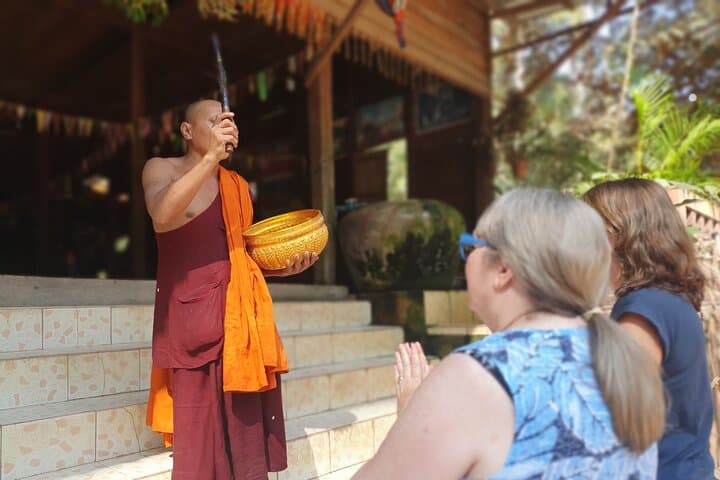
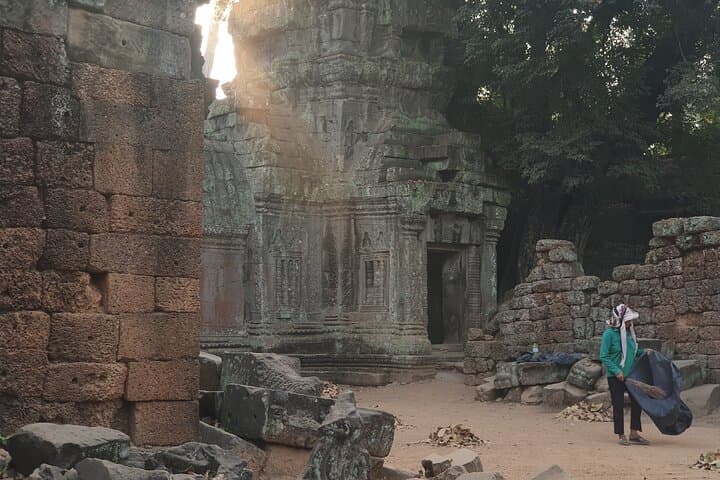
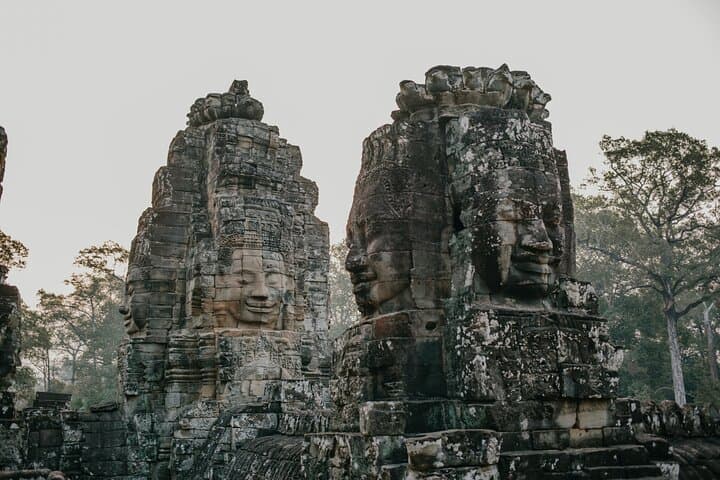
Culture and craft surface in small ways: palm-sugar makers along the route, stilt-house neighborhoods where life rides the flood cycle, and local guides who translate temple iconography into stories of kings, gods, and agrarian calendars. Expect close-up encounters with temple eyes, the aggressive roots of Ta Prohm, and the steady flow of villagers on Tonle Sap.
Practical guidance: plan for long walking days with uneven steps and dusty tracks; morning starts avoid heat and crowds. Bring a refillable water bottle, sun protection, and sturdy shoes with good grip for slick stones. Entrance fees to Angkor Archaeological Park are separate; confirm pickup, precise meeting time and whether sunrise is included. Move at a measured pace — these sites reward attention more than speed.
moderate.
2 days (full days, ~8–10 hours per day).
Moderate fitness: comfortable walking on uneven ground, several flights of steep stone steps, and some short hikes.
No—entrance fees for Angkor Archaeological Park are separate and paid on arrival; ask your operator for current pass prices.
Sunrise is available upon request but often incurs an extra charge due to earlier pickup times and higher demand.
Yes, swimming is possible at designated spots, but exercise caution on slippery rocks and follow guide instructions.
Yes—boats are operated by local crews and provided life jackets; water levels vary seasonally, so conditions change between dry and wet seasons.
Angkor was the heart of the Khmer Empire (9th–15th centuries); many temples were capitals, religious complexes and hydraulic systems tied to rice cultivation.
High visitation stresses fragile stone and ecosystems—use local guides, avoid touching carvings, support community-run services and carry out waste.
Around Cambodia Travel operates guided outdoor trips and adventures with an emphasis on safety, stewardship, and memorable experiences.
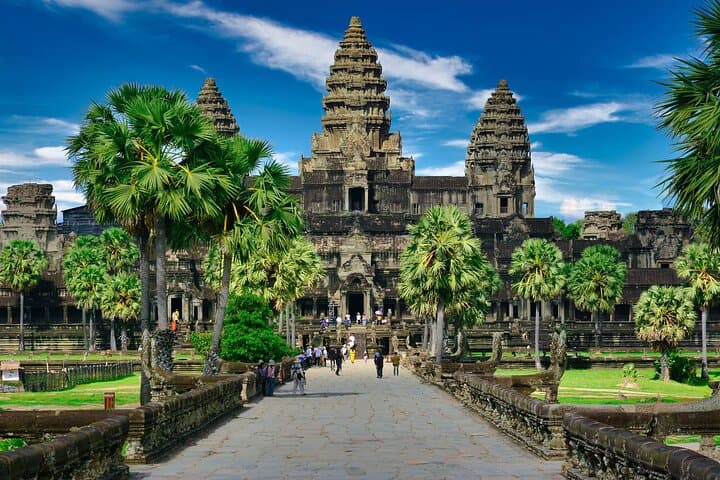
Morning light slices across the moat as you step from private transport onto the causeway of Angkor Wat, the stone facades warming under the tropical sun. For two days you move between colossal bas-reliefs and tight jungle corridors, guided by someone who reads the stones and the rhythms of local life.
Morning light slices across the moat as you step from private transport onto the causeway of Angkor Wat, the stone facades warming under the tropical sun. For two days you move between colossal bas-reliefs and tight jungle corridors, guided by someone who reads the stones and the rhythms of local life.
The itinerary threads Angkor Wat and Angkor Thom — monuments of the Khmer Empire (9th–15th centuries) — with the wild limestone and sandstone of Kulen Mountain and the waterborne villages of Tonle Sap. Geology here is clear: sandstone carved into faces and galleries, laterite foundations resisting the monsoon, and a higher, forested plateau at Kulen where freshwater springs cut channels and sculpt 1,000 lingams into the riverbed.
Culture and craft surface in small ways: palm-sugar makers along the route, stilt-house neighborhoods where life rides the flood cycle, and local guides who translate temple iconography into stories of kings, gods, and agrarian calendars. Expect close-up encounters with temple eyes, the aggressive roots of Ta Prohm, and the steady flow of villagers on Tonle Sap.
Practical guidance: plan for long walking days with uneven steps and dusty tracks; morning starts avoid heat and crowds. Bring a refillable water bottle, sun protection, and sturdy shoes with good grip for slick stones. Entrance fees to Angkor Archaeological Park are separate; confirm pickup, precise meeting time and whether sunrise is included. Move at a measured pace — these sites reward attention more than speed.