THE ADVENTURE COLLECTIVE® · Independent discovery and booking for outdoor travel

Watch Angkor Wat glow at sunrise, paddle through Tonle Sap’s floating villages, and finish each day with Khmer food and an Apsara performance. This two-day private tour combines temple history, local workshops, and community dining.
Watch Angkor Wat glow at sunrise, paddle through Tonle Sap’s floating villages, and finish each day with Khmer food and an Apsara performance. This two-day private tour combines temple history, local workshops, and community dining.
Before dawn the minivan hums out of Siem Reap and the silhouette of Angkor Wat sharpens against a pale sky. The air smells of dust and river mud; the lake beyond the town seems to breathe as water levels rise and fall with the seasons. Over two days this private tour moves between temple stones and waterways—the sunrise at Angkor Wat, the stone faces of Bayon, the tree-wrapped corridors of Ta Prohm, and the slow life of Tonle Sap’s floating villages.
Verified experiences and guided adventures in the surrounding area.
Operated by Dear Diary Tours · Siem Reap, Siem Reap Province
Before dawn the minivan hums out of Siem Reap and the silhouette of Angkor Wat sharpens against a pale sky. The air smells of dust and river mud; the lake beyond the town seems to breathe as water levels rise and fall with the seasons. Over two days this private tour moves between temple stones and waterways—the sunrise at Angkor Wat, the stone faces of Bayon, the tree-wrapped corridors of Ta Prohm, and the slow life of Tonle Sap’s floating villages.
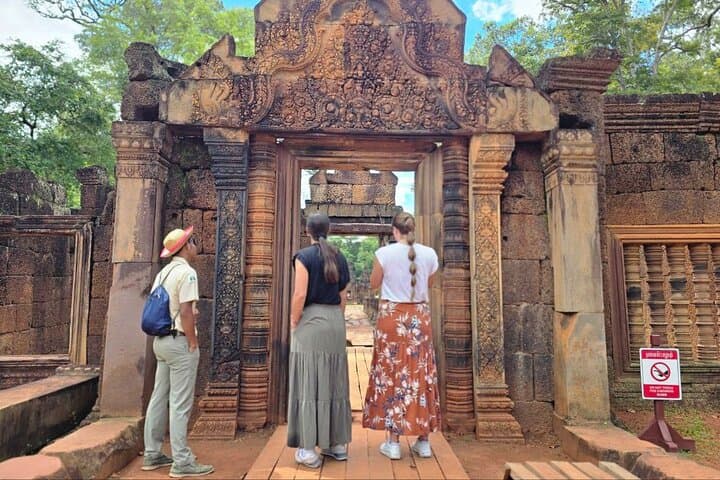
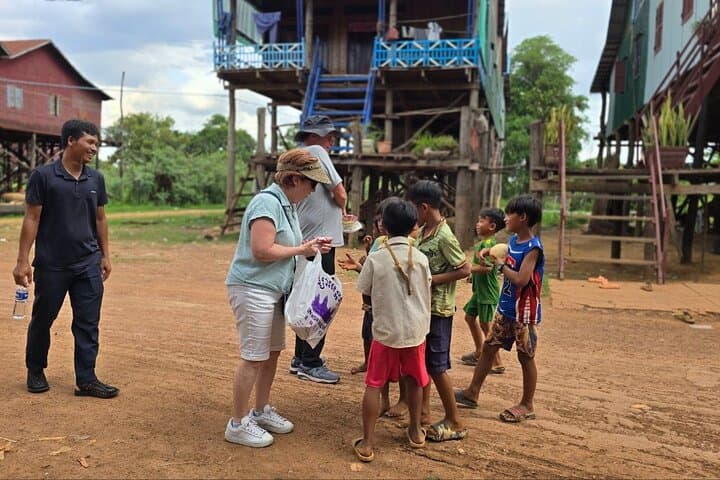
This landscape is the product of Khmer ingenuity and seasonal hydrology. Angkor’s sandstone and laterite blocks were shaped between the 9th and 13th centuries under successive kings; Bayon’s carved faces and Banteay Srei’s pink sandstone demonstrate different artistic chapters. Tonle Sap’s annual flood pulse expands the lake dramatically, creating the stilted communities visitors glide through by boat.
Expect cultural highlights—Khmer carving schools, a community lunch on a floating hut, and an evening Apsara performance that frames dance and legend.
Practical guidance: be ready for early starts, uneven temple steps, and humidity. Bring a fast-drying shirt, modest clothing that covers shoulders and knees for temple entry, cash for local purchases and tips, and mosquito repellent for the lake. Hydrate frequently; sun and sticky heat intensify by late morning. If mobility is limited, request specific pickup details in advance—the tour is broadly accessible but includes walking on irregular stone and boardwalks.
Overall this itinerary pairs iconic archaeology with living village life, offering both photo-ready views and tangible cultural exchange.
easy.
2 days.
Suitable for most fitness levels; requires short to moderate walks on uneven stone and occasional steps.
Angkor Park entry is not included by default—confirm with the operator; visitors typically purchase a temple pass at the official ticket center.
Lunches, dinners, and the Apsara show are included in this tour as noted; special dietary requests should be communicated in booking questions.
Yes, but access and boat routes vary by season—higher water in the wet months allows deeper boat access; the experience changes with the lake level.
Infants can use a stroller but must sit on an adult’s lap during transport and certain boats—check pickup logistics in advance.
Angkor was the capital of the Khmer Empire from roughly the 9th to 15th centuries; temples reflect shifting religious and political centers across centuries.
Tourism supports community livelihoods around Tonle Sap but also stresses water and waste systems—choose operators that contribute to local fees and use responsible waste practices.
Dear Diary Tours operates guided outdoor trips and adventures with an emphasis on safety, stewardship, and memorable experiences.


Before dawn the minivan hums out of Siem Reap and the silhouette of Angkor Wat sharpens against a pale sky. The air smells of dust and river mud; the lake beyond the town seems to breathe as water levels rise and fall with the seasons. Over two days this private tour moves between temple stones and waterways—the sunrise at Angkor Wat, the stone faces of Bayon, the tree-wrapped corridors of Ta Prohm, and the slow life of Tonle Sap’s floating villages.
Before dawn the minivan hums out of Siem Reap and the silhouette of Angkor Wat sharpens against a pale sky. The air smells of dust and river mud; the lake beyond the town seems to breathe as water levels rise and fall with the seasons. Over two days this private tour moves between temple stones and waterways—the sunrise at Angkor Wat, the stone faces of Bayon, the tree-wrapped corridors of Ta Prohm, and the slow life of Tonle Sap’s floating villages.
This landscape is the product of Khmer ingenuity and seasonal hydrology. Angkor’s sandstone and laterite blocks were shaped between the 9th and 13th centuries under successive kings; Bayon’s carved faces and Banteay Srei’s pink sandstone demonstrate different artistic chapters. Tonle Sap’s annual flood pulse expands the lake dramatically, creating the stilted communities visitors glide through by boat.
Expect cultural highlights—Khmer carving schools, a community lunch on a floating hut, and an evening Apsara performance that frames dance and legend.
Practical guidance: be ready for early starts, uneven temple steps, and humidity. Bring a fast-drying shirt, modest clothing that covers shoulders and knees for temple entry, cash for local purchases and tips, and mosquito repellent for the lake. Hydrate frequently; sun and sticky heat intensify by late morning. If mobility is limited, request specific pickup details in advance—the tour is broadly accessible but includes walking on irregular stone and boardwalks.
Overall this itinerary pairs iconic archaeology with living village life, offering both photo-ready views and tangible cultural exchange.