THE ADVENTURE COLLECTIVE® · Independent discovery and booking for outdoor travel

Explore Dhofar’s dramatic contrasts on a guided two-day itinerary from Salalah: monsoon-fed waterfalls, ancient frankincense trees, coastal blowholes and serene lagoons. Practical tips help you time visits, pack smart, and honor local sites.
Explore Dhofar’s dramatic contrasts on a guided two-day itinerary from Salalah: monsoon-fed waterfalls, ancient frankincense trees, coastal blowholes and serene lagoons. Practical tips help you time visits, pack smart, and honor local sites.
You arrive to a weather that changes tone by the hour: low clouds roll off the Dhofar mountains and the scent of frankincense rides the breeze as waterfalls pulse down green ravines. On day one the route climbs into Wadi Darbat and Ayn Athum, where springs and seasonal cataracts carve terraces and pools. Water dares you to stop and listen; baobab trunks stand like patient islanders in the foliage.
Verified experiences and guided adventures in the surrounding area.
Operated by WikiTours Adventures · Salalah, Dhofar Governorate
You arrive to a weather that changes tone by the hour: low clouds roll off the Dhofar mountains and the scent of frankincense rides the breeze as waterfalls pulse down green ravines. On day one the route climbs into Wadi Darbat and Ayn Athum, where springs and seasonal cataracts carve terraces and pools. Water dares you to stop and listen; baobab trunks stand like patient islanders in the foliage.
This two-day loop threads natural history with human history. Geologically, Dhofar is a meeting of Arabian escarpment and coastal plain—limestone cliffs, wadis cut into alluvial terraces, and beaches backed by ancient frankincense trees that fueled an international trade for millennia. Culturally, the area holds archaeological reminders of incense caravans and the long Islamic and pre-Islamic heritage (notably Khor Rori and Nabi Ayoub’s Shrine).
Day two opens onto the coast: Mughsail’s blowholes and Al Fazayah’s turquoise bays, where migratory birds and occasional sea turtles use sheltered lagoons. Expect a steady pace with short walks, picnic stops, and viewpoints rather than technical hiking—this is an observational, interpretive tour.
Practical guidance: bring a light waterproof layer for khareef (monsoon) months, sun protection for clear days, sturdy walking shoes for uneven wadi edges, and sufficient water—refill opportunities are limited. Hotels in Salalah provide logical bases; pickups are typically included. Timing matters: mornings and late afternoons yield cooler temperatures and better light for photography. Respect protected lagoons and frankincense groves—stay on paths and follow your guide’s directions.
easy.
2 days.
Suitable for most fitness levels; involves short walks and standing at viewpoints rather than long hikes.
No; the tour includes hotel pickup and drop-off but not overnight lodging—travelers typically stay in Salalah and join the guided days.
The khareef (monsoon) season from June to September produces the most dramatic waterfalls, greener wadis, and cooler temperatures.
The tour includes two local lunches; specific attraction entrance fees are noted in the itinerary when required and may be included as described by the operator.
Yes — the operator lists the trip as suitable for all fitness levels; infants must sit on an adult’s lap during transport.
Dhofar’s frankincense groves were central to an ancient trade network connecting the Arabian Peninsula with the Mediterranean and South Asia; archaeological sites like Khor Rori recall that maritime commerce.
Protect fragile lagoon habitats and frankincense trees by staying on designated paths, avoiding litter, and following local guide rules to minimize disturbance to nesting birds and coastal ecosystems.
WikiTours Adventures operates guided outdoor trips and adventures with an emphasis on safety, stewardship, and memorable experiences.


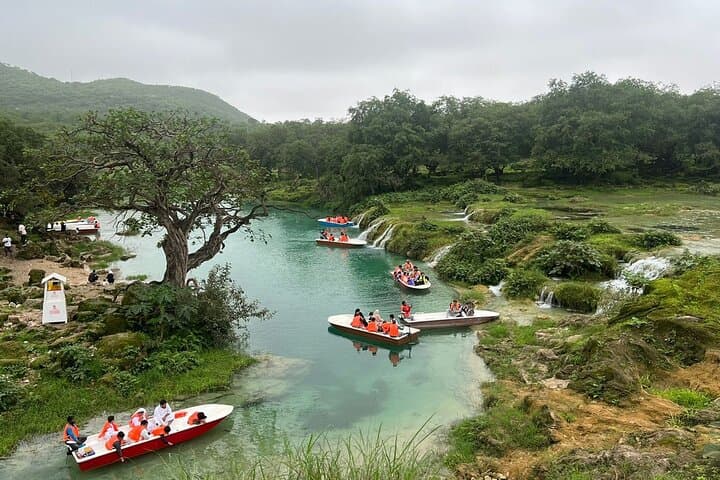

You arrive to a weather that changes tone by the hour: low clouds roll off the Dhofar mountains and the scent of frankincense rides the breeze as waterfalls pulse down green ravines. On day one the route climbs into Wadi Darbat and Ayn Athum, where springs and seasonal cataracts carve terraces and pools. Water dares you to stop and listen; baobab trunks stand like patient islanders in the foliage.
You arrive to a weather that changes tone by the hour: low clouds roll off the Dhofar mountains and the scent of frankincense rides the breeze as waterfalls pulse down green ravines. On day one the route climbs into Wadi Darbat and Ayn Athum, where springs and seasonal cataracts carve terraces and pools. Water dares you to stop and listen; baobab trunks stand like patient islanders in the foliage.
This two-day loop threads natural history with human history. Geologically, Dhofar is a meeting of Arabian escarpment and coastal plain—limestone cliffs, wadis cut into alluvial terraces, and beaches backed by ancient frankincense trees that fueled an international trade for millennia. Culturally, the area holds archaeological reminders of incense caravans and the long Islamic and pre-Islamic heritage (notably Khor Rori and Nabi Ayoub’s Shrine).
Day two opens onto the coast: Mughsail’s blowholes and Al Fazayah’s turquoise bays, where migratory birds and occasional sea turtles use sheltered lagoons. Expect a steady pace with short walks, picnic stops, and viewpoints rather than technical hiking—this is an observational, interpretive tour.
Practical guidance: bring a light waterproof layer for khareef (monsoon) months, sun protection for clear days, sturdy walking shoes for uneven wadi edges, and sufficient water—refill opportunities are limited. Hotels in Salalah provide logical bases; pickups are typically included. Timing matters: mornings and late afternoons yield cooler temperatures and better light for photography. Respect protected lagoons and frankincense groves—stay on paths and follow your guide’s directions.