THE ADVENTURE COLLECTIVE® · Independent discovery and booking for outdoor travel

Leave Djerba for a two-day circuit through salt flats, Berber villages and the palm-ringed oasis of Ksar Ghilane. Expect camel transfers, a night under clear desert skies, and visits to Matmata’s underground homes.
Leave Djerba for a two-day circuit through salt flats, Berber villages and the palm-ringed oasis of Ksar Ghilane. Expect camel transfers, a night under clear desert skies, and visits to Matmata’s underground homes.
Morning light spills across the Roman causeway as your convoy pulls away from Djerba, the island slipping behind in a shimmer of salt flats and Mediterranean haze.
Verified experiences and guided adventures in the surrounding area.
Operated by Vacances Promo Tunisie · Houmt Souk, Medenine Governorate
Morning light spills across the Roman causeway as your convoy pulls away from Djerba, the island slipping behind in a shimmer of salt flats and Mediterranean haze.
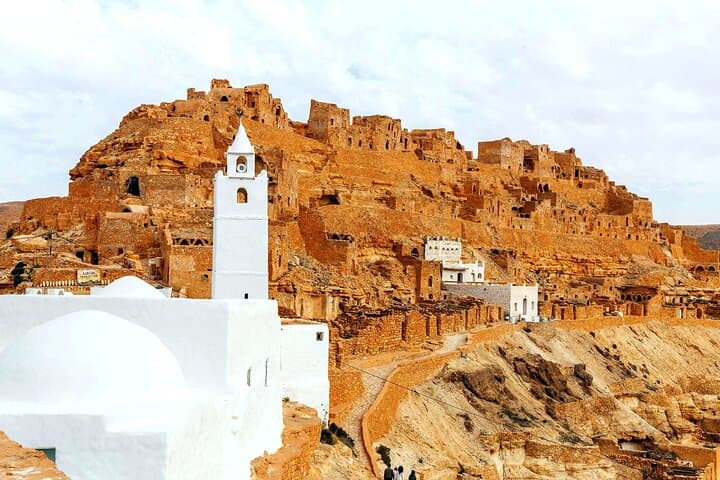
By mid-morning you stop at Sebkhet el Melah where reflective salt pans stretch like a pale sea; later, narrow lanes and troglodyte houses in Chenini introduce the region’s Berber history. The road climbs and flattens into ochre plains before the first palms of Ksar Ghilane signal the edge of the Sahara.
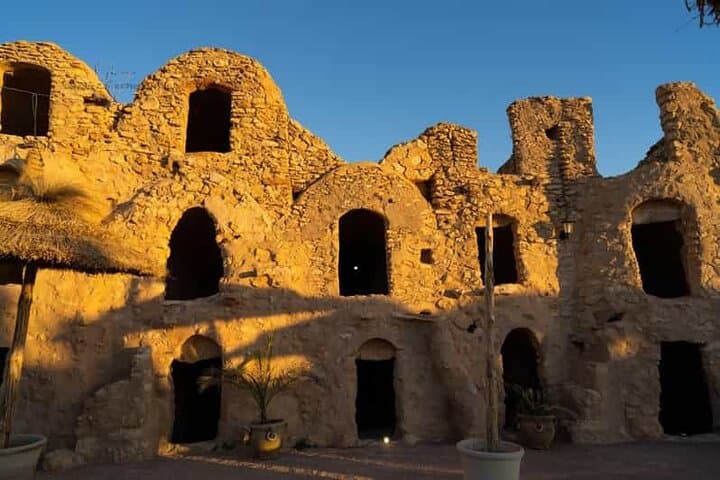
Geology here is direct: wind-sculpted sand sheets and crescent dunes rising 20–50 meters, punctuated by oases fed from deep springs. Human history threads through these landscapes — Roman causeways, troglodyte settlements, and the famous subterranean homes of Matmata where traditional Berber culture remains visible and living.
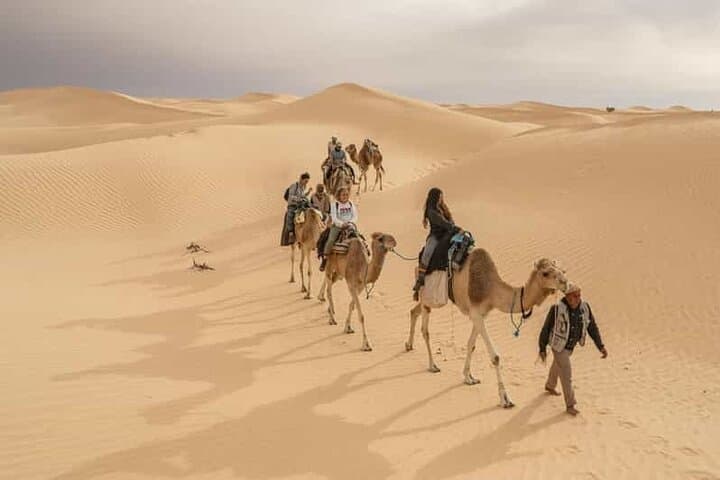
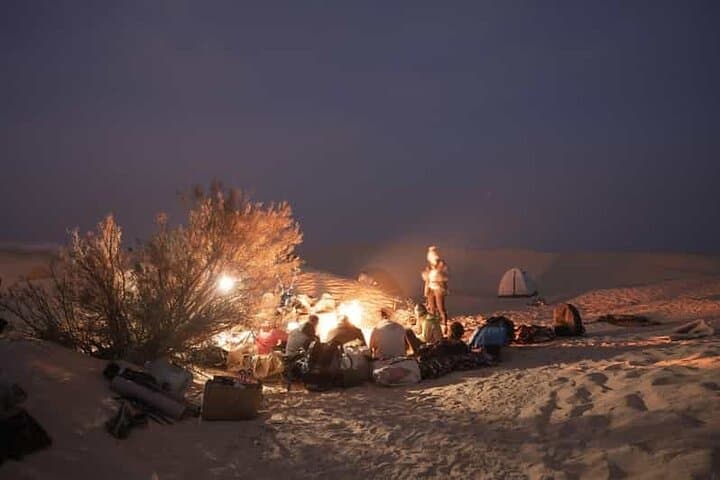
Expect two days of varied pacing: several hours of scenic driving with short cultural stops, an hour-long camel transfer into the dunes, and a night in a traditional Bedouin-style tent with mattresses and blankets. Sunrise and sunset are the highlights — low, slanted light on the ripples of sand and a night sky so dark the Milky Way reads like a river.
Practical points: carry at least 2–3 liters of water per day, sunscreen and layers (desert swings between hot days and cold nights), sturdy closed-toe shoes for dune hiking, and a headlamp for camp. Physical demands are moderate — primarily sitting in a vehicle, short walks, and brief camel transfer.
This itinerary blends cultural visits (Matmata, Toujane), a thermal spring dip at Ksar Ghilane, and simple desert camping — an accessible two-day immersion into southern Tunisia’s sands and stories.
moderate.
2 days (≈48 hours).
Suitable for most people with basic mobility — mostly vehicle travel with short walks, a camel transfer and light dune hiking.
Expect roughly 4–6 hours of road time including stops (times vary by route and traffic), with cultural stops en route.
The camel transfer is short (about 30–60 minutes) and suitable for beginners; the camels are used to tourists and guides help mount and dismount.
Overnight is in traditional-style desert tents with mattresses and blankets provided; camps are basic but comfortable for the desert setting.
Yes—meals listed (breakfast, lunch, dinner) and round-trip transportation from Djerba accommodations are included in the itinerary.
This route crosses the Roman causeway from Djerba and visits ancient Berber settlements and Matmata’s underground homes, places shaped by centuries of desert adaptation.
The Sahara’s fragile soils and scarce water demand low-impact travel—stay on established tracks, pack out waste, and minimize water use.
Vacances Promo Tunisie operates guided outdoor trips and adventures with an emphasis on safety, stewardship, and memorable experiences.
Morning light spills across the Roman causeway as your convoy pulls away from Djerba, the island slipping behind in a shimmer of salt flats and Mediterranean haze.
Morning light spills across the Roman causeway as your convoy pulls away from Djerba, the island slipping behind in a shimmer of salt flats and Mediterranean haze.
By mid-morning you stop at Sebkhet el Melah where reflective salt pans stretch like a pale sea; later, narrow lanes and troglodyte houses in Chenini introduce the region’s Berber history. The road climbs and flattens into ochre plains before the first palms of Ksar Ghilane signal the edge of the Sahara.
Geology here is direct: wind-sculpted sand sheets and crescent dunes rising 20–50 meters, punctuated by oases fed from deep springs. Human history threads through these landscapes — Roman causeways, troglodyte settlements, and the famous subterranean homes of Matmata where traditional Berber culture remains visible and living.
Expect two days of varied pacing: several hours of scenic driving with short cultural stops, an hour-long camel transfer into the dunes, and a night in a traditional Bedouin-style tent with mattresses and blankets. Sunrise and sunset are the highlights — low, slanted light on the ripples of sand and a night sky so dark the Milky Way reads like a river.
Practical points: carry at least 2–3 liters of water per day, sunscreen and layers (desert swings between hot days and cold nights), sturdy closed-toe shoes for dune hiking, and a headlamp for camp. Physical demands are moderate — primarily sitting in a vehicle, short walks, and brief camel transfer.
This itinerary blends cultural visits (Matmata, Toujane), a thermal spring dip at Ksar Ghilane, and simple desert camping — an accessible two-day immersion into southern Tunisia’s sands and stories.