THE ADVENTURE COLLECTIVE® · Independent discovery and booking for outdoor travel

Spend two days exploring Akagera’s mix of savannah, swamps and Lake Ihema. This itinerary pairs morning and night game drives with a boat trip to see hippos, crocodiles and abundant waterbirds.
Spend two days exploring Akagera’s mix of savannah, swamps and Lake Ihema. This itinerary pairs morning and night game drives with a boat trip to see hippos, crocodiles and abundant waterbirds.
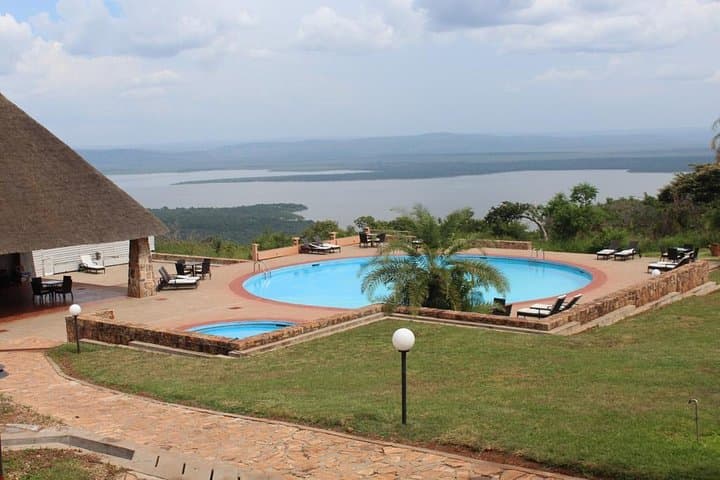
The safari begins before sunrise, when the savannah exhales cool air and a single vehicle cuts a low profile across dirt roads. Early light freights the acacia silhouettes and the distant ridge of low mountains—this is Akagera, where woodland, swamps and open plains meet Lake Ihema’s shore.
Verified experiences and guided adventures in the surrounding area.
Operated by Silverbird Tours Agency · Kayonza, Eastern Province
The safari begins before sunrise, when the savannah exhales cool air and a single vehicle cuts a low profile across dirt roads. Early light freights the acacia silhouettes and the distant ridge of low mountains—this is Akagera, where woodland, swamps and open plains meet Lake Ihema’s shore.
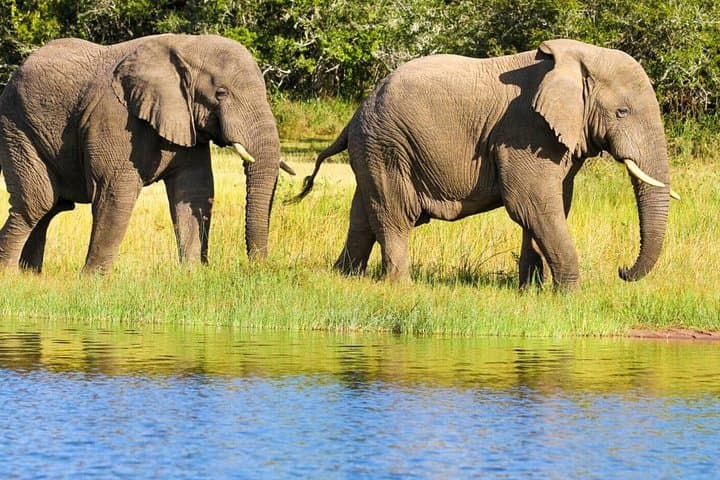
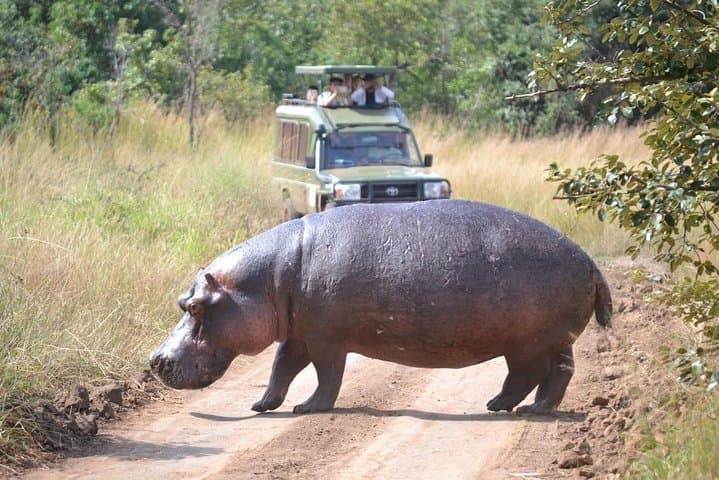
Akagera occupies Rwanda’s eastern flank and has been reshaped by conservation in recent decades: park boundaries expanded, and key species—hippo, elephant, lion and rhino—have been reintroduced or recovered through anti-poaching efforts. Geologically, the park sits on rolling Precambrian bedrock that channels seasonal wetlands into shallow lakes; those wetlands feed a surprising density of waterbirds and the hippo pods that give Lake Ihema its blunt, heavy presence.
Local culture is visible at roadside markets and the coffee stop en route; guides are commonly English- and French-speaking and share village histories alongside wildlife facts. Expect a rhythm of game drives (morning and full-day loops), an afternoon boat trip on Lake Ihema (about 1.5 hours), and a guided night drive—each offering different species and light for photography.
Practical guidance: the road transfer from Kigali is roughly 1.5–2 hours each way, so pack sun protection, a small daypack, binoculars and insect repellent. Wear earth tones and closed-toe shoes for short walks from the vehicle; bring layered clothing for cooler mornings and evenings at roughly 1,200–1,500 m elevation. Hydrate on drives and keep camera batteries warm and charged—the park’s wildlife and birdlife reward patience and steady framing.
easy.
2 days.
Suitable for travelers in light to average fitness—able to embark/disembark vehicles and walk short distances.
The drive from Kigali to the park gate typically takes about 1.5–2 hours depending on traffic and your pickup point.
This itinerary states that fees, taxes and full-board accommodation are included—confirm specifics with the operator at booking.
Yes; the Lake Ihema boat trip (about 1.5 hours) is a guided excursion for viewing hippos, crocodiles and waterbirds; life jackets are provided and guides maintain safe distances from animals.
Malaria prophylaxis is commonly recommended for the region—consult your healthcare provider; routine vaccinations and travel health advice for Rwanda are also advised.
Akagera has undergone significant restoration since the 1990s, with translocations and anti-poaching programs that re-established large mammals and rebuilt tourism.
Conservation in Akagera is a partnership-driven effort involving park authorities and private partners; responsible tourism supports anti-poaching, community employment and habitat protection.
Silverbird Tours Agency operates guided outdoor trips and adventures with an emphasis on safety, stewardship, and memorable experiences.
The safari begins before sunrise, when the savannah exhales cool air and a single vehicle cuts a low profile across dirt roads. Early light freights the acacia silhouettes and the distant ridge of low mountains—this is Akagera, where woodland, swamps and open plains meet Lake Ihema’s shore.
The safari begins before sunrise, when the savannah exhales cool air and a single vehicle cuts a low profile across dirt roads. Early light freights the acacia silhouettes and the distant ridge of low mountains—this is Akagera, where woodland, swamps and open plains meet Lake Ihema’s shore.
Akagera occupies Rwanda’s eastern flank and has been reshaped by conservation in recent decades: park boundaries expanded, and key species—hippo, elephant, lion and rhino—have been reintroduced or recovered through anti-poaching efforts. Geologically, the park sits on rolling Precambrian bedrock that channels seasonal wetlands into shallow lakes; those wetlands feed a surprising density of waterbirds and the hippo pods that give Lake Ihema its blunt, heavy presence.
Local culture is visible at roadside markets and the coffee stop en route; guides are commonly English- and French-speaking and share village histories alongside wildlife facts. Expect a rhythm of game drives (morning and full-day loops), an afternoon boat trip on Lake Ihema (about 1.5 hours), and a guided night drive—each offering different species and light for photography.
Practical guidance: the road transfer from Kigali is roughly 1.5–2 hours each way, so pack sun protection, a small daypack, binoculars and insect repellent. Wear earth tones and closed-toe shoes for short walks from the vehicle; bring layered clothing for cooler mornings and evenings at roughly 1,200–1,500 m elevation. Hydrate on drives and keep camera batteries warm and charged—the park’s wildlife and birdlife reward patience and steady framing.