THE ADVENTURE COLLECTIVE® · Independent discovery and booking for outdoor travel

Leave the Angkor crowds behind for two days of remote Khmer temples and charged modern history. This trip pairs jungle-covered sanctuaries like Koh Ker and Beng Mealea with the cliff-top grandeur of Preah Vihear and the sobering Khmer Rouge sites around Anlong Veng.
Leave the Angkor crowds behind for two days of remote Khmer temples and charged modern history. This trip pairs jungle-covered sanctuaries like Koh Ker and Beng Mealea with the cliff-top grandeur of Preah Vihear and the sobering Khmer Rouge sites around Anlong Veng.
Early in the morning the van slips out of Siem Reap, rice paddies unspooling like green lanes as the road climbs toward older stone and deeper jungle.
Verified experiences and guided adventures in the surrounding area.
Operated by Tour Guide-Siem Reap · Siem Reap, Siem Reap Province
Early in the morning the van slips out of Siem Reap, rice paddies unspooling like green lanes as the road climbs toward older stone and deeper jungle.
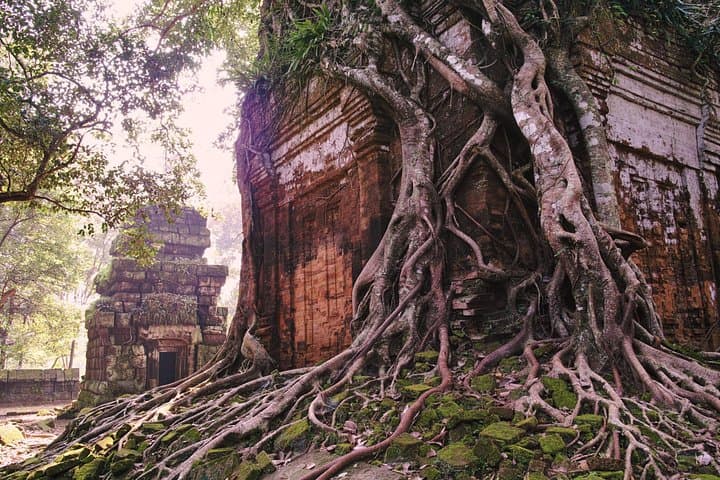
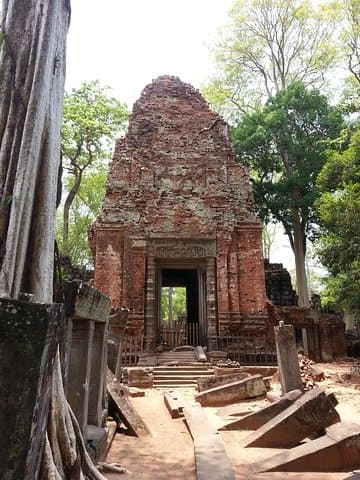
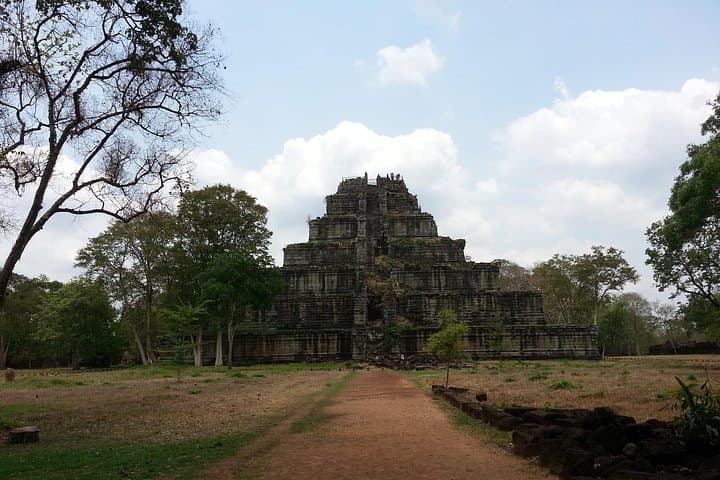
On day one, Beng Mealea greets visitors with toppled towers and roots that press like curious hands into sandstone; the site feels alive, stones reminding you of centuries of labor and belief. Koh Ker, remote and more sparsely visited, spreads across an 81 km² protected landscape where only a fraction of its 180 sanctuaries are obvious from the trail. The trees here push and pry at ruins, and the silence often allows birds and monkeys to claim the acoustics.
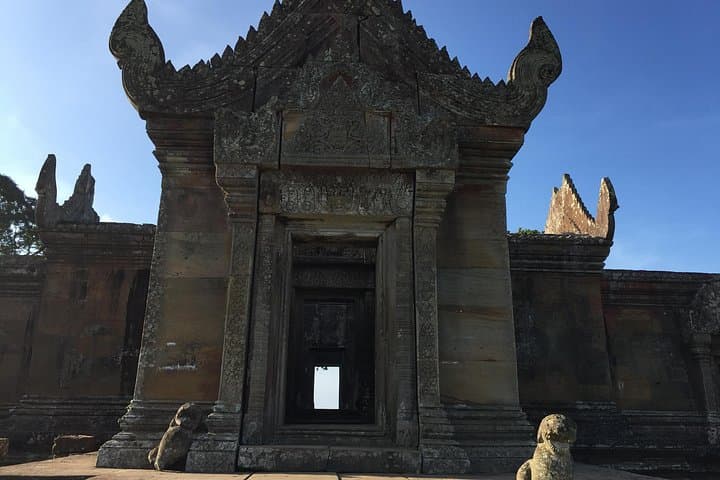
Day two ascends the Dângrêk escarpment to Preah Vihear, perched atop a 525 m cliff and long contested at the international level — its corridors and bas-reliefs belong to the high point of Khmer temple architecture from the Angkorian era. The route ends in a very different register at Anlong Veng: recent history looms at Ta Mok’s house and the site linked to Pol Pot, places that confront the late 20th-century upheavals that shaped modern Cambodia.
Practical guidance: expect long drives on rough provincial roads, moderate walking over uneven temple terraces, and basic facilities at remote stops. Bring sun protection, sturdy shoes, and a respectful mindset for sensitive historical sites. This itinerary removes the Angkor crowds for raw archaeology and the complex human stories that surround it.
moderate.
2 days (approx. 48 hours).
Suitable for travelers in average fitness who can handle multiple short temple walks and prolonged vehicle time
Entrance fees for national monuments are typically not included; confirm with the operator and bring cash for temple tickets.
Expect multi-hour drives each day—Koh Ker is roughly 120 km from Siem Reap and Preah Vihear is a long border ascent—so plan for 3–6 hours of transit across stops.
The operator marks the trip as physically easy, but parents should consider the long drives and uneven temple terrain; infant seats can be requested.
Sites around Anlong Veng are accessible and commonly visited by guided tours; they are treated as historical sites—follow your guide and local regulations.
These temples span the Angkorian high point of Khmer architecture; Preah Vihear’s ownership was subject to an International Court of Justice ruling in 1962 and later UNESCO recognition.
UNESCO listing and local protections aim to preserve temple fabric; stay on established paths, avoid touching carvings, and minimize single-use plastics in remote sites.
Tour Guide-Siem Reap operates guided outdoor trips and adventures with an emphasis on safety, stewardship, and memorable experiences.
Early in the morning the van slips out of Siem Reap, rice paddies unspooling like green lanes as the road climbs toward older stone and deeper jungle.
Early in the morning the van slips out of Siem Reap, rice paddies unspooling like green lanes as the road climbs toward older stone and deeper jungle.
On day one, Beng Mealea greets visitors with toppled towers and roots that press like curious hands into sandstone; the site feels alive, stones reminding you of centuries of labor and belief. Koh Ker, remote and more sparsely visited, spreads across an 81 km² protected landscape where only a fraction of its 180 sanctuaries are obvious from the trail. The trees here push and pry at ruins, and the silence often allows birds and monkeys to claim the acoustics.
Day two ascends the Dângrêk escarpment to Preah Vihear, perched atop a 525 m cliff and long contested at the international level — its corridors and bas-reliefs belong to the high point of Khmer temple architecture from the Angkorian era. The route ends in a very different register at Anlong Veng: recent history looms at Ta Mok’s house and the site linked to Pol Pot, places that confront the late 20th-century upheavals that shaped modern Cambodia.
Practical guidance: expect long drives on rough provincial roads, moderate walking over uneven temple terraces, and basic facilities at remote stops. Bring sun protection, sturdy shoes, and a respectful mindset for sensitive historical sites. This itinerary removes the Angkor crowds for raw archaeology and the complex human stories that surround it.