THE ADVENTURE COLLECTIVE® · Independent discovery and booking for outdoor travel

Walk the plazas and low pyramids of Caral, the Americas’ oldest city, then witness the freshly uncovered citadel at Peñico. This private two-day trip from Lima combines archaeology, valley landscapes, and a night at a local lodge for an intimate look at ancient coastal civilization.
Walk the plazas and low pyramids of Caral, the Americas’ oldest city, then witness the freshly uncovered citadel at Peñico. This private two-day trip from Lima combines archaeology, valley landscapes, and a night at a local lodge for an intimate look at ancient coastal civilization.
You pull off the Pan-American Highway and the ocean’s breath gives way to wind-scoured desert and green irrigated furrows. The Supe Valley opens like a revealed page: low pyramids rise from pale sand, and terraces step down toward the coast. On day one your guide leads you across compacted plaza stones at Caral, where low sun sharpens the edges of ancient platforms and the scale of early urban planning becomes obvious.
Verified experiences and guided adventures in the surrounding area.
Operated by VIPAC Travel · Supe, Lima
You pull off the Pan-American Highway and the ocean’s breath gives way to wind-scoured desert and green irrigated furrows. The Supe Valley opens like a revealed page: low pyramids rise from pale sand, and terraces step down toward the coast. On day one your guide leads you across compacted plaza stones at Caral, where low sun sharpens the edges of ancient platforms and the scale of early urban planning becomes obvious.
Caral is older than the Inca by millennia—one of the earliest complex societies in the Americas. The landscape here is geological and human: coastal terraces fed by riverine floodplain soils, and architecture built from local river rock and reed bundles. Peñico, a more recent excavation nearby, adds new chapters—ceremonial platforms, residential sectors, and alignments that suggest astronomical awareness and sophisticated social organization long before Spanish contact.
Culturally the region remains tied to the land; small orchards and fishing villages still supply local markets. Guides often point out agricultural terraces and explain how ancient irrigation shaped community life.
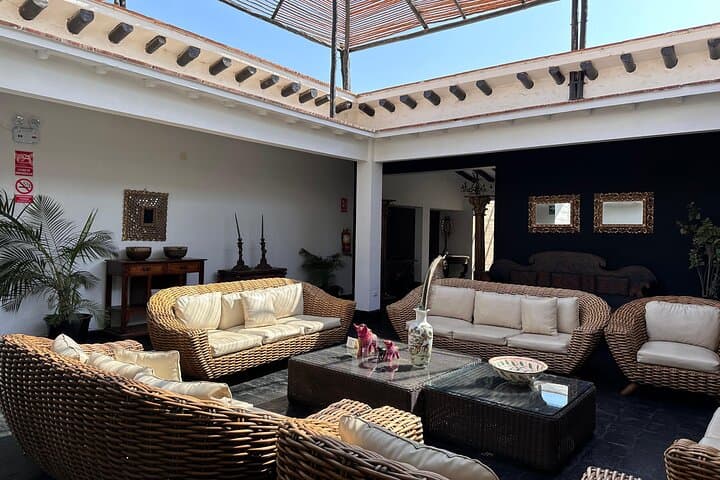
Practically, plan two full days with an overnight at a small lodge in the valley. Expect gravel roads, limited mobile signal, and cool evenings—pack layers, sun protection, and sturdy walking shoes for uneven archaeological terraces. Bring a reusable water bottle, insect repellent in warmer months, and a camera with spare batteries. Travel time from Lima is roughly 3.5–4.5 hours each way depending on traffic; private transport makes the route part of the experience.
This is a slow, contemplative adventure: archaeological discovery balanced with quiet valley walks and local hospitality.
easy.
2 days (approx. 48 hours).
Suitable for most fitness levels; requires walking on uneven ground and short terrace climbs.
Expect about 3.5–4.5 hours each way depending on Lima traffic and road conditions along the Pan‑American Highway.
Yes; the tour is rated easy and suits most ages, but sites have uneven terrain and some steps that may be challenging for limited mobility.
Admission tickets to Caral and Peñico are included as part of the tour package.
Mobile signal is limited in the Supe Valley and lodge Wi‑Fi can be spotty—plan to be largely offline during the visit.
Caral dates back roughly 5,000 years and is considered one of the oldest urban centers in the Americas, offering insight into early coastal state formation.
Archaeological sites are fragile; follow site rules, avoid touching exposed structures, and support responsible tourism that funds local conservation and research.
VIPAC Travel operates guided outdoor trips and adventures with an emphasis on safety, stewardship, and memorable experiences.
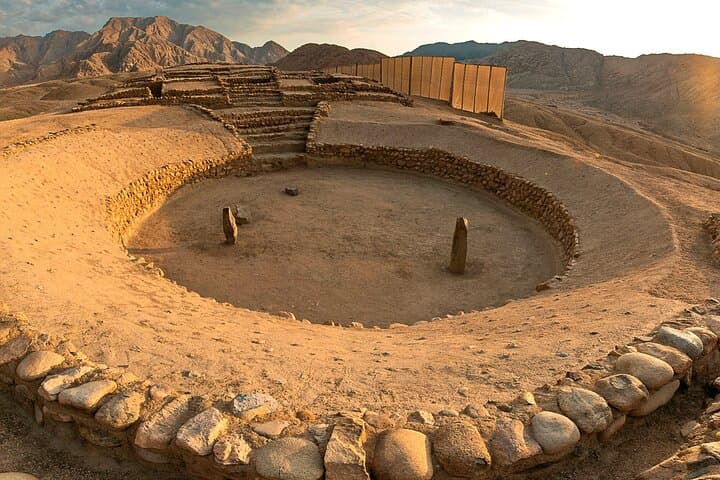
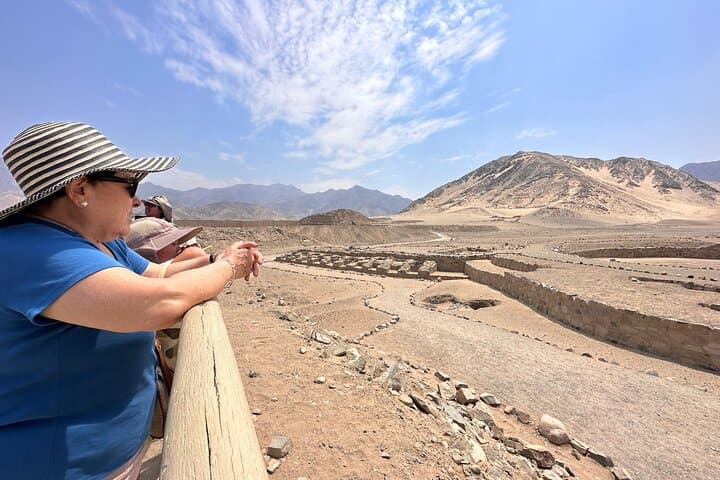
You pull off the Pan-American Highway and the ocean’s breath gives way to wind-scoured desert and green irrigated furrows. The Supe Valley opens like a revealed page: low pyramids rise from pale sand, and terraces step down toward the coast. On day one your guide leads you across compacted plaza stones at Caral, where low sun sharpens the edges of ancient platforms and the scale of early urban planning becomes obvious.
You pull off the Pan-American Highway and the ocean’s breath gives way to wind-scoured desert and green irrigated furrows. The Supe Valley opens like a revealed page: low pyramids rise from pale sand, and terraces step down toward the coast. On day one your guide leads you across compacted plaza stones at Caral, where low sun sharpens the edges of ancient platforms and the scale of early urban planning becomes obvious.
Caral is older than the Inca by millennia—one of the earliest complex societies in the Americas. The landscape here is geological and human: coastal terraces fed by riverine floodplain soils, and architecture built from local river rock and reed bundles. Peñico, a more recent excavation nearby, adds new chapters—ceremonial platforms, residential sectors, and alignments that suggest astronomical awareness and sophisticated social organization long before Spanish contact.
Culturally the region remains tied to the land; small orchards and fishing villages still supply local markets. Guides often point out agricultural terraces and explain how ancient irrigation shaped community life.
Practically, plan two full days with an overnight at a small lodge in the valley. Expect gravel roads, limited mobile signal, and cool evenings—pack layers, sun protection, and sturdy walking shoes for uneven archaeological terraces. Bring a reusable water bottle, insect repellent in warmer months, and a camera with spare batteries. Travel time from Lima is roughly 3.5–4.5 hours each way depending on traffic; private transport makes the route part of the experience.
This is a slow, contemplative adventure: archaeological discovery balanced with quiet valley walks and local hospitality.